

















…and this is how doctors made the impossible possible
Patient’s hand saved through highly complex surgery despite severed subclavian artery
Doctors cut the collar bone and inserted an artificial vein, saving the patient from becoming disabled in a four-hour operation.

This extremely complex operation was performed under the supervision of Dr. Krishnakant Sahu (Head of Department of Heart Chest and Vascular Surgery).
Probably the first case in Chhattisgarh in which a patient’s life was saved by cutting the shoulder bone and inserting an artificial graft.
Doctors at Pandit Jawaharlal Nehru Memorial Medical College and Dr. Bhimrao Ambedkar Memorial Hospital (Mekara), Raipur, have once again successfully performed a complex and life-threatening surgery on a critical and life-threatening case, saving an injured patient’s arm from amputation. According to the doctors, if the patient had not received timely access to such a complex surgery, the patient’s arm would have been amputated and he would have become disabled. Led by Dr. Krishnakant Sahu, Head of the Department of Heart, Chest, and Vascular Surgery, the team not only saved the patient’s life but also prevented the patient’s arm from being amputated by reconnecting the subclavian artery, a major blood vessel severely damaged in a knife attack on a young man’s shoulder. Another special feature of this surgery was the involvement of an orthopedic surgeon, who assisted in the removal of the collarbone and then reattached it with a plate after the operation.
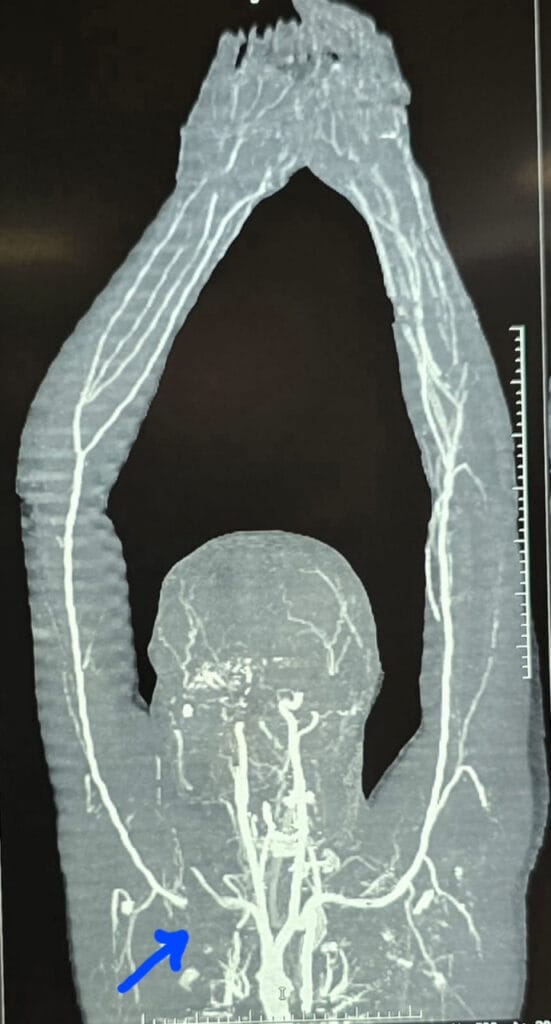
Giving details of the case, Dr. Krishnakant Sahu, Head of the Department (Heart, Chest, and Vascular Surgery), said: A 34-year-old patient was brought to the trauma unit of Ambedkar Hospital, bleeding profusely and in a dying state. The patient works for an electric vehicle company and is a resident of Amaleshwar. According to family members, the patient was traveling with his family on a motorcycle to Raipur Railway Station when they collided with an electric rickshaw. During the altercation, the rickshaw driver attacked the patient’s left shoulder with a sharp knife. The wound was so deep that the subclavian artery, the main artery running behind the clavicle, was completely damaged.
As soon as the injury occurred, a gush of blood spurted from the artery, and the patient fainted within a short time. Bystanders somehow managed to get him to the emergency department of Ambedkar Hospital, where the bleeding was temporarily stopped by stuffing cotton gauze into the wound. However, as the bleeding stopped, blood flow to the left hand also stopped, causing the hand to turn black and lose strength. Without a timely operation, the hand could have had to be amputated.
After initial treatment, the patient’s family voluntarily took him to other hospitals, but due to the severity of the injury and the damage to the artery, they refused treatment. The patient was then brought back to the Heart, Chest and Vascular Surgery Department at Ambedkar Hospital, where, under my (Dr. Krishnakant Sahu’s) supervision, the decision was made to operate immediately.
- Extremely complex and challenging surgery
Surgery on the subclavian artery is particularly challenging in its second part, as it is located behind the collarbone within the chest. There was a risk of excessive bleeding upon removing the dressing, requiring utmost vascular control. Given the severity of the situation, it was decided to access the artery by cutting the patient’s collarbone.
After cutting the collarbone, it was found that the artery was completely damaged for approximately 3 cm. A 7×30 mm Dacron graft (artificial vein) was inserted to repair it. Approximately 5 units of blood were transfused during the surgery, and after approximately 4 hours of painstaking work, blood flow to the arm was restored. The brachial plexus (nerve system) was completely protected, as damage to it can lead to permanent paralysis. After the operation, the collarbone was reattached with a plate.
- Now fully recovered, the patient is back at work.
Thanks to the successful operation and timely treatment, the patient’s hand was saved and gangrene was averted. The patient is now fully recovered and has returned to his daily activities.
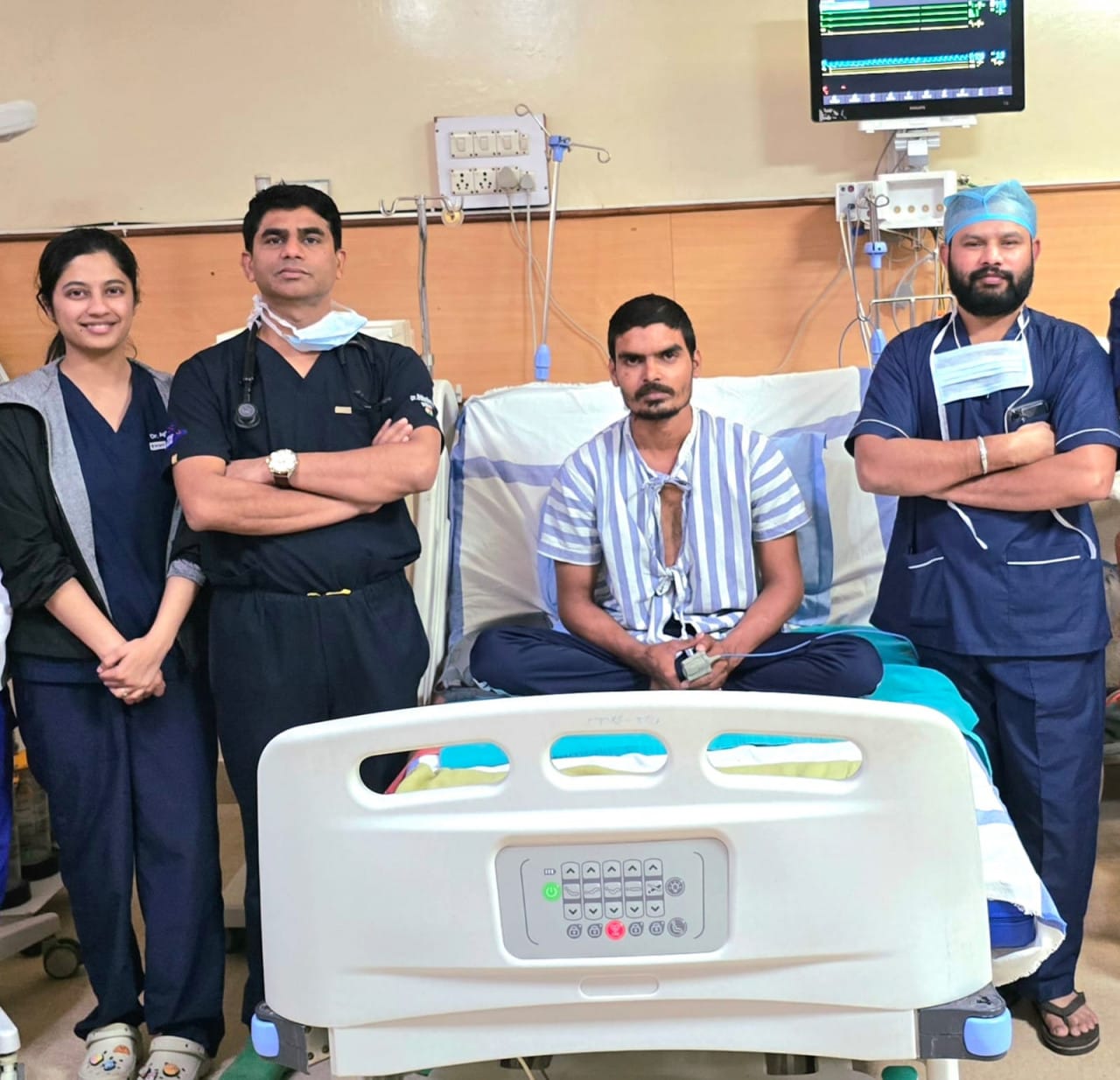
The team that made this complex operation successful included heart, chest and vascular surgeon Dr. Krishnakant Sahu,
Orthopedic Surgeons Dr. Pranay Srivastava, Dr. Lomesh Sahu,
Anaesthesiologists Dr. Sankalp Dewan, Dr. Balswaroop Sahu,
Junior Doctors – Dr. Ayushi Khare, Khyaati, Akanksha Sahu, Sanjay Tripathi, Dr. Omprakash were present.
Among the nursing staff, Rajendra, Narendra, Munesh, Chova, Dushyant and anesthesia technicians Bhupendra and Harish played an important role.
This success is a matter of pride not only for Ambedkar Hospital but for everyone, which proves that with timely right decisions, concerted efforts and expert medical care, even the impossible can be made possible.
- Dr. Vivek Chaudhary, Dean, Pt. Nehru Medical College, Raipur
This surgery was extremely complex and risky. Repairing a large and vital artery like the subclavian artery is not possible in every hospital. It was possible thanks to the coordinated efforts of the Heart, Chest and Vascular Surgery Department, the Trauma Unit, and the Anesthesia team at Ambedkar Hospital. This effort demonstrates that high-quality, life-saving treatment is available even in government hospitals.
- Dr. Santosh Sonkar, Superintendent, Ambedkar Hospital