
























































- Under the leadership of Chief Minister Shri Vishnu Deo Sai, Chhattisgarh’s historical and archaeological heritage is gaining global recognition.
- Through the efforts of Tourism and Culture Minister Shri Rajesh Agrawal, the conservation, promotion, and tourism development of the state’s rich heritage will receive a new impetus.
- Situated on the banks of the Mahanadi River, Sirpur—the capital of the ancient kingdom of Dakshina Kosala—is set to carve out a distinct identity on the global tourism map.
- Renowned for the Lakshman Temple, Buddhist monasteries (Viharas), Surang Tila, and remarkable architectural craftsmanship, Sirpur embodies a glorious history spanning approximately 1,500 years.
A significant milestone has been reached in the endeavor to gain international recognition for Chhattisgarh’s glorious historical, cultural, and archaeological heritage. The ancient city of Sirpur, located on the banks of the sacred Mahanadi River in the Mahasamund district, has been included in the UNESCO (United Nations Educational, Scientific and Cultural Organization) Tentative List for World Heritage status. This achievement marks a historic step toward elevating Chhattisgarh’s rich cultural heritage on the global stage. Famous for its ancient temples, Buddhist monasteries, rare sculptures, architectural splendor, and a unique tradition of religious tolerance, Sirpur is now advancing toward the prospect of attaining full World Heritage status.
Under the leadership of Chief Minister Shri Vishnu Deo Sai, the state government is consistently working toward the conservation and promotion of Chhattisgarh’s historical and cultural heritage, aiming to establish these sites on both the national and international tourism maps. Guided by Tourism and Culture Minister Shri Rajesh Agrawal, special emphasis is being placed on securing global recognition for the state’s significant archaeological sites and expanding the potential for cultural tourism. The inclusion of Sirpur in the UNESCO Tentative List is viewed as a major achievement in this regard. This milestone will not only bring international recognition to the historical significance of Sirpur but will also strengthen the prospects for the expansion of tourism-related activities in the future. Union Minister for Tourism and Culture Inspects Sirpur
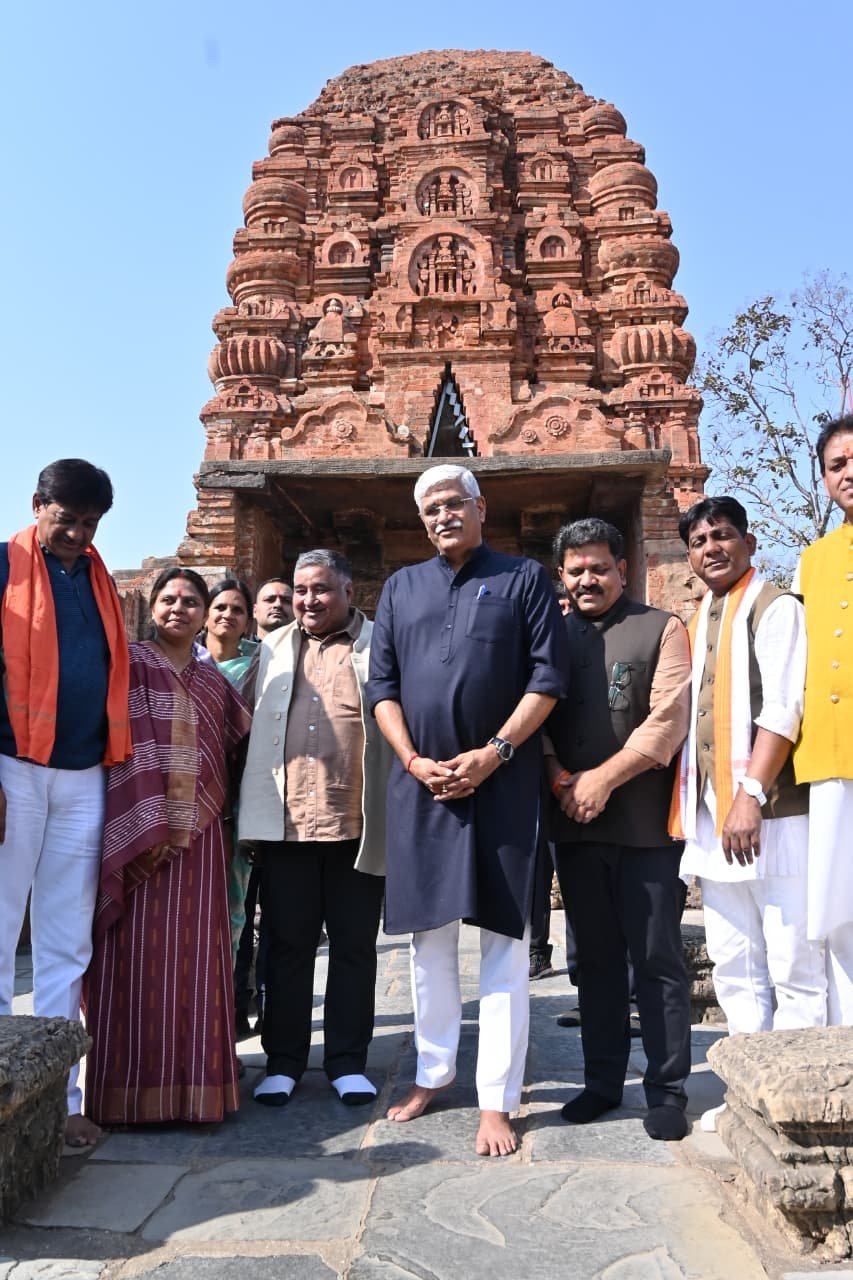
It is noteworthy that the Union Minister for Culture and Tourism, Shri Gajendra Singh Shekhawat, visited the historical and archaeological sites of Sirpur on January 1, 2026. During his visit, he praised Sirpur’s rich heritage, ancient monuments, and architectural splendor. He emphasized the need for essential measures to preserve and promote these sites and underscored the priority of efforts to have Sirpur included in the UNESCO World Heritage List.

- Sirpur: The Capital of Dakshina Kosala and an Ancient Hub of Religion and Culture
The history of Sirpur encapsulates a remarkable legacy of Indian civilization, religious tolerance, cultural harmony, and architectural brilliance. Known as ‘Shripur’ in ancient times, the city served as the capital of Dakshina Kosala under the rule of the Panduvanshi dynasty. Situated on the banks of the Mahanadi River, it was a prominent center for political, religious, cultural, and commercial activities.
Significant evidence regarding the antiquity of Sirpur is found in the copper-plate inscriptions of the Sharabhapuriya rulers, Pravararaja and Mahasudevaraja. During the long, approximately 57-year reign of the Panduvanshi ruler Mahashivagupta Balarjuna, Sirpur reached new heights in cultural and architectural development. This period saw the construction of numerous temples, Buddhist monasteries (viharas), reservoirs, and gardens.
In the seventh century, the renowned Chinese traveler Xuanzang visited this region. His travel accounts mention a flourishing tradition of Buddhism here; he described the presence of approximately 100 Buddhist monasteries and around 10,000 monks belonging to the Mahayana tradition.
A defining feature of Sirpur is the coexistence of Shaiva, Vaishnava, Buddhist, and Jain religious traditions. Although he was a follower of the Shaiva tradition himself, Mahashivagupta Balarjuna extended his patronage to Buddhist monasteries through generous donations. This fact establishes Sirpur as an important center of religious tolerance and cultural harmony in ancient India.
- Lakshmana Temple: An Unparalleled Example of Ancient Indian Brick Architecture
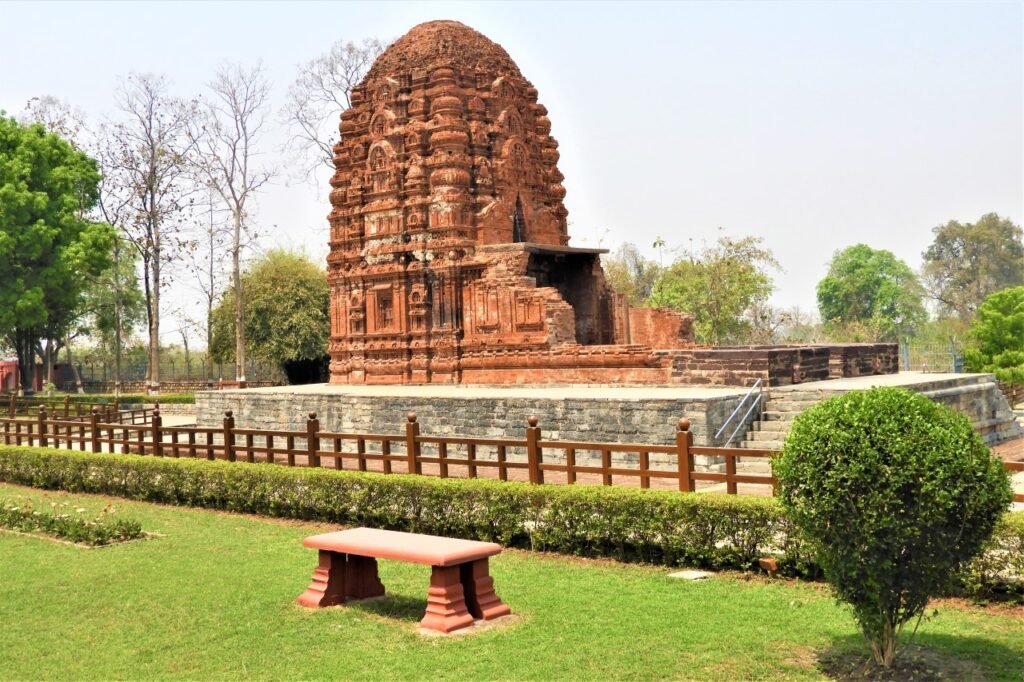
The world-renowned Lakshmana Temple in Sirpur is considered one of the outstanding achievements of Indian architecture. Built around the 7th century, it stands as one of the finest examples of ancient Indian brick-built temples. The grandeur of the temple, its artistic ornamentation, intricate carvings, and construction techniques showcase the remarkable talent of the craftsmen of that era.
Situated on a stone-built jagati (platform) approximately seven feet high, this temple—designed in the pancharatha style—comprises a garbhagriha (sanctuary), an antarala (vestibule), and a mandapa (hall). The exterior walls of the temple are adorned with chaitya-gavakshas (arch-shaped motifs), elephants, kirtimukhas (mythical lion-faces), bharavahaka ganas (celestial figures depicted as load-bearers), and various other decorative motifs.
The entrance to the temple is a particular highlight. Its lintel features a depiction of Lord Vishnu reclining on the serpent Shesha (Sheshashayi), while the door frames are beautifully carved with scenes representing the various avatars (incarnations) of Lord Vishnu, the Krishna-lila (episodes from the life of Krishna), and other mythological narratives. Inside the garbhagriha, an image of the serpent king, Nagraj Shesha, is enshrined.
According to historical records, the Lakshmana Temple was commissioned by Queen Vasata—the mother of Mahashivagupta Balarjuna—in memory of her late husband, Harshagupta. Queen Vasata was the daughter of King Suryavarman of Magadha. The temple is believed to have been constructed around 650 CE.This temple remains a living symbol of the architectural brilliance and cultural richness of Sirpur.
- Gandheshwar Mahadev Temple: A Confluence of Faith and History on the Banks of the Mahanadi
Situated on the sacred banks of the Mahanadi River, the Gandheshwar Mahadev Temple serves as a significant center for the religious traditions of Sirpur. Known in ancient times as ‘Gandharveshwar,’ the temple continues to be a major site of devotion for pilgrims today.
Architectural elements salvaged from older temples and Buddhist monasteries (viharas) were incorporated into the construction of this temple. The temple complex houses numerous artistic sculptures and archaeological remains. The carvings found here offer valuable insights into the artistic traditions, mythological narratives, and religious life of that era.
- Sirpur as a Major Center of Buddhism: Remarkable Craftsmanship in its Monasteries (Viharas)
In ancient India, Sirpur served as a prominent center for Mahayana Buddhism. Archaeological excavations conducted here have uncovered the remains of several Buddhist monasteries (viharas). These monasteries were well-organized, featuring dedicated spaces for meditation, study, teaching, and the residence of monks.
Among the notable Buddhist monasteries in Sirpur are the Anandprabhu Kuti Vihara and the Swastik Vihara. The Anandprabhu Kuti Vihara was commissioned by a Buddhist monk named Anandprabhu during the reign of Mahashivagupta Balarjuna—a fact established through epigraphic evidence.
This two-story structure contained 14 chambers for the monks to reside in. In the main chamber, there stands a statue of Lord Buddha, approximately 6.5 feet tall, depicted in the bhumisparsha mudra (earth-touching gesture). Other Buddhist sculptures, including one of Avalokiteshvara, have also been discovered here.
Nearby lies the Swastik Vihara, renowned for its unique ground plan. A statue of Lord Buddha in the bhumisparsha mudra was also discovered at this site. The remains of these monasteries stand as a testament to the religious, educational, and spiritual prosperity of ancient Sirpur. Tivardeva Mahavihara: A Grand Testament to the Buddhist Architectural Heritage of Ancient Dakshina Kosala
Excavations conducted in Sirpur during 2002–03, under the direction of Dr. Arun Kumar Sharma, unearthed the remains of the vast Tivardeva Mahavihara. Spanning an area of approximately 902 square meters, this Mahavihara stands as one of the prominent Buddhist architectural sites in the region of Dakshina Kosala.
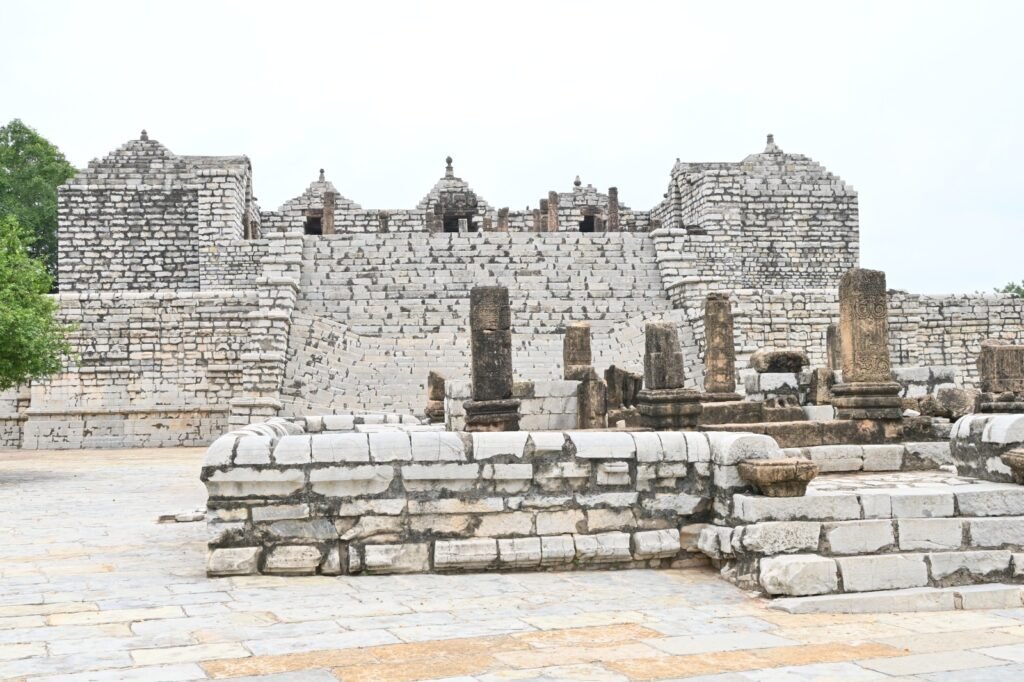
Located about one kilometer east of the Lakshmana Temple, along the Kasdol road, this Mahavihara is particularly significant for its immense scale, ornate entrance, and exquisite craftsmanship.
The entrance to the Mahavihara features intricate carvings depicting animal figures, tales from the Panchatantra, scenes from the social life of that era, and various other artistic motifs. Notable examples include the famous story of the crocodile and the monkey, along with other animal-themed depictions and decorative elements, all of which showcase the vivid imagination and technical mastery of the artisans of that period.
Within the Mahavihara complex, archaeologists have discovered remains of well-organized chambers and an underground stone drainage system. These findings offer valuable insight into the advanced construction techniques and urban planning practices of ancient times.
- Surang Tila and the Rama Temple: Significant Evidence of Architectural Splendor
Surang Tila in Sirpur is another important archaeological site, distinguished by its unique structure and ancient temple architecture. The temple remains, staircases, and sculptural carvings found here provide a window into the religious and architectural traditions of the era.
Similarly, the ancient Rama Temple, situated to the east of the Lakshmana Temple, is a significant historical structure built of brick. While its shikhara (spire) has been lost over time, the remains of its walls still stand. Its star-shaped ground plan and distinctive construction style render it archaeologically significant. It is believed that there is a gap of a few decades between the construction periods of the Lakshmana Temple and the Rama Temple. Over Two Thousand Artifacts Reveal the Secrets of Sirpur’s Glorious Past
Archaeological excavations conducted in various phases at Sirpur have unveiled multiple layers of this ancient city’s rich history. More than two thousand artifacts have been recovered during these excavations.
These include metal sculptures, sculptural panels, tools for crafting ornaments, iron vessels, locks, chains, lamps, ritual vessels, earthenware pots, glass bangles, terracotta seals, toys, and ancient coins.
Of particular historical significance is a Chinese coin discovered at the site, which is believed to date back to the reign of the Chinese Emperor Kai Yuan. Additionally, coins belonging to the eras of the Sharabhapuriya ruler Prasannamatra and the Kalachuri ruler Ratnadeva have also been found. These artifacts provide vital insights into Sirpur’s ancient commercial, economic, and cultural connections.
- Sirpur: A Renowned Center for Metal Sculpture in the 7th–8th Centuries
During the 7th and 8th centuries, Sirpur was celebrated for the creation of exquisite metal sculptures. The images crafted here represent the high tradition of Indian metal sculpture.
In 1939, a significant hoard of metal sculptures was unearthed at Sirpur. Notable among these are figures of Lord Buddha, Avalokiteshvara, Padmapani, Vajrapani, Manjushri, Tara, Rishabhanatha, and Lord Vishnu.
The facial features, the expressions in the eyes, the mudras (hand gestures), the fluid, wave-like folds of the garments, and the intricate ornamentation of these sculptures are a testament to remarkable artistic skill.
Many of the metal sculptures recovered from Sirpur are now preserved in museums and institutions across Raipur, Nagpur, New Delhi, and Mumbai. These artifacts have also been exhibited in countries such as England, Germany, and the United States. This underscores the significance of Sirpur’s artistic tradition..underscores its international significance.
- The Invaluable Heritage of Sirpur Preserved in the Archaeological Museum
The museum established by the Archaeological Survey of India (ASI) within the Lakshman Temple complex serves as a vital center for the ancient art and culture of Sirpur. It houses rare sculptures and architectural fragments unearthed from the site, representing the Shaiva, Vaishnava, Buddhist, and Jain traditions.
Notable among the collection are images of the Chaturmukh (four-faced) Linga, Mahishasuramardini, Narasimha, Ambika, Chamunda, Vishnu, Surya, the Matrikas (mother goddesses), Jain Tirthankaras, and Lord Buddha.
Furthermore, a sculpture depicting the Keshi-vadha (the slaying of the demon Keshi) and an artistic figure of a nayika (heroine) exemplify the excellence of the craftsmanship of that era. These sculptures display a remarkable synthesis of aesthetic beauty, spirituality, and technical skill.
- The Grandeur of an Ancient City Revealed Through Palace Ruins
Excavations conducted near the banks of the Mahanadi River in Sirpur during 2000–01, under the direction of Dr. Arun Kumar Sharma, uncovered the remains of a vast complex identified as a royal palace.
Significant sculptures of Lord Vishnu and Goddess Lakshmi were also discovered here. These findings offer insights into the political, administrative, and cultural prosperity of ancient Sirpur.
Subsequent excavations between 2001 and 2004 revealed the remains of numerous temples, Buddhist monasteries (viharas), and other structures, further cementing Sirpur’s historical importance.
- Global Recognition to Boost Cultural Tourism and the Local Economy
The inclusion of Sirpur in the UNESCO World Heritage tentative list is expected to provide a new impetus to cultural, historical, religious, and archaeological tourism in Chhattisgarh.
As Sirpur gains greater global recognition, it is likely to attract an increasing number of tourists, historians, archaeologists, researchers, and followers of Buddhism from both within the country and abroad. This will also enhance the potential for expanding tourism services—such as hotels, homestays, and transport—as well as handicrafts, local cuisine, and other employment-generating activities at the local level.
In particular, the Buddhist heritage of Sirpur holds significant potential for integration into the international Buddhist tourism circuit. The historical confluence of Shaiva, Vaishnava, Buddhist, and Jain traditions here can lend a distinct identity to religious and cultural tourism.
- A Significant Milestone Toward World Heritage Status
Inclusion in the UNESCO Tentative List is a crucial preliminary step in the process of attaining World Heritage status for a historical site. Following this, it is necessary to complete the preparation of detailed nomination documents, establish conservation management systems, and undergo an evaluation process in accordance with prescribed standards.
Sirpur’s rich archaeological heritage—characterized by its unique brick architecture, ancient Buddhist monasteries (viharas), rare sculptures, and the historical coexistence of diverse religious traditions—establishes it as a culturally significant site on the global stage.
This achievement for Sirpur is not merely about recognizing an archaeological site; it is a significant step toward showcasing Chhattisgarh’s cultural consciousness—evolved over millennia—along with its artistic brilliance, religious harmony, and historical pride, on the global platform.
Having preserved invaluable historical treasures for centuries along the banks of the Mahanadi River, Sirpur is now embarking on a new journey toward global recognition, illuminated by its ancient cultural splendor. This achievement not only presents Chhattisgarh’s glorious past to the world but also serves as a testament to the importance of preserving this invaluable heritage for future generations.