




























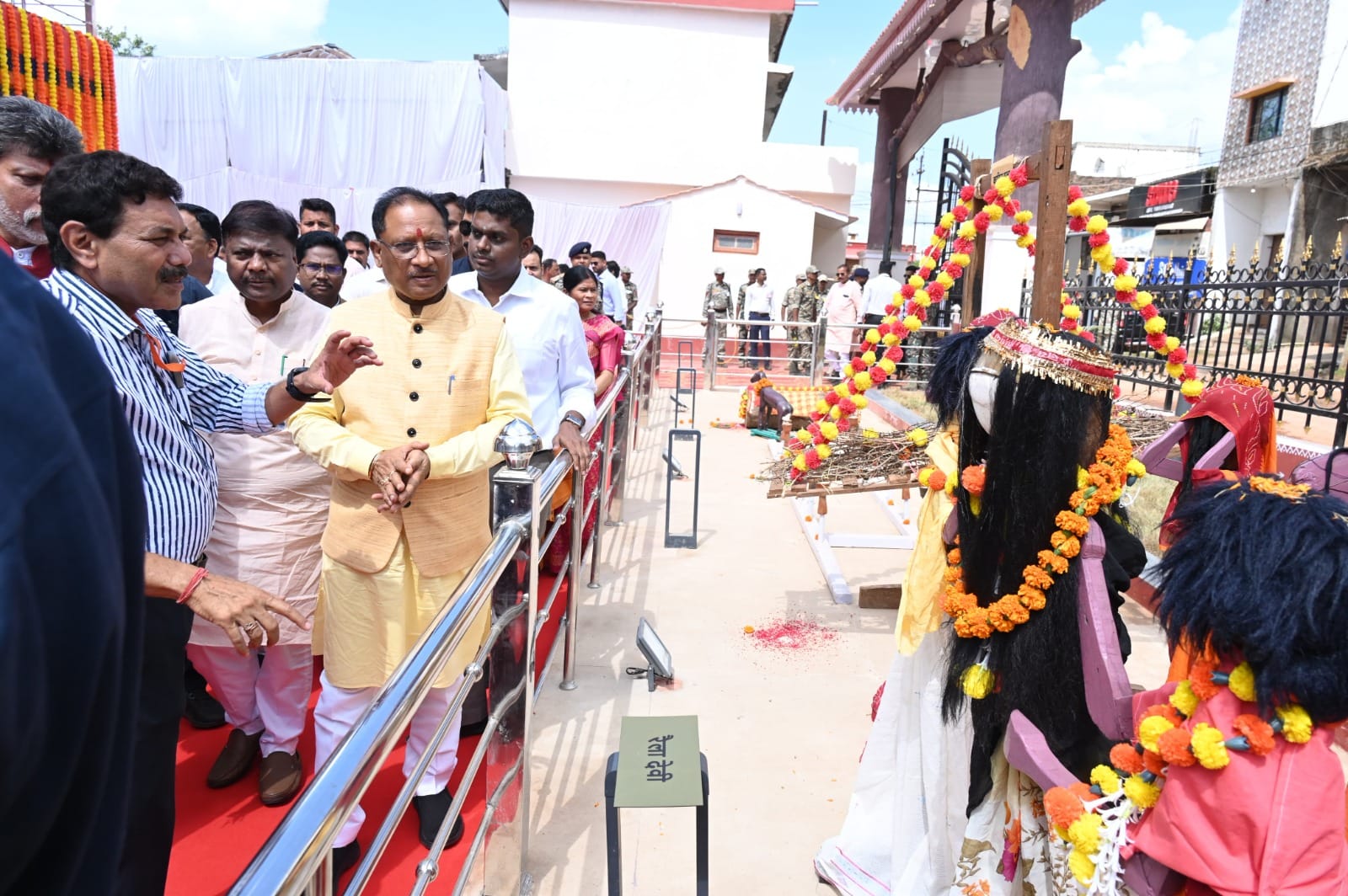















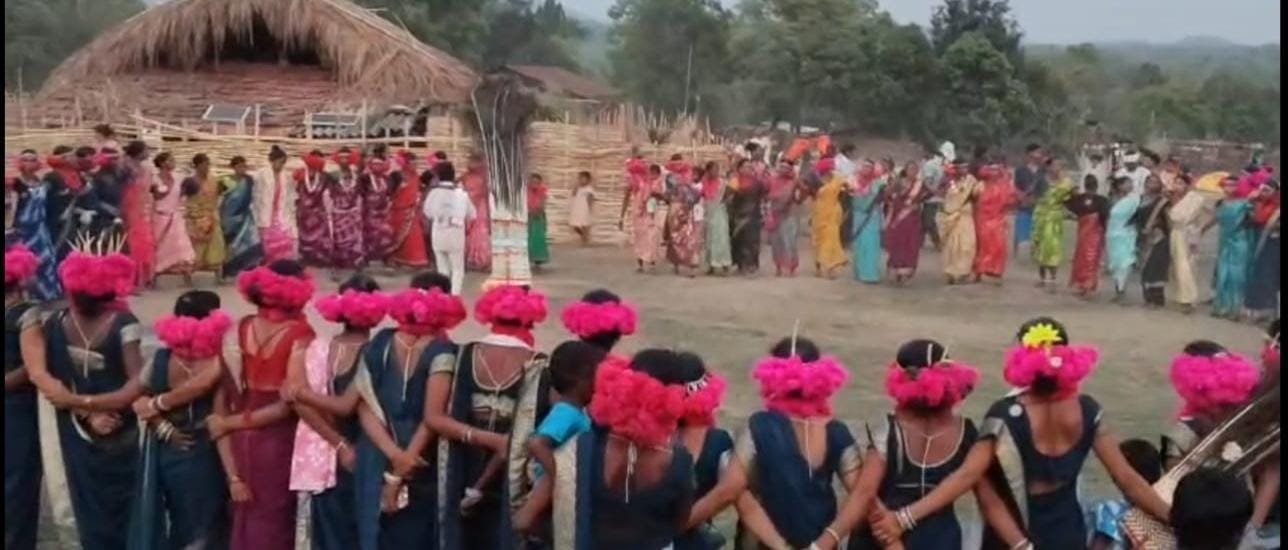
The ‘Ghotul’ tradition in the Abujhmad region of Narayanpur district (Bastar division) serves as a unique and vibrant hub for tribal culture, discipline, and social education. Villagers in remote areas of Abujhmad (such as Jharawahi) are now reconstructing traditional Ghotuls using local timber and natural materials to preserve their ancient culture. Here, elders impart knowledge to the youth regarding societal norms, traditions, music, dance, and essential life responsibilities.
- Melodious Folk Songs of ‘Chelik-Motiyarin’ Resonate Once More
Evenings in Abujhmad are shedding the shadow of fear and returning to their traditional, cultural rhythm. In a region once defined by the terrifying crackle of gunfire and eerie silence, the beat of the Mandar drum and the melodious folk songs of the ‘Chelik-Motiyarin’ now echo as the sun sets. With the positive shift in the security environment, the vibrancy of the ‘Ghotul’—a historic heritage of the tribal community—has returned.
- Youth Visit the Ghotul Without Hesitation
The Ghotul is not merely a social center; it is a vital school of life for the tribal community, fostering culture, discipline, folk art, and communal values. During the era of Naxalite violence and uncertainty, villagers were forced to confine themselves to their homes at dusk, causing Ghotul activities to come to a near-standstill. Effective operations by security forces and a decline in Naxalite influence have instilled a renewed sense of security among the villagers. Young people now visit the Ghotul without hesitation, learning folk traditions, dances, and songs from their elders, thereby carrying forward their rich cultural heritage. The beat of the mandar drum echoing from the ghotuls stands as living testimony to the revival of traditions and collective joy.

The revitalization of ghotuls signifies not merely entertainment, but the restoration of Abujhmarh’s cultural identity and self-respect. With the strengthening of security arrangements, the villagers have regained their freedom of movement and ability to engage in farming, local markets, and festive celebrations. The villagers believe that expanding access to education, healthcare, road connectivity, employment, and communication facilities is now crucial to making this peace enduring. The rhythmic beat of the mandar drum from the ghotuls bears living witness to the fact that when the darkness of fear lifts, traditions and collective joy naturally come alive.