









- Chief Minister Rural Bus SchemeRegular bus service in the interior villages of Bastar has given a new direction to education, health, employment and access to markets.
For a village, bus service isn’t just a means of transportation. It’s also a surety for children to reach school, a route to the health center for patients, access to the market for farmers and forest produce collectors, and a convenient way for laborers to return home after work. Many villages in Chhattisgarh’s Bastar and Surguja divisions lacked this convenient facility for a long time. Dense forests, hilly terrain, scattered settlements, and low passenger numbers prevented private bus operators from offering services on these routes. Villagers were forced to travel in the open compartment of pickup trucks or cargo vehicles, often paying higher fares, without a fixed time slot, and without a safe seating area.
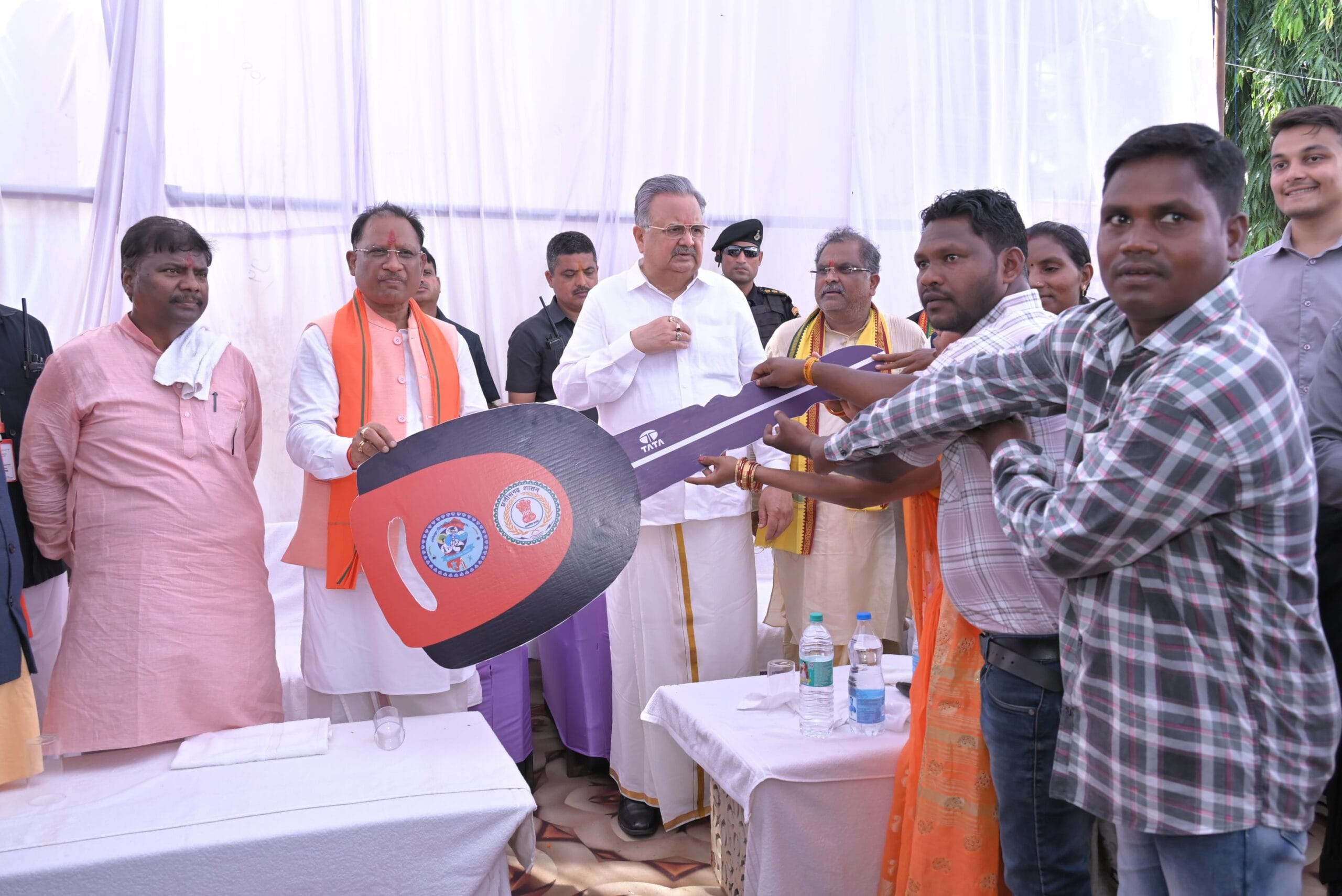
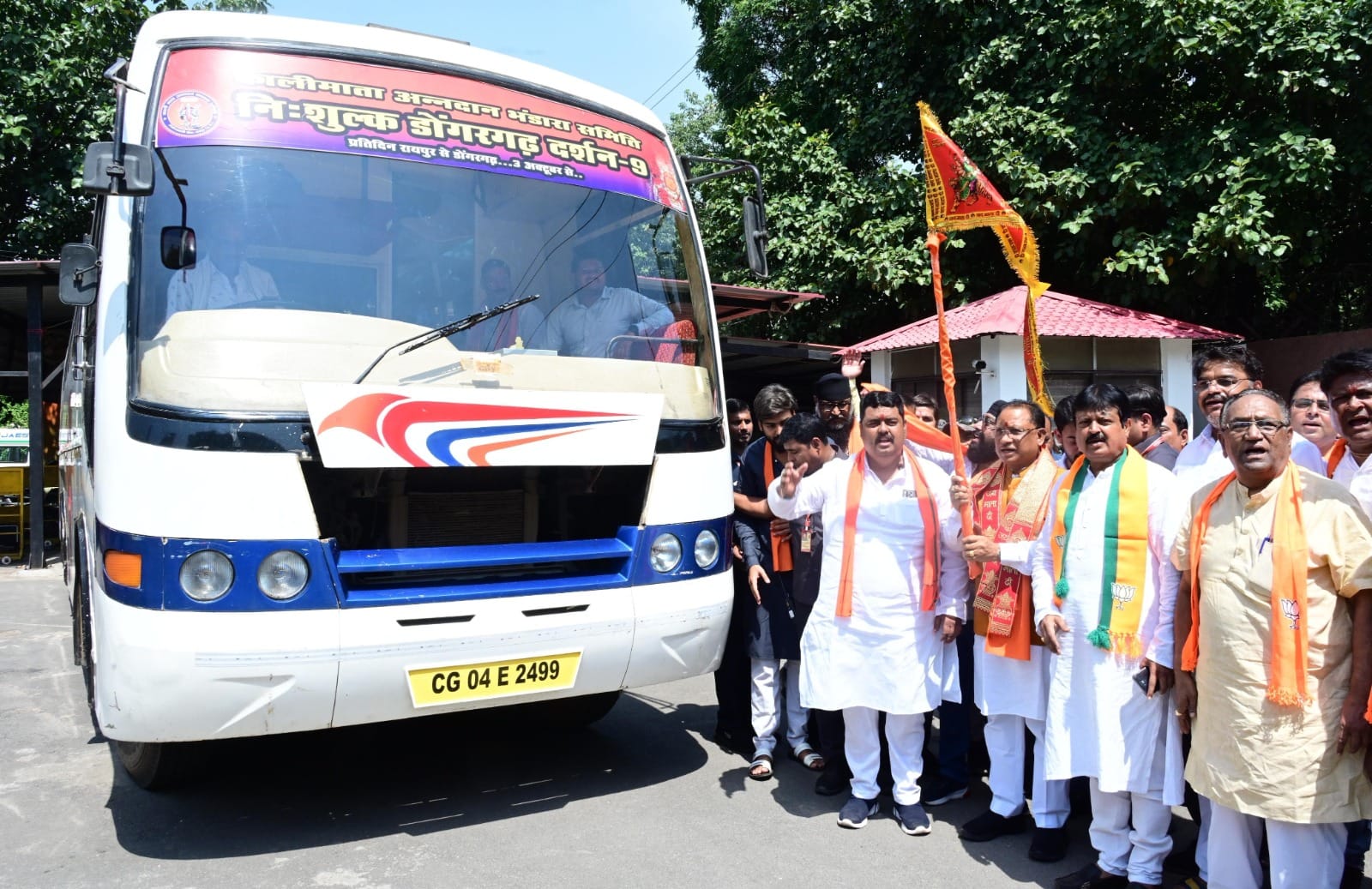
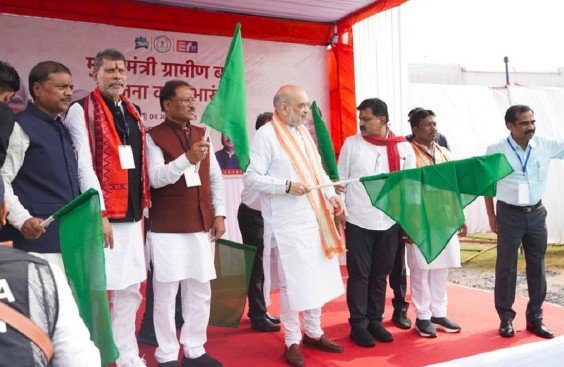
Keeping this need in mind, the Chhattisgarh government launched the Chief Minister’s Rural Bus Scheme. Under the leadership of Chief Minister Shri Vishnu Dev Sai, the state government sought to connect remote and low-passenger villages with regular passenger transport. The scheme was launched on October 4, 2025, in Jagdalpur. Within a year, the initiative expanded to 13 districts in the Bastar and Surguja divisions. As of September 2026, 107 buses operated on 106 routes, connecting 850 villages previously unreached by regular passenger buses with regular bus service for the first time. In one year, these buses covered a distance of approximately 2.4 million kilometers.
- Distance in Bastar is not measured only in kilometers.
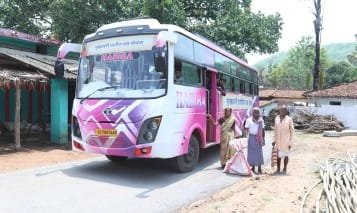
Reaching a village in the interior of Bastar division is often not as simple as simply looking at the distance on a map. Forested roads, isolated villages, and limited transportation options can make even everyday tasks difficult. Therefore, extending bus service to the interior areas of districts like Sukma and Bijapur, and to the villages of Niyed Nellanar, wasn’t just a matter of figuring out a route; it was an effort to provide public convenience to areas where providing regular transportation was considered commercially difficult.

Under the scheme, villages like Puvarti, Jagargunda, Kistaram, and Golapalli in Sukma district are connected by regular bus service. In Bastar division, 57 buses operate on 55 routes in Sukma, Dantewada, Bijapur, Narayanpur, Bastar, Kondagaon, and Kanker districts. In Surguja division, 50 buses operate on 51 routes in six districts. The total notified route length is approximately 5,300 kilometers. Routes range from 14 to 105 kilometers in length, with an average length of about 49 kilometers. Normally, buses make two trips daily.
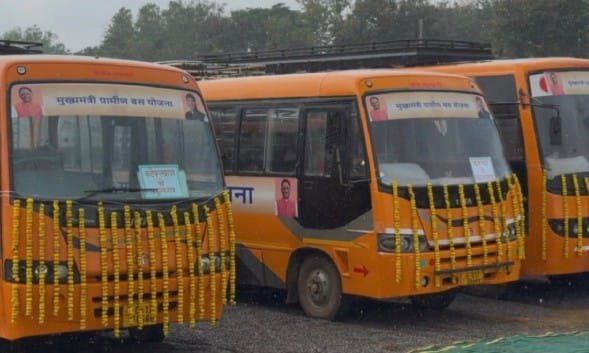
The scheme’s achievement lies not only in the buses reaching remote areas. It’s also important that routes were chosen based on local needs. Route proposals are prepared by the Sub-Divisional Officer (Revenue) and the Chief Executive Officer of the Janpad Panchayat. A district-level committee reviews them, and a state-level committee makes the selection. This ensures both village needs and administrative review are factored into the process.
- Safe travel and fare relief
Before the scheme, passengers had to stand on the open space of a pickup or cargo vehicle on the 83-kilometer journey from Konta to Jagargunda, a cost of 200 rupees or more. Now, the fare for a seated bus on the same route, with a fixed schedule, is 130 rupees. Even short distances between villages, where previously a vehicle was available, can now be travelled for 50 rupees, according to a fixed schedule.
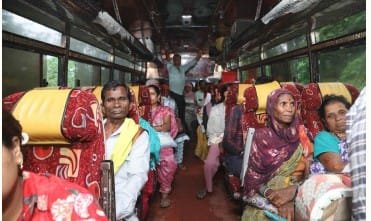
This change is especially important for women, children, patients, and elderly passengers. Having designated bus seats and fixed times makes travel more organized and safe. In a field survey conducted on the Konta-Jagargunda route in June 2026, passengers rated the bus service as safe.
- Buses open doors to education, health and livelihood.
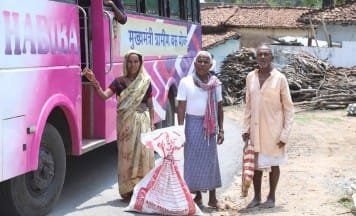
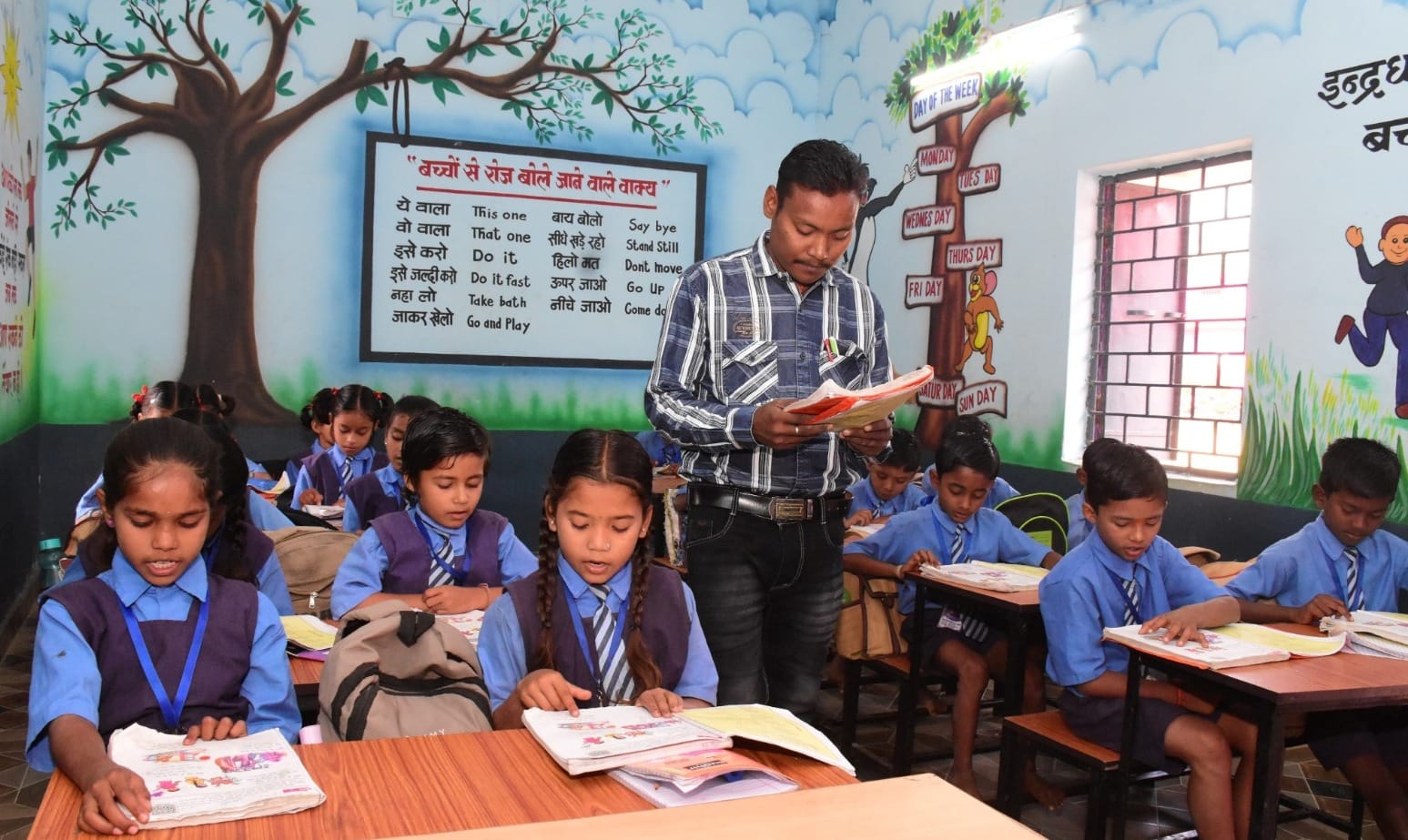
The impact of regular bus service often extends beyond travel time. A 12-year-old student from the Konta area takes the bus daily to school in Bhejji. The Chintagufa Arogya Mandir is also located on the same route. Now, patients and their families have a regular option to reach the health center.
Local vendors can take mangoes, mahua, chicken, and other forest produce to the market and return to their villages the same day. Daily wage laborers in Andhra Pradesh are also able to return the same day after work, reducing the need to spend the night outside. Young people can travel to Konta and Jagdalpur for employment. Buses also transport passengers, along with goods: forest produce to the market and essential goods to the villages. This strengthens daily connections between villages, markets, and block headquarters.
The benefits of the bus service are also visible in the movement of security forces. Soldiers from CRPF camps along the route also travel by these buses. This example illustrates how the impact of regular public transport can extend to many aspects of local life—education, health, business, employment, and mobility are all interconnected.
- Government support for service on difficult routes
The cost of running buses on inaccessible and low-passenger routes can be high for operators, while recovering the entire cost from fares is difficult. To bridge this gap, the state government provides financial assistance per kilometer. Under the scheme, there is a provision of assistance of Rs 26 per kilometer in the first year, Rs 24 per kilometer in the second year and Rs 22 per kilometer in the third year. Bus operators are also given exemption in monthly motor vehicle tax for a maximum period of three years. By September 2026, a total financial assistance of Rs 5.77 crore had been provided to 107 bus operators. The operation of buses and fares is handled by private operators, while the government provides support to continue the service on notified routes.
Operations and payments are also monitored using technology. VLTD (GPS) devices on buses transmit their location to the Transport Department’s Control and Command Center. Live bus tracking, route, trip, and stoppage information is available on the MMGBY portal. Payments are made based on kilometers traveled on the notified route and online GPS reports. Regional Transport Officers review these reports daily. Passenger timetables are available on the Bus Sangwari app.
- Preparations for the next phase of expansion
The next phase of the plan is to expand it to new areas. It has been decided to expand bus services to 85 tribal development blocks in the scheduled areas of eight districts. 60 to 80 buses are proposed for this purpose. It is estimated that this could benefit 4,368 villages and approximately 1.457 million people, where bus services are currently unavailable. Passengers are also offered the option of paying fares using UPI and QR codes.
Visually and intellectually impaired passengers, individuals with ambulatory disabilities, senior citizens aged 80 years and above, and passengers suffering from HIV or AIDS, including attendants, are eligible for a 100 percent fare concession. A 50 percent concession is available to persons affected by Naxalism as certified by the Collector.
Under the leadership of Chief Minister Shri Vishnu Dev Sai, the Chief Minister’s Rural Bus Scheme has presented a practical model for delivering public services to villages struggling with transportation constraints. Buses plying on the rugged terrain of Bastar are a testament to the fact that the path to development broadens only when it reaches remote villages. Where travel was once uncertain, expensive, and unsafe, regular buses now help children reach school, patients reach health centers, villagers reach markets, and laborers reach work. This is the scheme’s greatest achievement: the expansion of opportunities as distances decrease.