









- Article by Govind Patel
Merely touching the summit of Mount Everest—the world’s highest peak—is not considered a true conquest; only those who return safely after reaching that height are regarded as true Everest conquerors. Amita Shrivas, a daughter of Chhattisgarh, recently accomplished this arduous feat. For Amita, this journey was not just about traversing snow-capped peaks but also about staring death in the face.
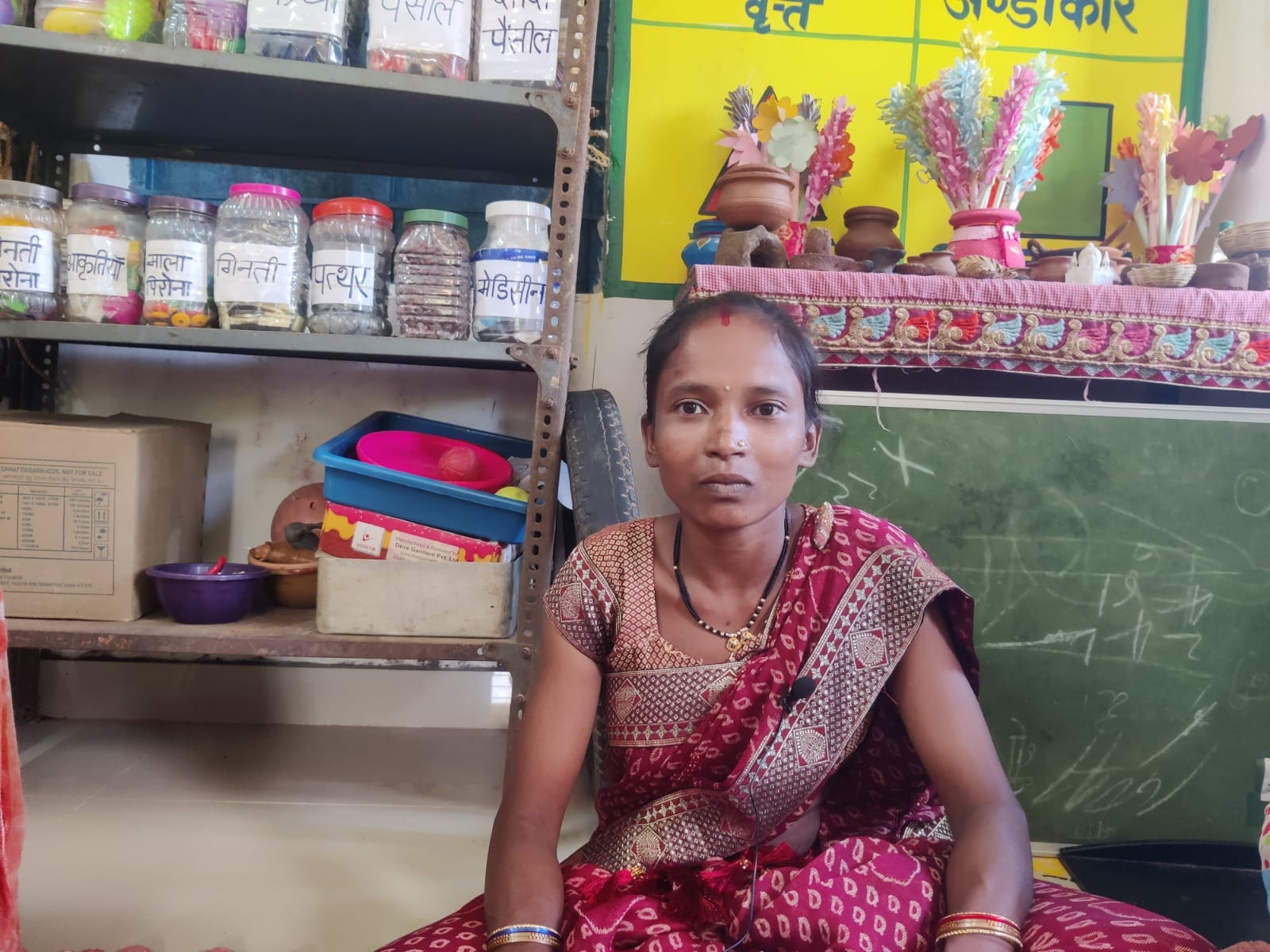
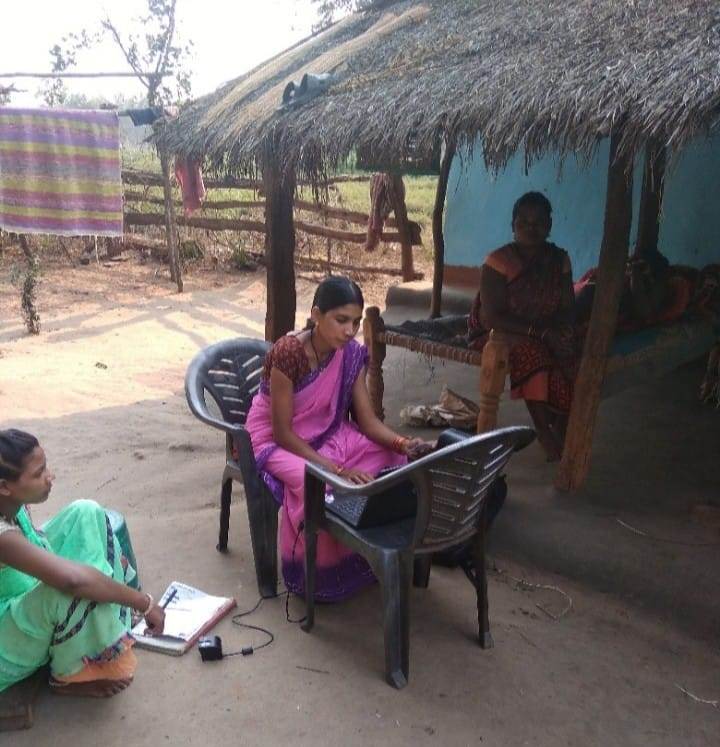
Amita Shrivas’s story does not begin in an affluent family; rather, it originates amidst the extreme poverty and adverse circumstances of the Janjgir-Champa district. Her father, Jaitram Shrivas, runs a small hair salon in the Loharpara area of Champa; it was on this income that he raised five daughters and two sons. Amita passed her Class 12 exams from the Government Lakshmibai Girls’ School in Champa in 2008 and subsequently completed her B.Com degree. Due to the family’s weak financial condition, she became an Anganwadi worker in 2011.
While looking after young children in a small Anganwadi center in Ward 4 of the Champa Municipality, Amita would often weave dreams about her future. Her gaze would frequently fall upon the Atal Bihari Vajpayee Thermal Power Plant in Madwa, located some distance away. Little did she imagine that this very power project would one day play a pivotal role in giving wings to her mountaineering dreams.

This thermal power plant, operated by the Chhattisgarh State Power Generation Company, does more than just generate electricity; it has also infused new energy into the dreams of Amita Shrivas, a daughter nurtured in its very vicinity. Amita stands as a powerful example of how an industrial project can steer the lives of local people in a new direction.
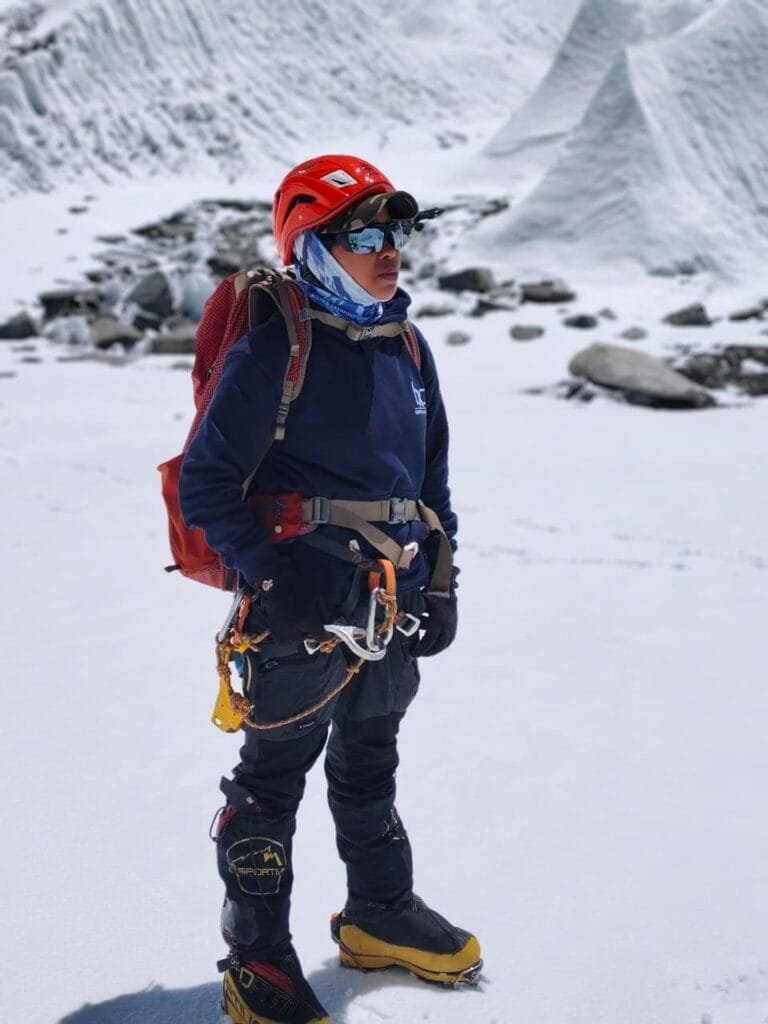
Although Amita Shrivas did not come from a family with a mountaineering background, she gained her first experience in the sport alongside her friend Kshama Rajput at Mount Abu. It was there that she began to dream big about scaling towering mountains. To turn her dream into reality, she completed a basic mountaineering course in 2018. Subsequently, she secured a spot in a 28-day advanced mountaineering training program in Sikkim. Raising the training fees was no easy task for an Anganwadi worker earning a modest honorarium of just a few thousand rupees. Despite financial constraints, she did not give up and somehow managed to complete the training.
A pivotal moment in her mountaineering journey arrived when she got the opportunity to join an expedition to Mount Kilimanjaro, Africa’s highest peak. She lacked the funds to participate; raising such a large sum was a challenge no less daunting than climbing the mountain itself. She approached the Collector of Champa, through whom the power generation company provided the initial funding for her journey. This support proved to be a turning point in Amita’s life. She seized this opportunity with unwavering dedication and discipline. Mr. Ramesh Kumar Shrivas, a fellow villager and Chief Statistical Officer at the Chhattisgarh State Power Distribution Company, recalls that Amita worked hard amidst great adversity. He would often see her practicing early in the morning, sometimes even without shoes. Her indomitable spirit in pursuing her goal, despite such scarcity, serves as an inspiring lesson for everyone.
The result of her rigorous physical and mental preparation was that on March 8, 2021—International Women’s Day—she successfully scaled Mount Kilimanjaro in Africa, earning the distinction of becoming Chhattisgarh’s first international female mountaineer. This was not merely a victory over a mountain, but a triumph of the belief that limited resources cannot stand in the way of big dreams.
Amita’s journey did not end with this success. She now faced the challenge of scaling Mount Everest, the world’s highest peak. However, this expedition required a fee of ₹50 lakh. Upon the recommendation of the state government and the Collector, the Chhattisgarh State Power Generation Company provided her with substantial financial assistance. She set out for Delhi by train on April 9, proceeding from there to Kathmandu and eventually reaching Everest Base Camp. Her first challenge arose when the expedition was halted at an altitude of 6,500 meters due to inclement weather. She passed the time eating traditional Chhattisgarh snacks like Gond ke laddu, Thethri, Khurmi, and Saloni. The journey resumed after a wait of a few days. Biting cold, icy winds, extremely low oxygen levels, and the constant threat of death at every step—these defined the reality of the expedition. They had to move forward slowly throughout the night. Along the way, the sight of the bodies of other mountaineers served as silent testimony to the perils of the expedition; it would take an entire day just to cover a small stretch of altitude.
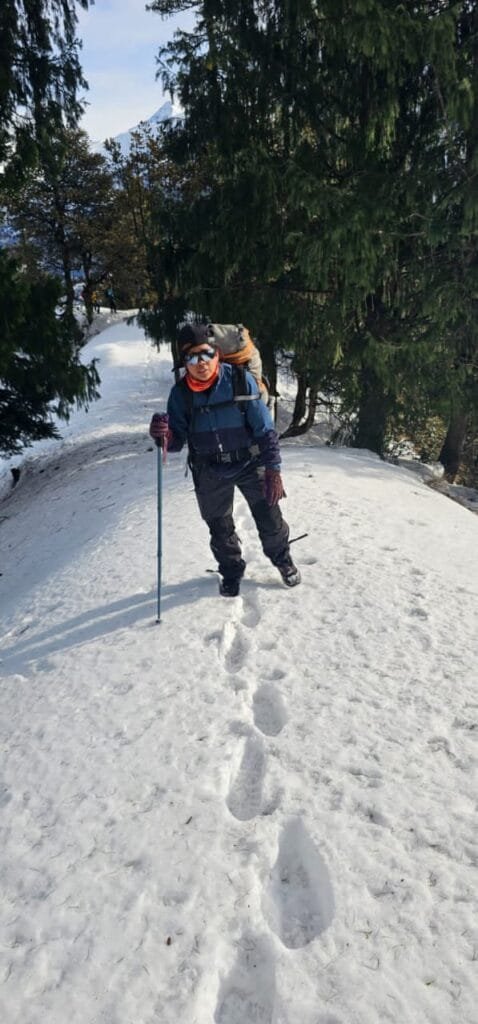
The most harrowing moment of the Everest expedition occurred when Sandeep Apte, a mountaineer from Bengaluru, fell victim to snow blindness right before her eyes. Although he was physically robust, his corneas were damaged by the sun’s ultraviolet rays. She witnessed him groaning in agony; later, she learned that he had passed away.
Amita had barely recovered from this shock when another tragedy shook the entire expedition team. Kanak Tiwari, a mountaineer from Hyderabad, died suddenly just 100 meters shy of the Everest summit. Despite such immense tragedy, Amita’s resolve remained unbroken. Her Sherpa, Dawa Galjin, kept her spirits high and reminded her of her determination to conquer Everest.
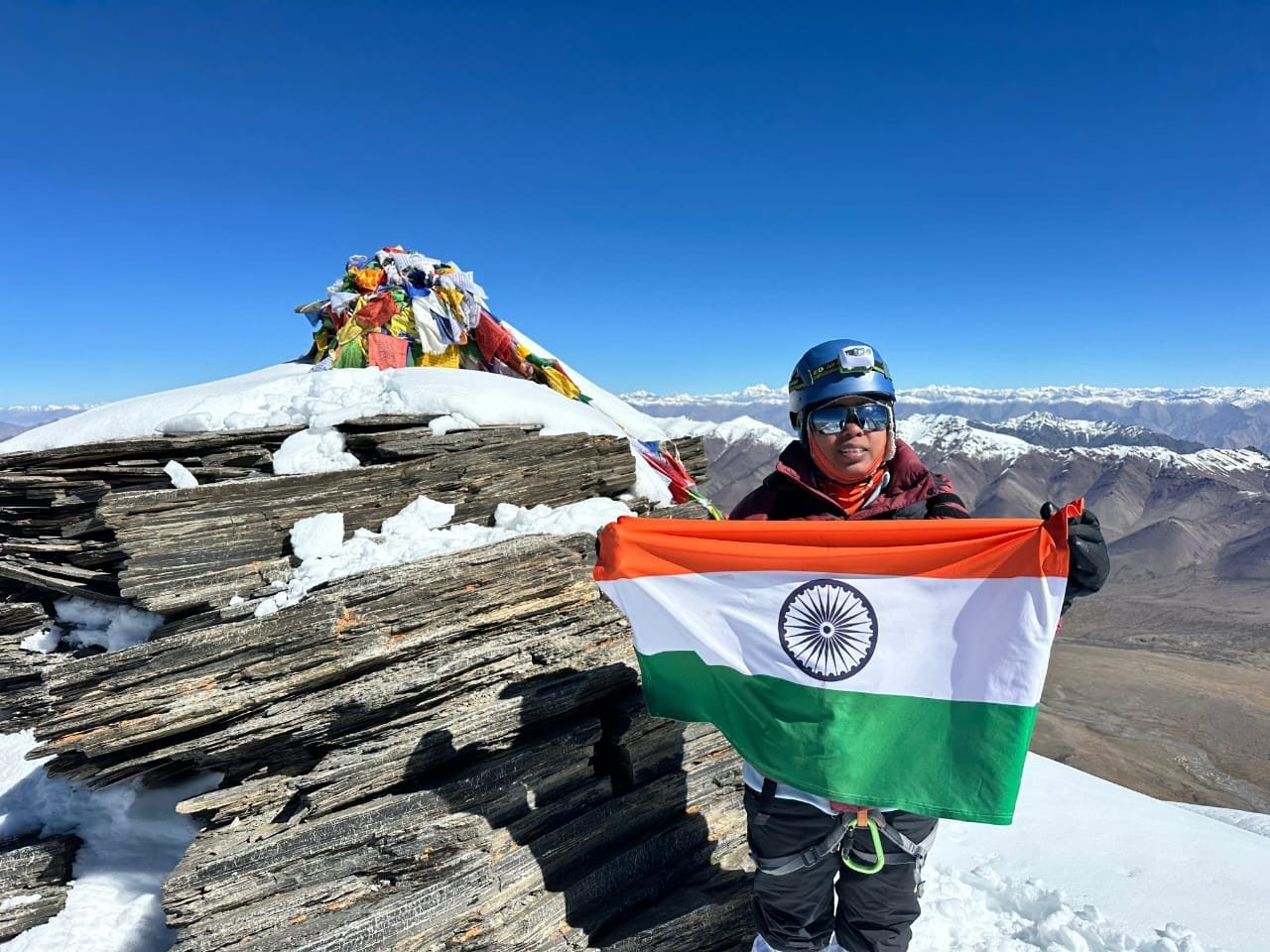
In the final leg, it took her approximately 21 hours to complete the 800-meter ascent with the aid of an oxygen cylinder. Finally, on May 22, 2026, she reached an altitude of 8,848 meters (29,031 feet) above sea level…She made history by hoisting the Tricolour atop the world’s highest peak. In that moment, she had conquered not just Everest, but also the social and economic circumstances that had made her path difficult since childhood.
- However, in the world of mountaineering, the true victory lies not in reaching the summit, but in returning safely.
According to Amita, the descent from Everest was far more difficult than the ascent. While the excitement of reaching the summit provides the drive to move forward, the body is utterly exhausted during the return journey, and even a minor slip can prove fatal. Oxygen deprivation disrupts the coordination between the body and the mind; one loses track of location and distance covered. During the descent, she encountered a fellow climber who was utterly exhausted and lying prostrate. Her Sherpa, Dawa Galjin, encouraged the climber and urged him to move along with them. Yet, pausing even for a few minutes on the route from the summit is extremely difficult and perilous. Amita kept moving slowly; oxygen levels were so low that her memory was failing her, and she does not even recall the hardships that followed.
After an arduous struggle spanning 42 days, Amita finally managed to reach Base Camp. Upon arrival, she faced yet another crisis: her fingers had begun to suffer tissue damage due to the prolonged exposure to freezing conditions—a condition known as frostbite. She was hastily airlifted from Base Camp to Kathmandu, where she underwent treatment for about a week. Once her health improved, she returned to India. Back home, Amita’s face reflects both pride and the deep contentment of having realized her dream.
The Tricolour hoisted atop Everest represents more than just the success of a mountaineering expedition; it is the story of the indomitable courage, struggle, and determination of a daughter of Chhattisgarh—a woman who refused to let adversity stand in the way of her goal. This story illustrates that the magnitude of one’s dreams is determined not by economic circumstances, but by the courage to pursue them. When personal determination, hard work, and institutional support converge, even an ordinary daughter from Champa can scale the world’s highest peak and make her entire state hold its head high with pride.