




































- Agriculture in Chhattisgarh Gains New Momentum; Scenario Transforming from Farm to Market
Chhattisgarh has long been known as the ‘Rice Bowl,’ but thanks to initiatives by Chief Minister Vishnu Deo Sai’s government, the state’s agriculture sector is now evolving beyond its traditional identity. Efforts ranging from improved farm yields to the adoption of modern technology, irrigation, crop diversification, processing, and market access have turned agriculture into a catalyst for a comprehensive transformation of the rural economy. This impact is visible not only in crop production but also in sectors such as horticulture, animal husbandry, and fisheries.
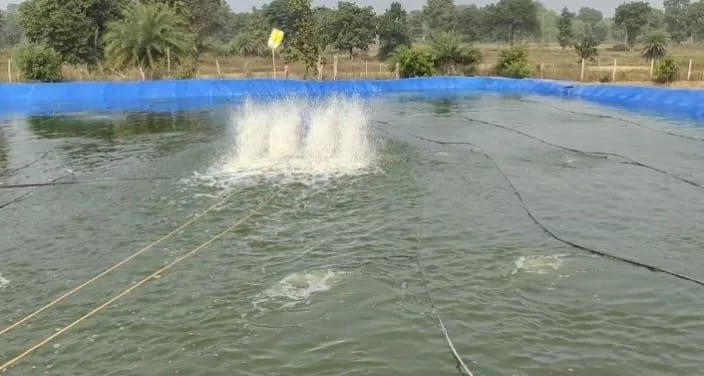
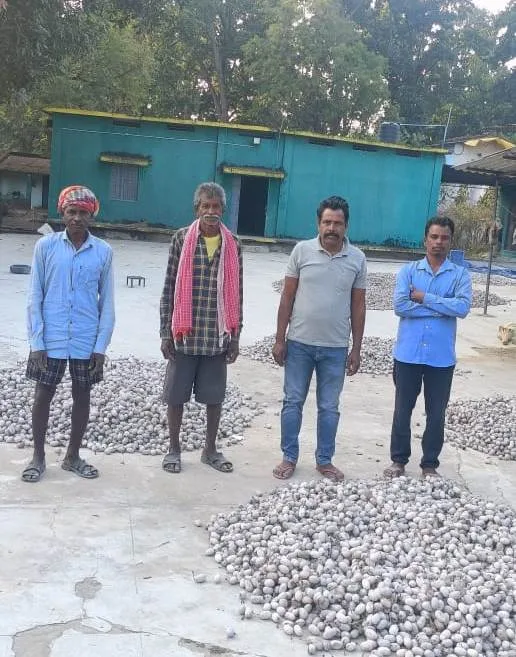
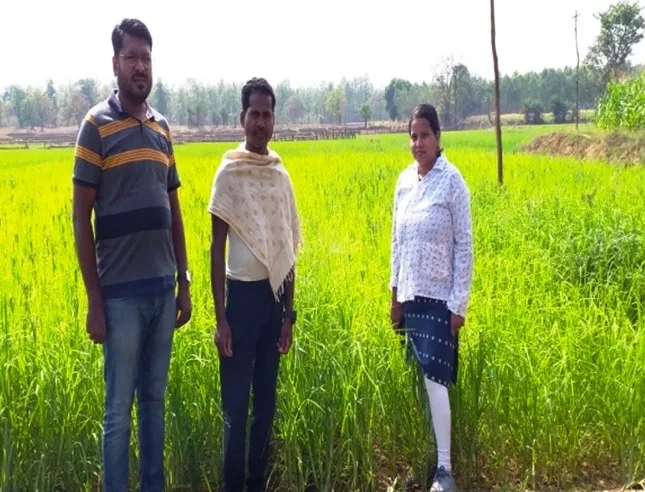
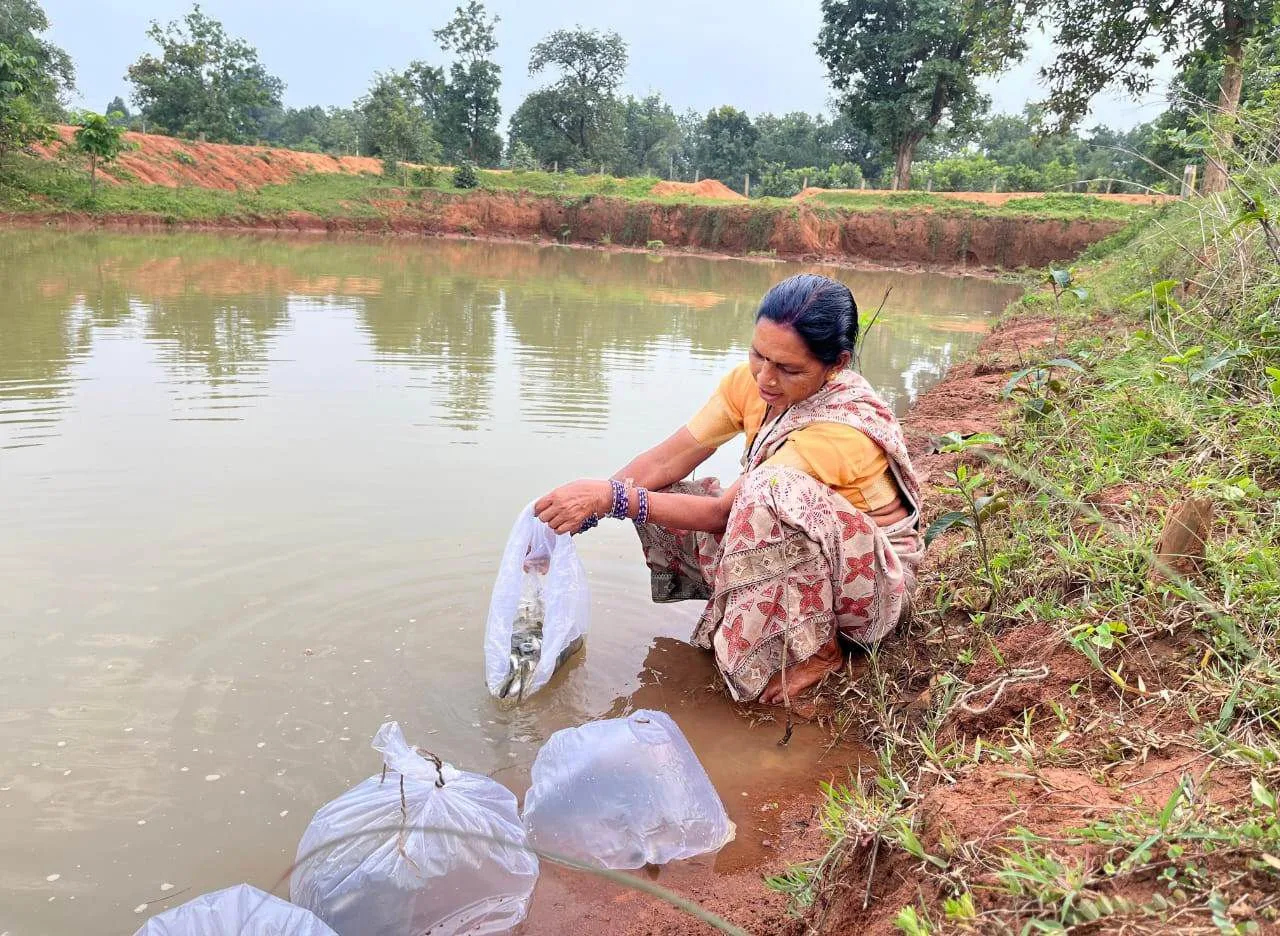
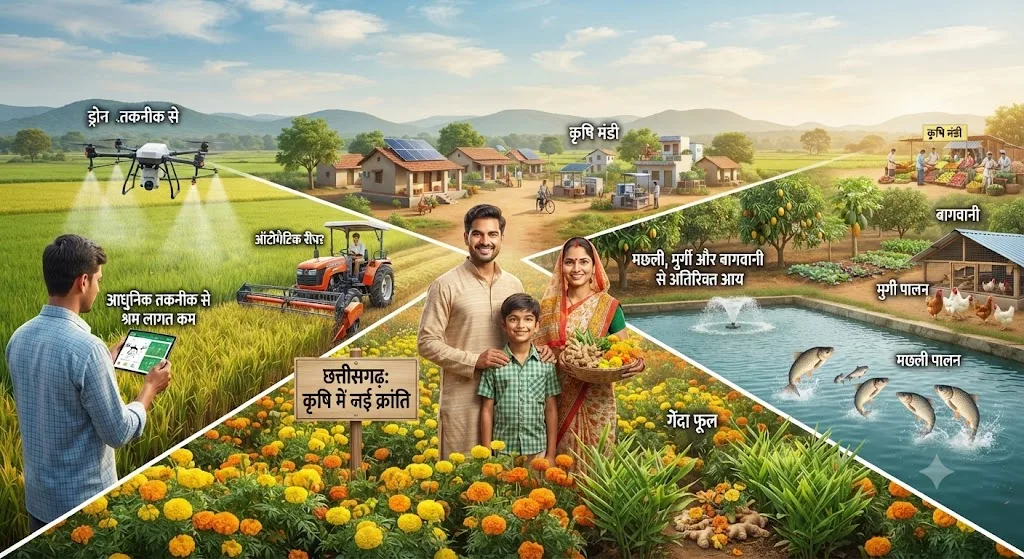
Beyond traditional paddy cultivation, the farming of modern and cash crops—such as ginger, marigolds, horticultural produce, and fish—is rapidly changing the lives of farmers in Chhattisgarh. Farmers are no longer restricted to paddy alone; they are earning profits worth lakhs of rupees per acre by cultivating ginger, marigolds, and other flowers. Young farmers are integrating fish farming, poultry rearing, and horticulture to transform their fields into hubs of income generation. In rural areas, the use of drone technology, automatic reapers, and modern agricultural equipment is reducing labor costs while boosting yields.
During the tenure of the Vishnu Deo Sai government—spanning over two and a half years—the state has recorded a significant increase in both the cultivated area and overall production. Official data indicates a rise of approximately 17 percent in Kharif crop production and nearly 20 percent in Rabi crop production. This transformation is not merely the result of cultivating more land; it is largely driven by farmers’ improved access to quality seeds, fertilizers, irrigation facilities, and agricultural mechanization.

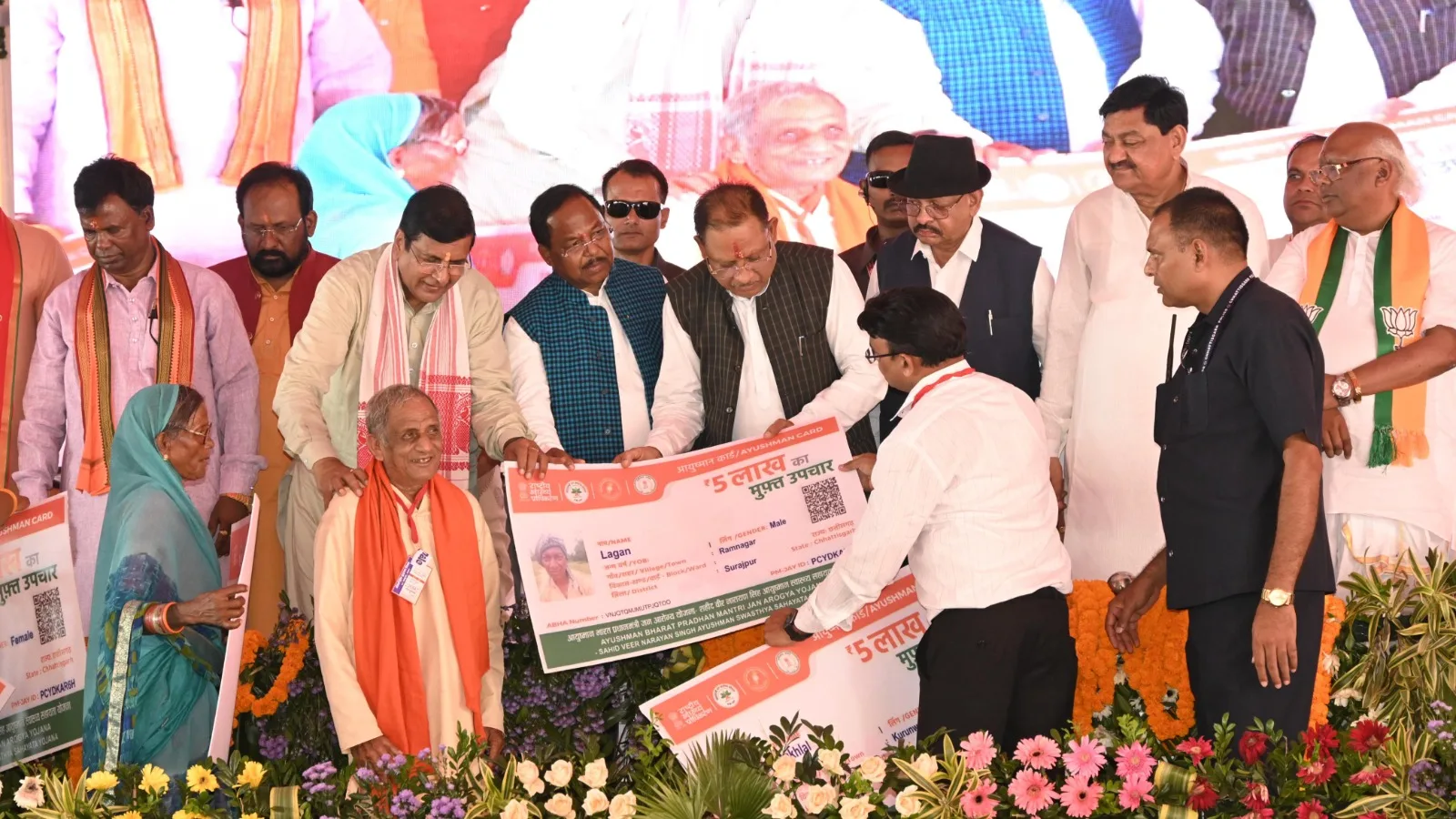
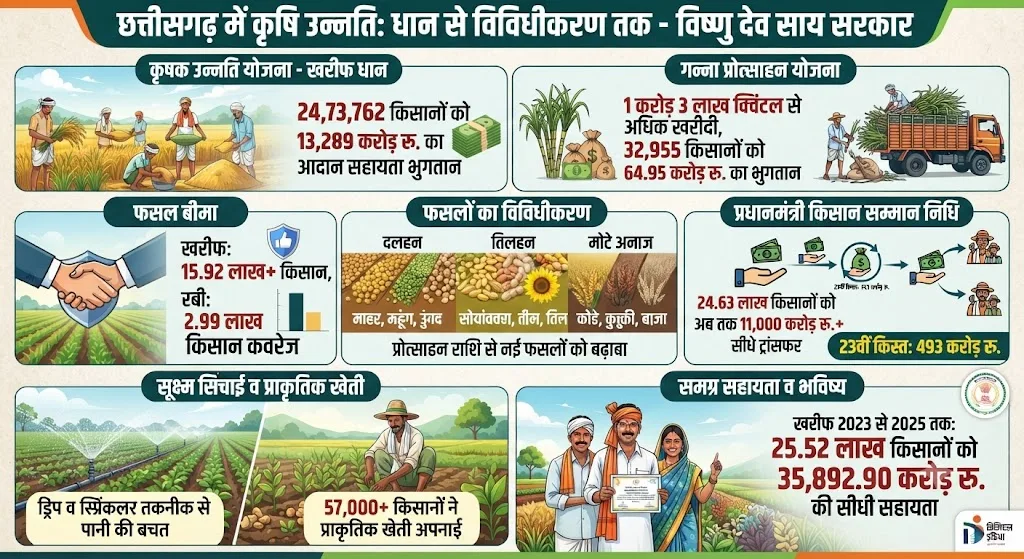
Another crucial aspect of the agricultural policy relates to farmers’ income and crop selection. Significant strides have been made over the past two and a half years to ensure financial security for farmers alongside increased production. Under the Krishak Unnati Yojana, a sum of ₹13,289 crore was paid to 2,473,762 farmers as input assistance linked to the Minimum Support Price (MSP) for Kharif paddy. Under the Sugarcane Incentive Scheme, ₹64.95 crore was paid to 32,955 farmers following the procurement of over 103.34 lakh quintals of sugarcane. Furthermore, more than 15.92 lakh farmers during the Kharif season and 2.99 lakh farmers during the Rabi season were brought under the ambit of crop insurance.
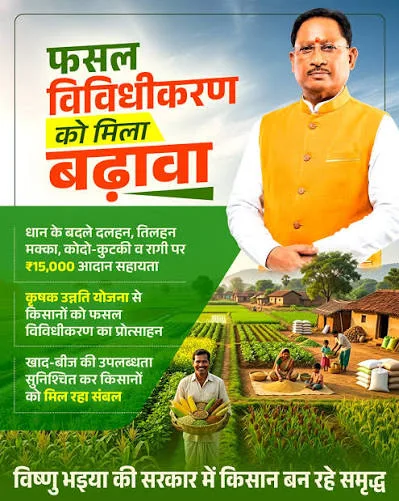
The Vishnu Deo Sai government’s Krishak Unnati Yojana is playing a pivotal role in providing economic security alongside production support to farmers. From the Kharif season of 2023 through 2025, financial assistance totaling ₹35,892.90 crore has been directly transferred to the bank accounts of approximately 25.52 lakh farmers.
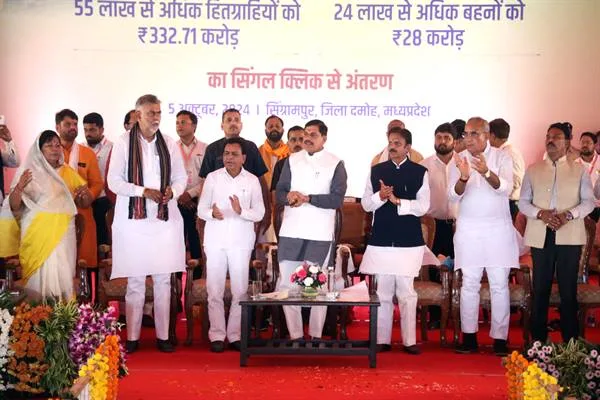
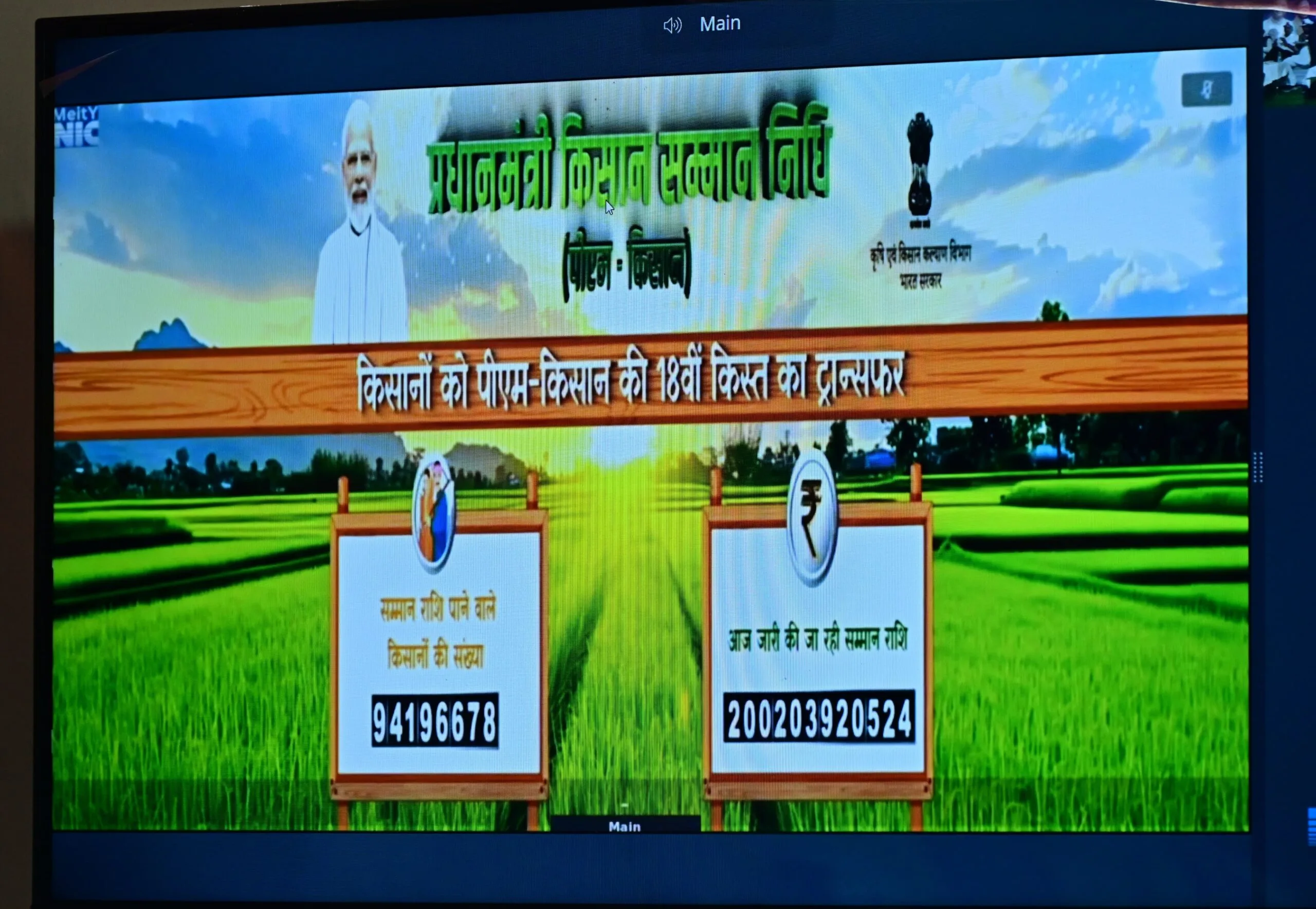
Paddy is the primary crop of Chhattisgarh, earning the state the title of the “Rice Bowl.” However, the state government is now emphasizing crop diversification to enable farmers to cultivate other crops as well. To encourage crop diversification, the government is providing an incentive of ₹15,000 per acre to farmers. This scheme offers incentives to promote the cultivation of pulse crops—such as Arhar (pigeon pea), Moong (green gram), Urad (black gram), and Chana (chickpea)—and oilseed crops like soybean, groundnut, sunflower, and sesame. Additionally, benefits under this scheme are available for cultivating maize, cotton, and coarse grains (millets) such as Kodo, Kutki, Ragi, and Bajra. To bolster farmers’ income and mitigate risk, a total of over ₹11,000 crore—including ₹493 crore as the 23rd installment—has been directly transferred to 24.63 lakh farmers in the state under the Pradhan Mantri Kisan Samman Nidhi scheme.
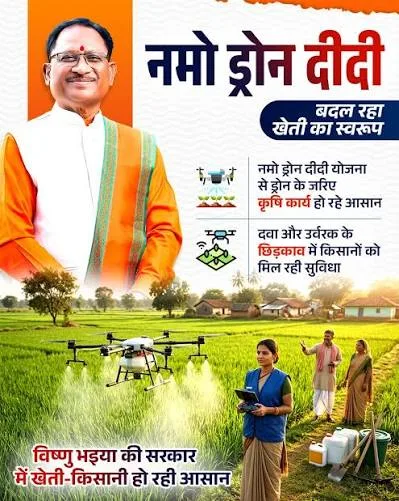
The adoption of new agricultural technologies is increasing rapidly, and farmers in Chhattisgarh are not lagging behind in embracing these advancements. Small farmers are gaining access to expensive machinery on rent through ‘Farm Machinery Banks’ established in villages, thereby reducing both their physical toil and operational costs. Micro-irrigation techniques—such as drip and sprinkler systems—have expanded under the ‘Pradhan Mantri Krishi Sinchayee Yojana,’ resulting in significant water conservation. Furthermore, the adoption of natural farming by over 57,000 farmers last year signals a sustainable future for agriculture.
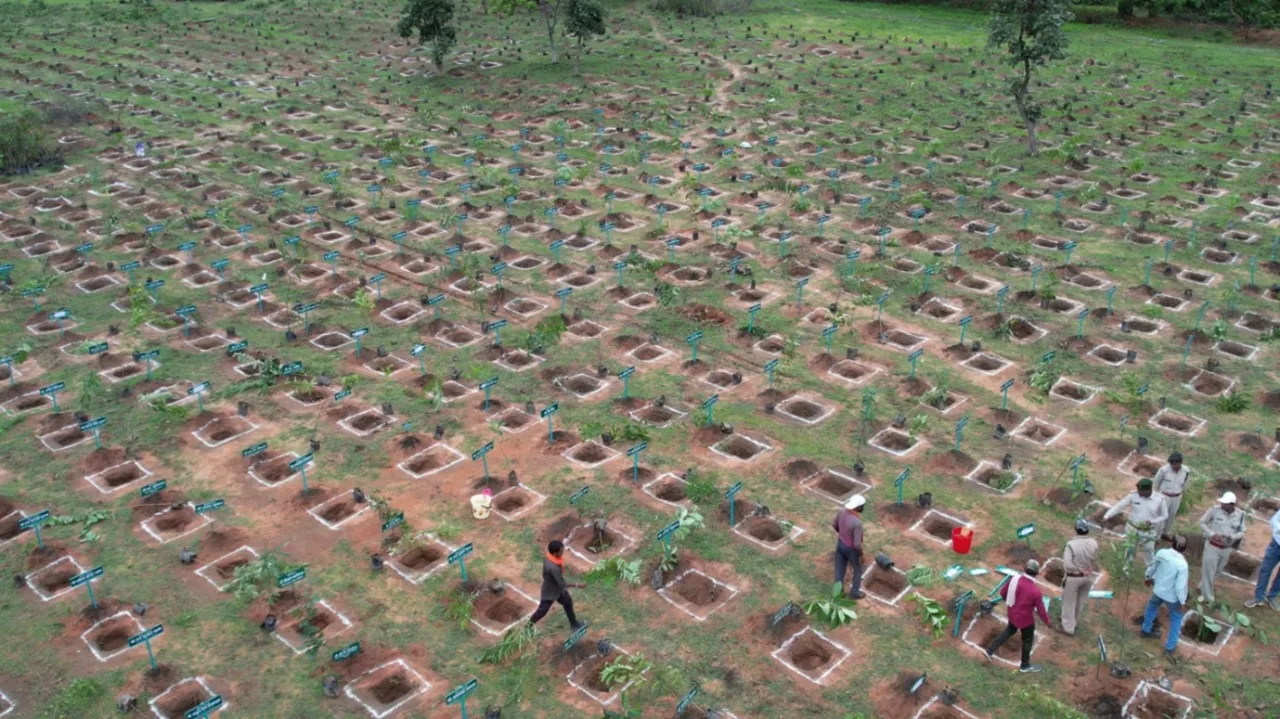
Horticulture represents another significant chapter in Chhattisgarh’s agricultural story. Over the past two and a half years, the area under horticulture has grown from 8.42 lakh hectares to 8.91 lakh hectares. The expansion of crops such as oil palm and bamboo, alongside fruits, vegetables, spices, and flowers, is opening up new possibilities. The challenge now extends beyond merely increasing production to effectively linking it with markets, processing facilities, and better price realization. Preparations are underway to develop infrastructure such as pack-houses and Centers of Excellence to address this need.