







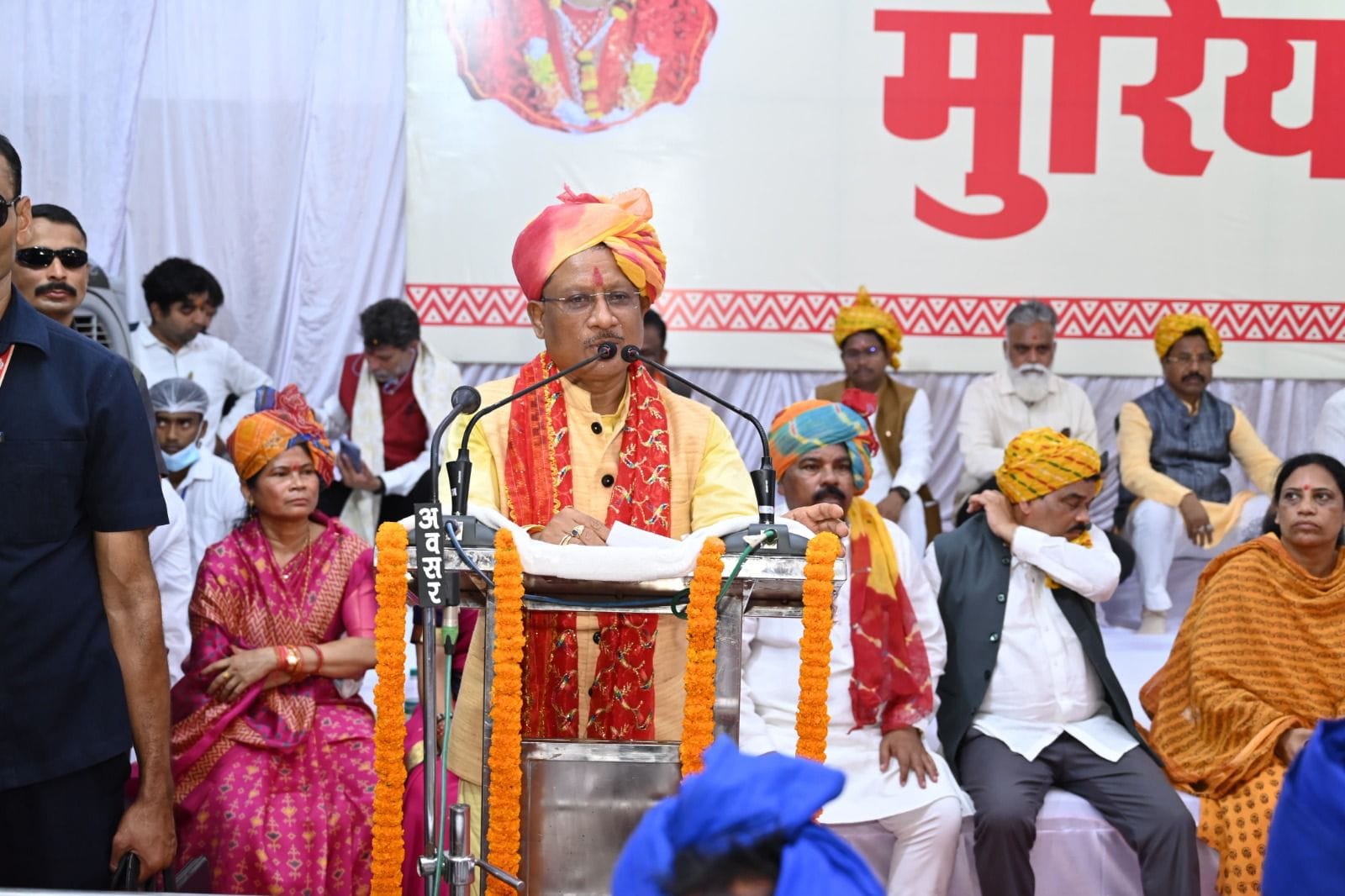
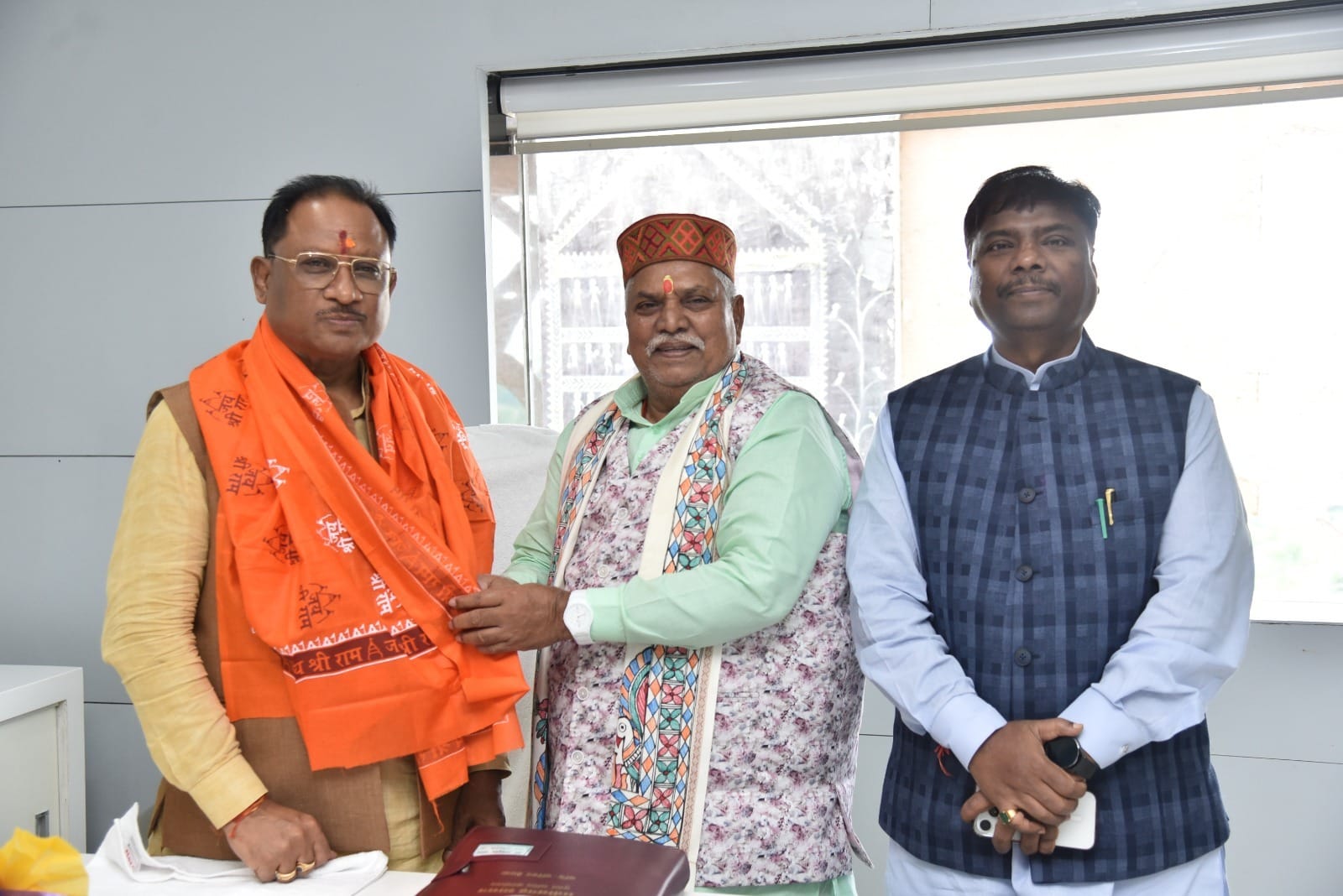
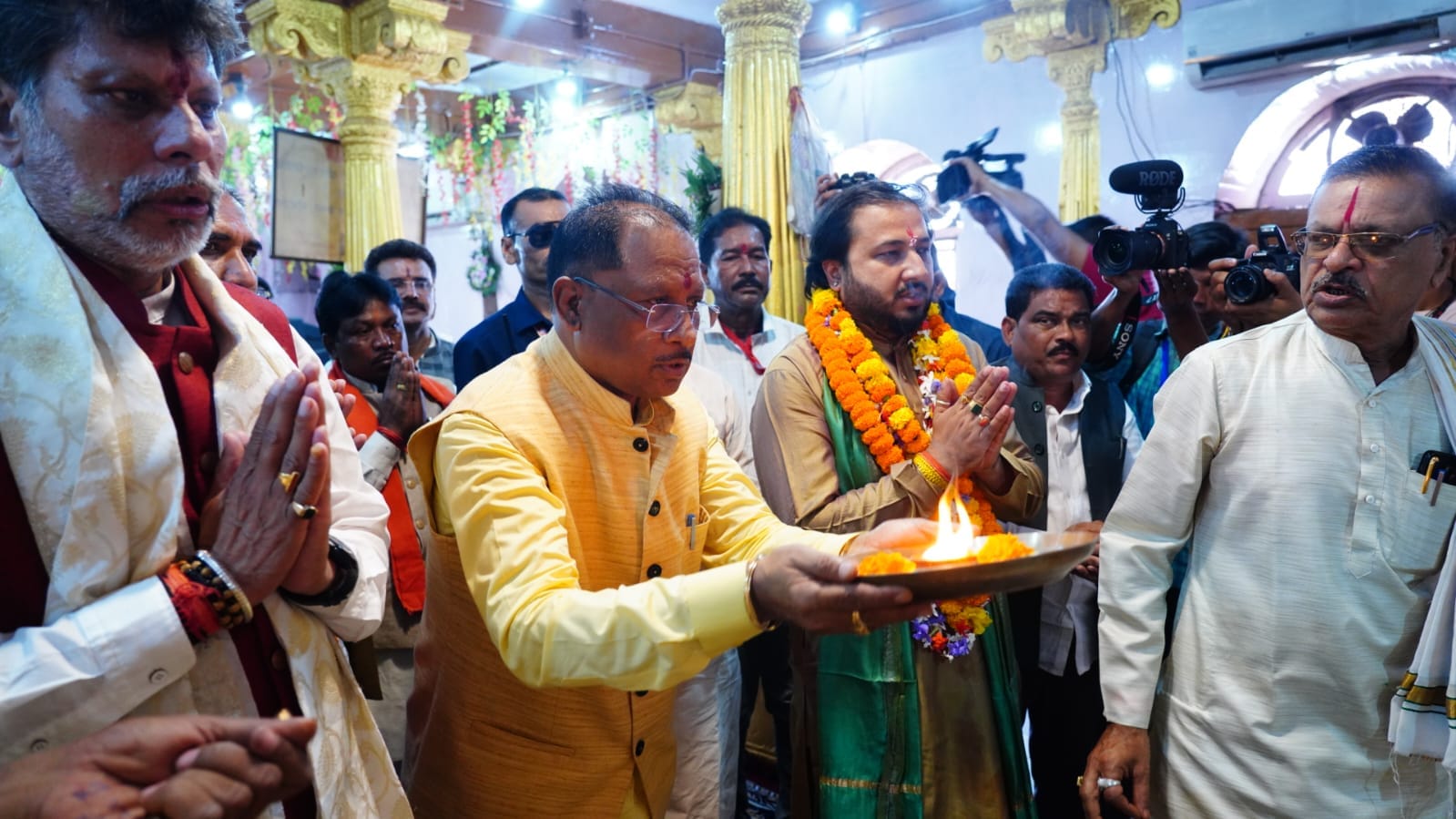
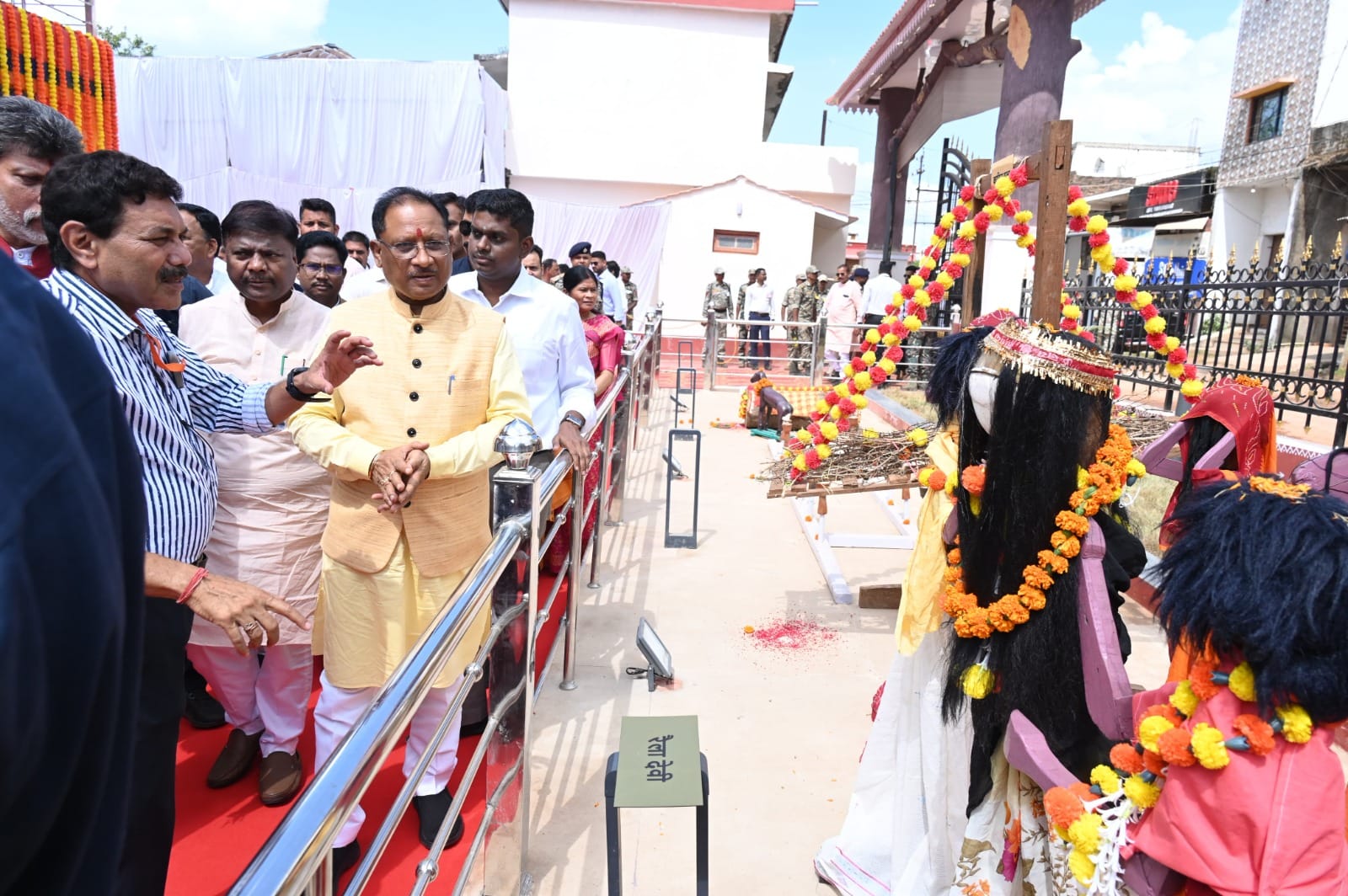




- Navratri is a grand festival dedicated to the worship of ‘Shakti’ (Divine Power) and the honoring of women: Chief Minister Shri Vishnu Deo Sai
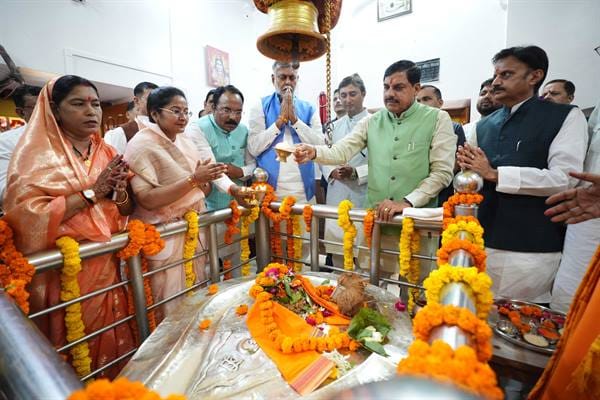
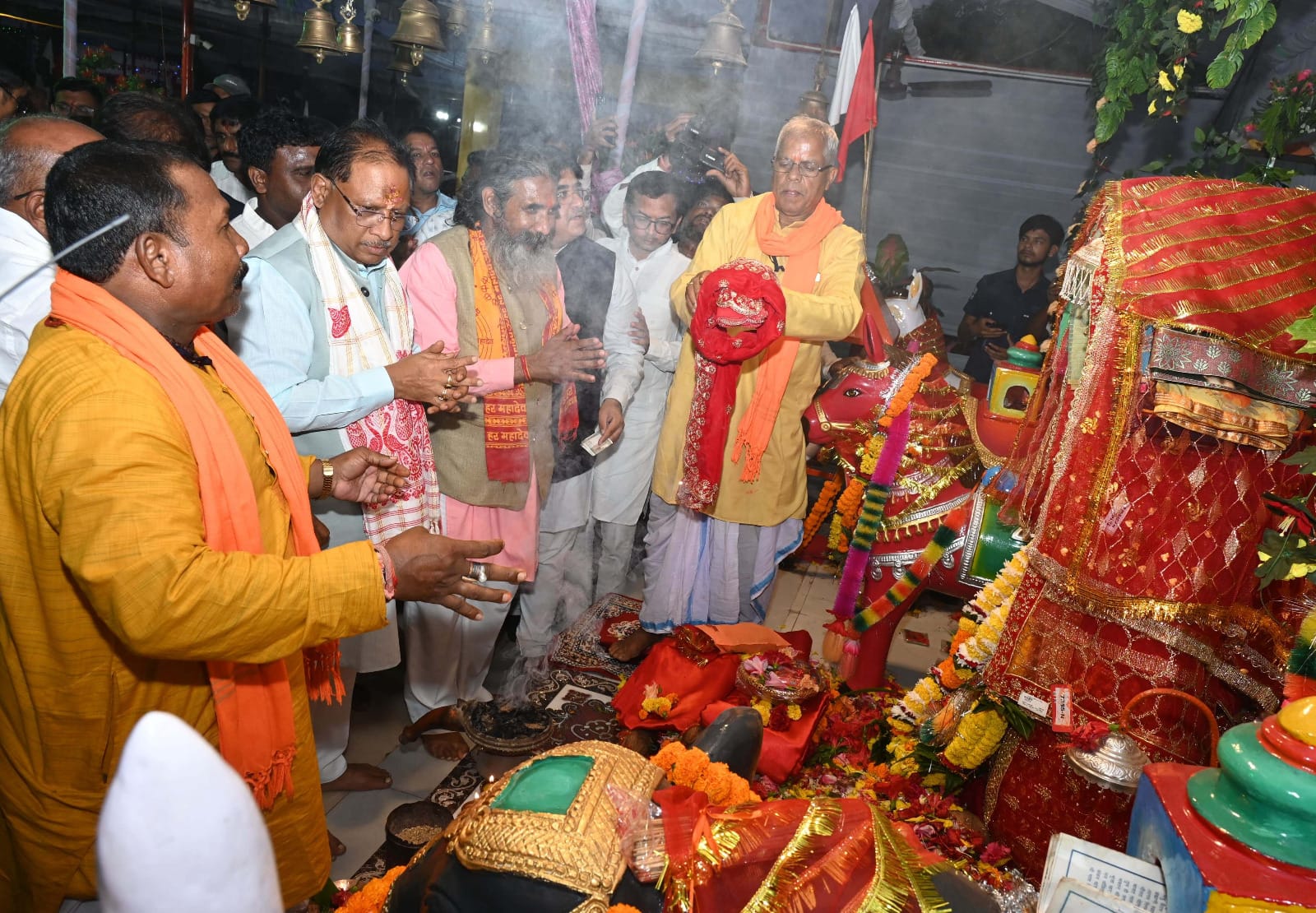
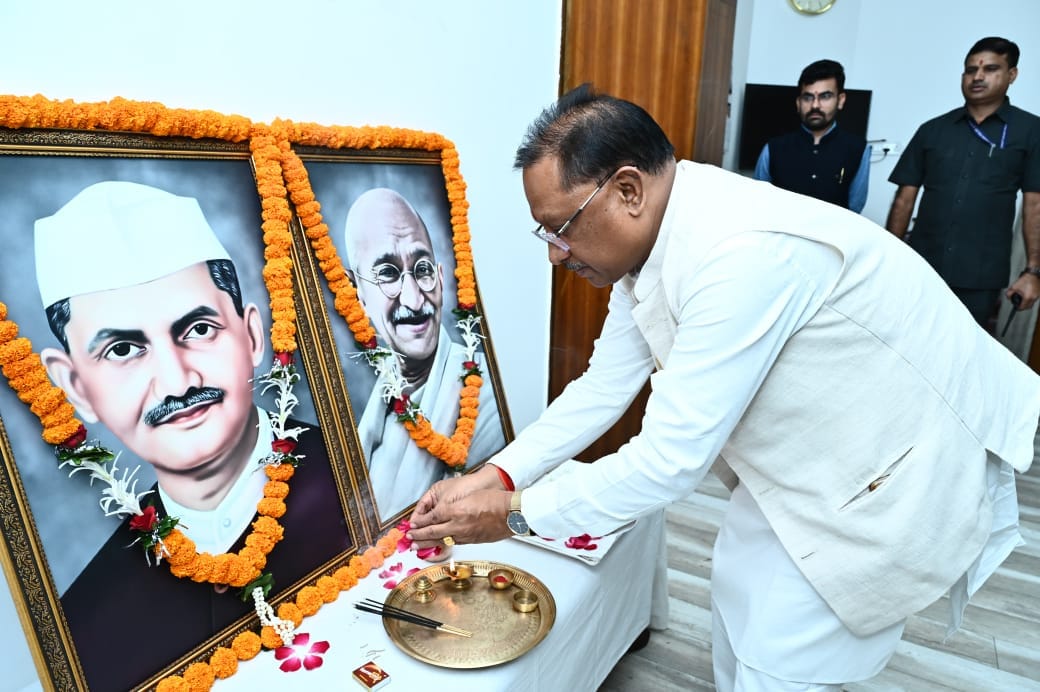
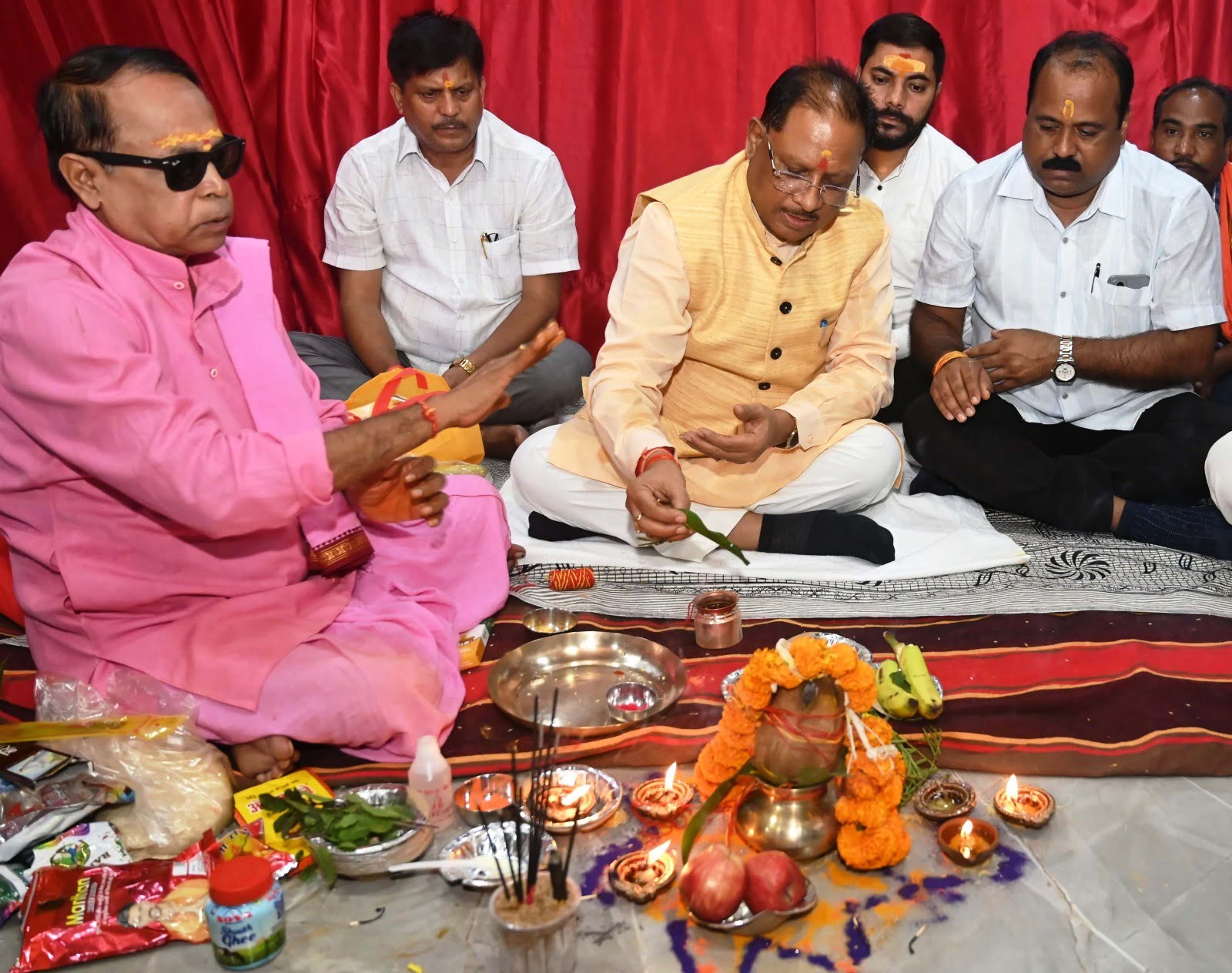
- The Chief Minister offered prayers to Goddess Durga, seeking happiness, prosperity, and well-being for the people of the state
- In our culture, ‘Nari Shakti’ (women’s power) holds the highest place; the respect and empowerment of our mothers and sisters remain a priority for the government: Chief Minister Shri Sai
- Through the ‘Mahtari Vandan Yojana’, approximately 6.8 million (68 lakh) women are receiving financial support, and 1.4 million (14 lakh) women in the state have become ‘Lakhpati Didis’ (financially empowered women)
- The state government is committed to the preservation and development of Chhattisgarh’s rich cultural heritage and its sacred ‘Shaktipeeths’ (seats of the Divine Feminine)
- The Gujarati community plays a significant role in the creation of a ‘Viksit Chhattisgarh’ (Developed Chhattisgarh): Chief Minister Shri Sai
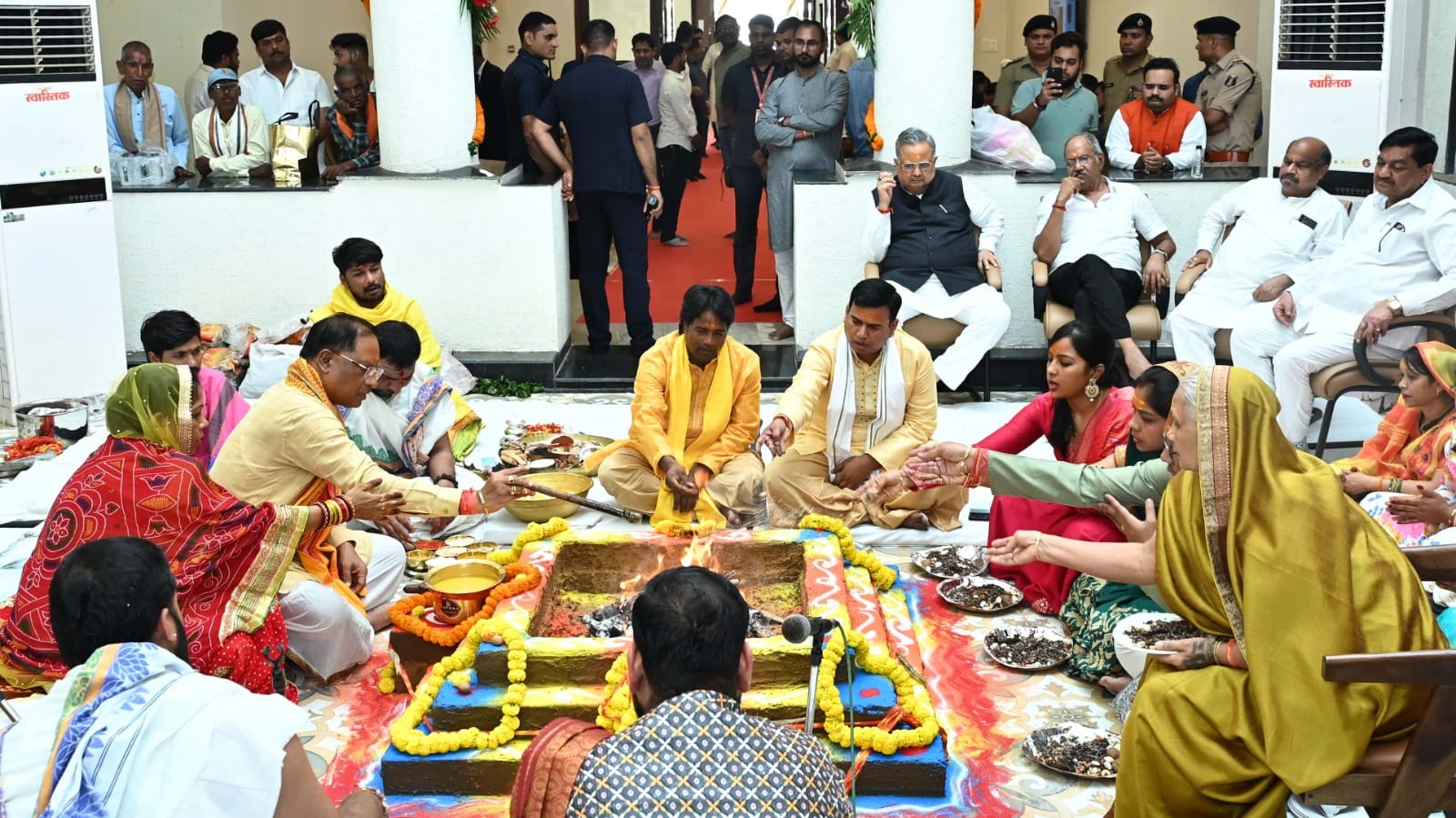
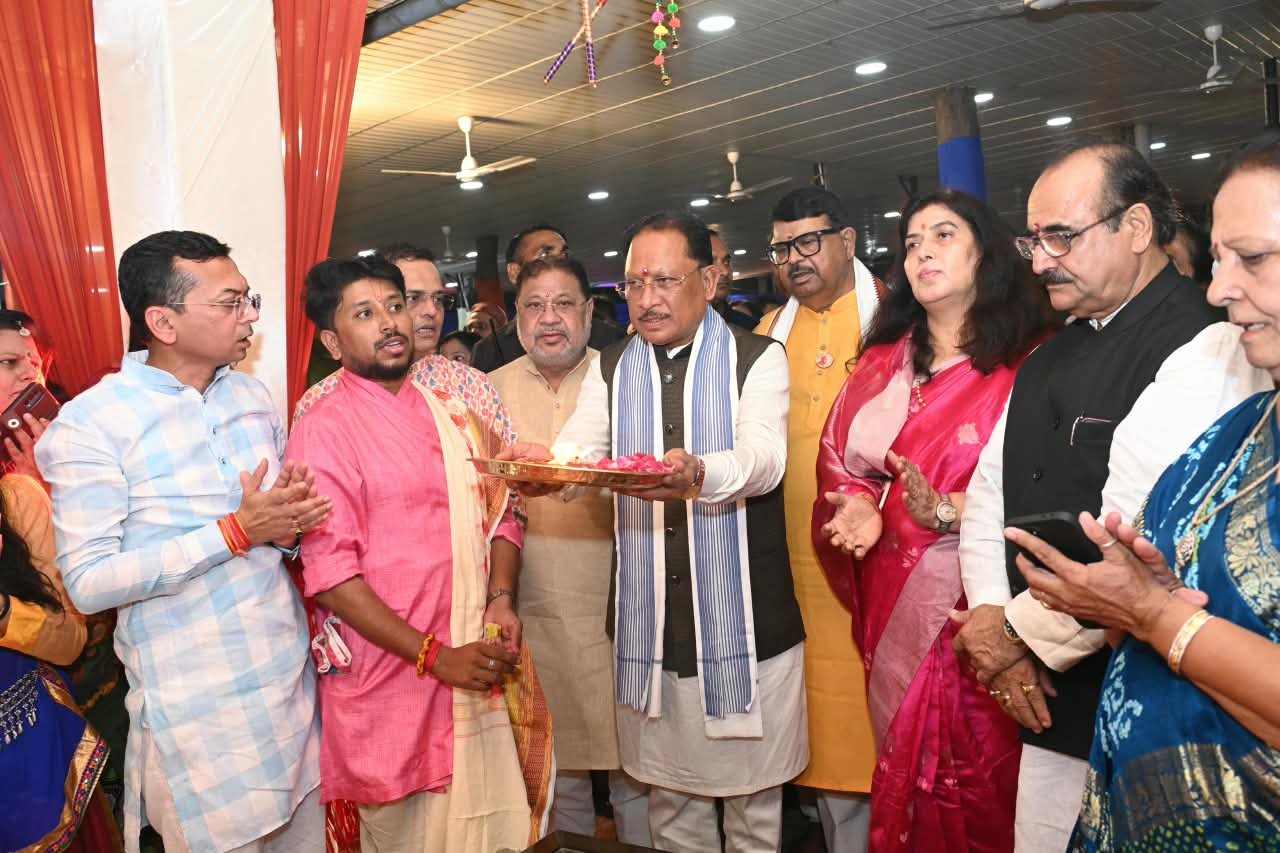
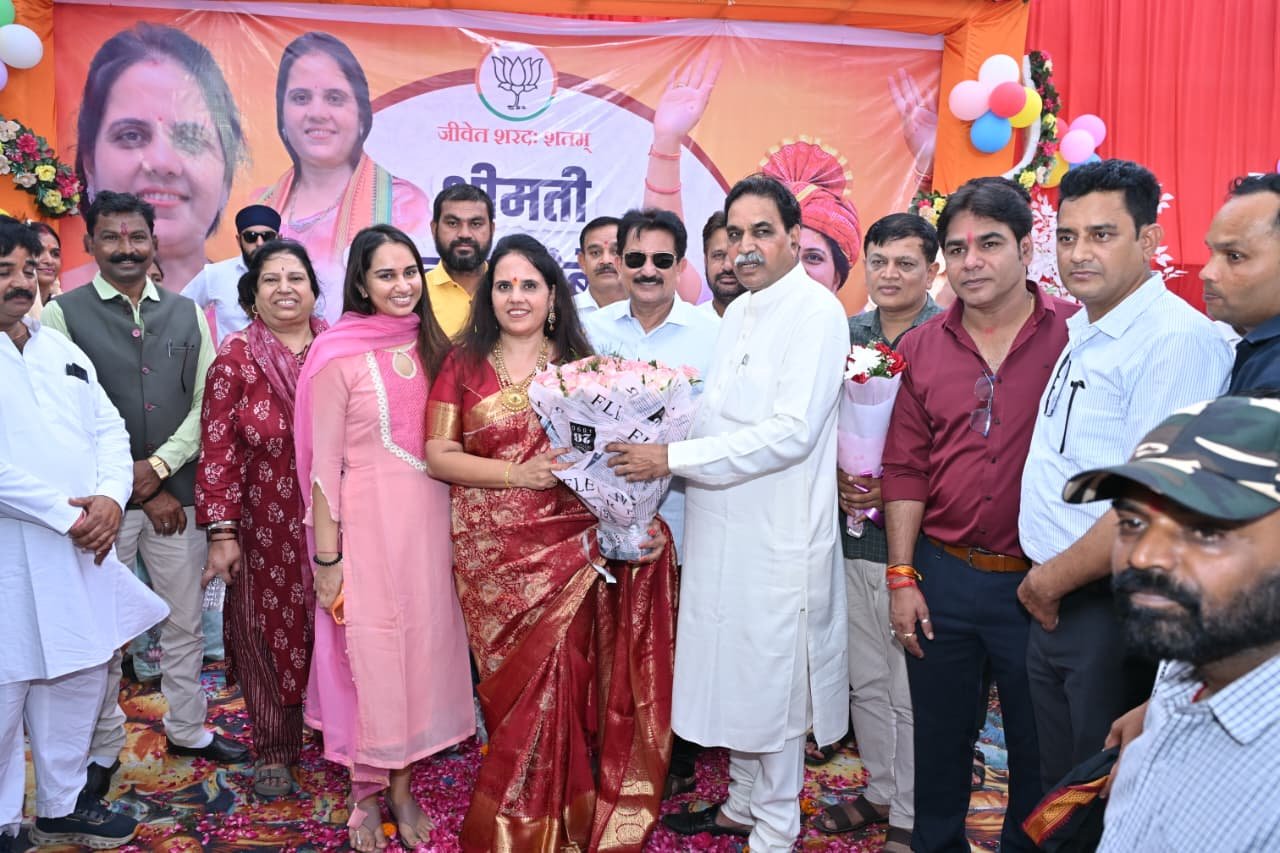
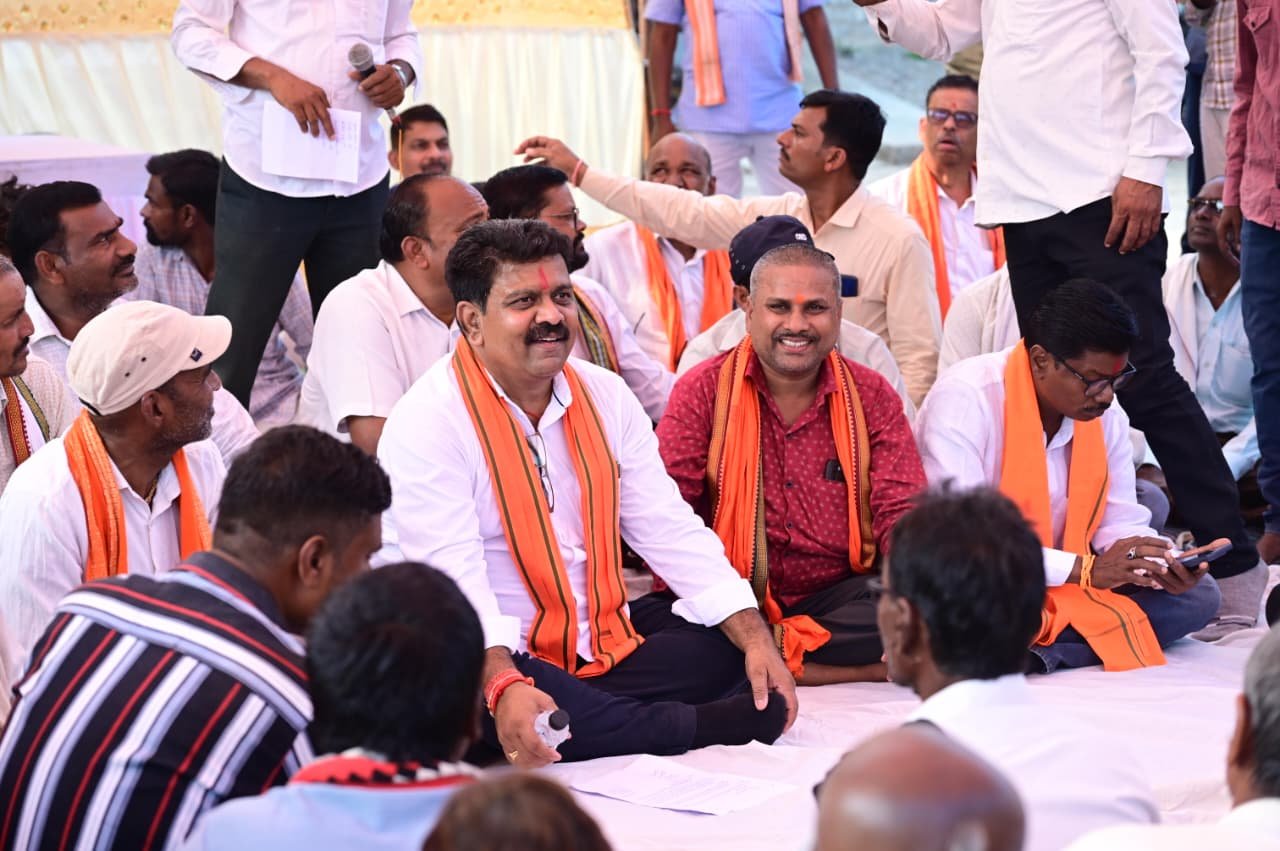
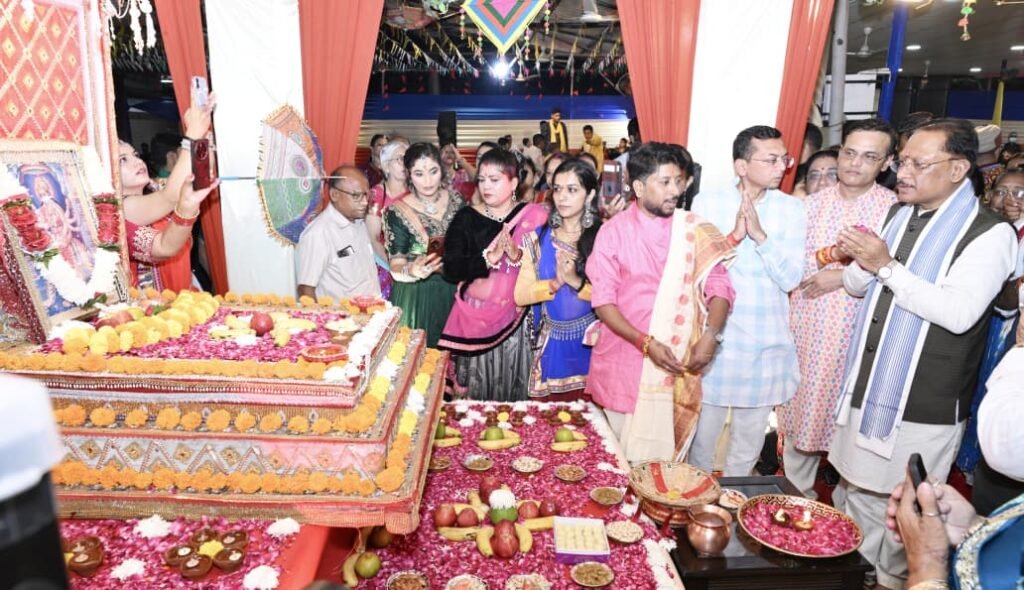
Today, the Chief Minister’s residence was filled with the spirit of Navratri devotion, the rhythmic beats of Garba, and an atmosphere of great joy. A large number of women, daughters, and members of the Gujarati community participated with immense enthusiasm in the Garba festival, held in the presence of Chief Minister Shri Vishnu Deo Sai. Dressed in traditional attire, the participants offered prayers to Goddess Durga and presented captivating Garba performances. Amidst devotional music and the rhythmic beats of Garba, the entire premises were immersed in a festive glow.
Chief Minister Shri Vishnu Deo Sai offered prayers to Goddess Durga, wishing for the happiness, prosperity, good health, and well-being of the state’s residents. He extended his heartfelt greetings and best wishes for ‘Shardiya Navratri’ to all the women, daughters, and devotees present.
Chief Minister Shri Sai stated that Navratri is a grand festival that embodies the worship of ‘Shakti’, deep faith, and the honoring of women. In our ‘Sanatan’ culture, women are revered as the embodiment of ‘Shakti’. This festival serves as a reminder of our responsibilities toward the respect, safety, and empowerment of women.

He added that Garba is not only a beautiful expression of faith and devotion toward Goddess Durga but also a symbol of our vibrant cultural heritage. The tradition of Garba, which originated in the land of Gujarat, is now celebrated with great enthusiasm across the entire country. Such events further strengthen the spirit of unity amidst the nation’s cultural diversity.
- Our Festivals: A Cultural Force That Binds Society Together
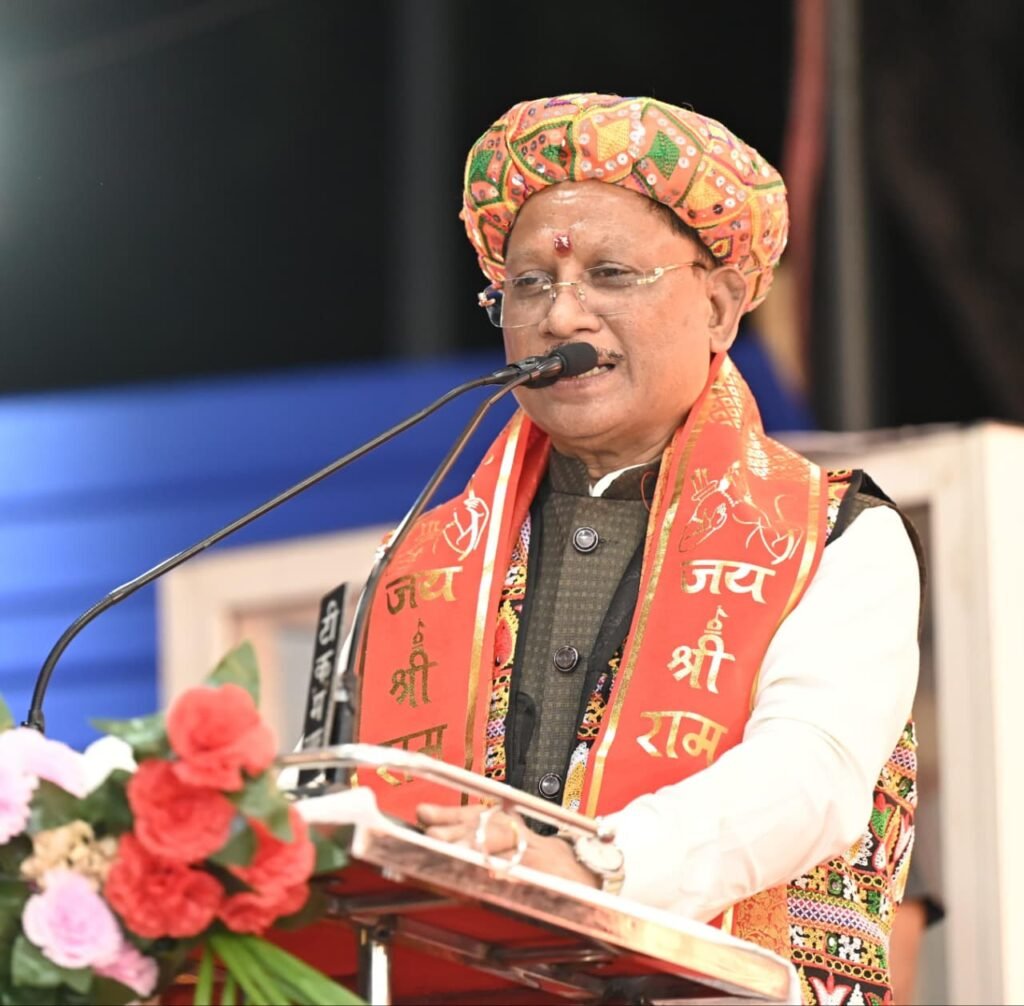
Chief Minister Shri Sai stated that India’s festivals and celebrations are not limited to religious faith alone. They serve as a vital medium for bringing families and society together, fostering mutual love, harmony, and brotherhood, while also introducing the younger generation to their own culture and traditions.
He noted that today, Garba has become a distinct hallmark of Indian culture, both within the country and globally. In Chhattisgarh, too, enthusiasm for Garba has been steadily growing. The participation of a large number of women—mothers, sisters, and daughters—makes this celebration even more special.
- Women’s Empowerment: A Key Priority for Our Government
Chief Minister Shri Sai emphasized that respecting ‘Nari Shakti’ (women’s power) is a core tenet of our culture, and making women self-reliant and empowered remains one of the state government’s top priorities. Under the leadership of the Honorable Prime Minister Shri Narendra Modi, unprecedented efforts are being made to integrate women into the mainstream of development, ensuring their social and economic empowerment.
He mentioned that in Chhattisgarh, through the ‘Mahtari Vandan Yojana,’ approximately 6.8 million (68 lakh) mothers and sisters are receiving financial assistance of one thousand rupees every month. This amount is credited directly into their bank accounts, providing them with the economic support needed to meet their personal requirements, as well as the needs of their families—including their children’s education and healthcare.
The Chief Minister shared that 1.4 million (14 lakh) women in the state have now become ‘Lakhpati Didis’ (women earning an annual income of at least one lakh rupees). This stands as a testament to the hard work, capability, and self-confidence of our women. It is our firm resolve that the women of Chhattisgarh should not merely be beneficiaries of government schemes, but should also play a leading role in the creation of a developed Chhattisgarh. From Mata Kaushalya to Maa Danteshwari: The Land of Chhattisgarh as a Sacred Ground for the Worship of ‘Shakti’ (Divine Feminine Power)
Chief Minister Shri Sai stated that Chhattisgarh is the sacred land of Mata Kaushalya, where a rich tradition of worshipping ‘Adishakti’ (the Primordial Divine Feminine Power) has flourished for centuries. The state is home to several revered shrines—such as those of Maa Danteshwari in Bastar, Maa Bamleshwari in Dongargarh, Maa Mahamaya in Ratanpur, and Maa Chandrahasini in Chandrapur—which serve as key centers of faith and cultural identity.
He noted that during the festival of Navratri, a vast multitude of devotees gathers at these shrines, from Dantewada to Dongargarh and Ratanpur to Chandrapur. The entire state of Chhattisgarh becomes immersed in the worship of ‘Shakti’. These ‘Shaktipeeths’ (seats of divine power) are not merely centers of faith; they are also vital symbols of our cultural heritage and identity.
The Chief Minister remarked that under the leadership of Prime Minister Shri Narendra Modi, the nation is progressing with the vision of “Development as well as Heritage” (Vikas bhi, Virasat bhi). A modern India is being built while taking pride in its own culture and glorious traditions. In line with this spirit, the Government of Chhattisgarh is committed to preserving and promoting the state’s religious, spiritual, and cultural heritage. Continuous efforts are underway to develop these prominent shrines and expand the facilities available to devotees.
- The Significant Role of the Gujarati Community in a Developed Chhattisgarh
Appreciating the contributions of the Gujarati community, Chief Minister Shri Sai stated that they have carved a distinct niche for themselves in the nation’s development through their entrepreneurship, hard work, spirit of service, and social unity. In Chhattisgarh, too, the Gujarati community plays a significant role in the state’s progress through its involvement in trade, industry, education, public service, and various social initiatives..is making a contribution.
He stated that Chhattisgarh has always been characterized by its warm and inclusive embrace of all communities and cultures. The Gujarati community, too, has made significant contributions to the socio-cultural journey of Chhattisgarh by adopting it as their land of work (karmabhumi). This participation from the community is vital in realizing the vision of a ‘Developed Chhattisgarh’ alongside the broader goal of building a ‘Developed India’ (Viksit Bharat).
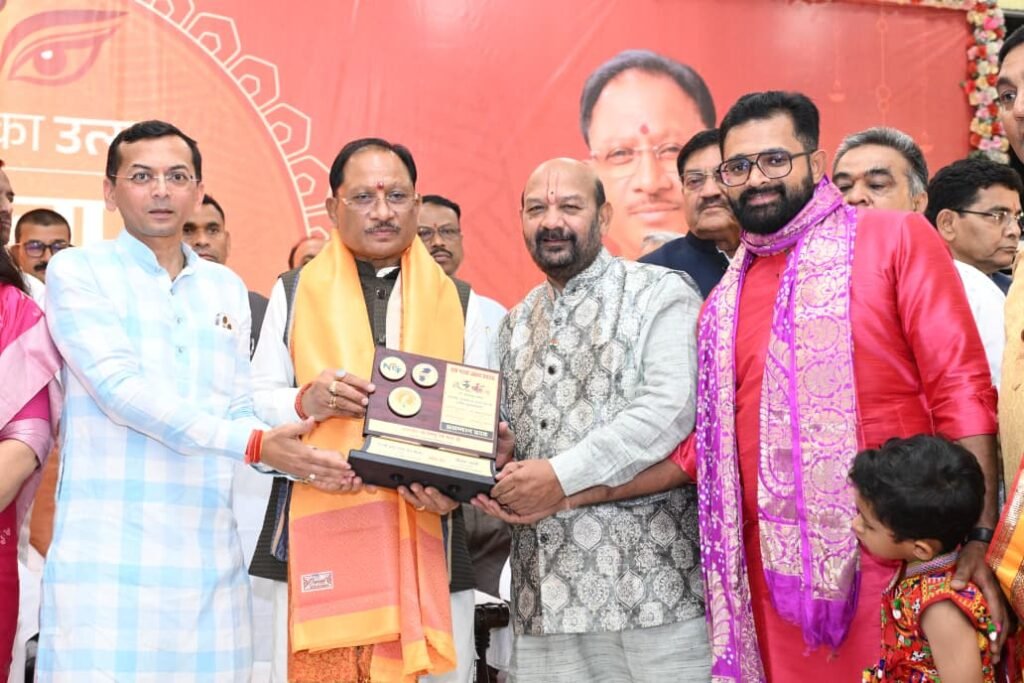
Chief Minister Mr. Sai remarked that Navratri conveys a message of strength, positivity, and collective spirit. He expressed his wish that, with the blessings of the Divine Mother (Mata Rani), Chhattisgarh may continue to advance on the path of progress, and that every family may be graced with happiness, peace, and prosperity.
Present on this occasion were Cabinet Minister Mr. Ramvichar Netam, School Education Minister Mr. Gajendra Yadav, Revenue Minister Mr. Tank Ram Verma, Food Minister Mr. Dayaldas Baghel, and Minister for Technical Education and Skill Development Guru Khushwant Saheb. Also in attendance were the chairpersons and vice-chairpersons of various commissions and boards; Mr. Pritesh Gandhi, State President of the Sarv Gujarati Samaj Chhattisgarh; former MLA and President of the N.R. Gujarati Association Chhattisgarh, Mr. Devji Patel; President of the Gujarati School, Mr. Jayanti Patel; as well as other prominent members of the Gujarati community—including Mr. Mitul Kothari, Mr. Nitin Dholakia, Mr. Mahendra Kodiyar, Mr. Babu Bhai Patel, Mr. Ashok Patel, Mr. Mukesh Shah, Mr. Gaurang Kacha, Mr. Kirti Vyas, and Mr. Rajendra Faujdar—along with a large number of devotees.