












































































Since the Satyayuga, the system of governance in
India has been based on the eternal Vedic principles of Dharma.
India has always fulfilled the responsibility of being a world
leader, working for the welfare of the entire world, based on the
principle of king and subjects. According to contemporary
records, the objective of our country’s independence was to re-
assume India’s responsibility as a world leader. Whenever India
deviated from the system of Dharma, chaos, unrighteousness,
and sin increased in the country and the world. To rid India of
this chaos, God has incarnated 24 times so far to re-establish the
rule of Dharma.
These days, the situation of sin, unrighteousness, and chaos
in India has again reached its peak. To resolve this tragic
situation, India’s revered Shankaracharya and many other great
saints are currently leading a campaign to re-establish the rule
of Dharma in the country. It is heartening to note that millions
of Hindu activists, both in India and in many countries around
the world, are joining this campaign. The Sindhi community has
always been a conservative Hindu community. Therefore, the
Sindhi community should play an active role in this campaign to
establish the rule of Dharma in the country, led by the revered
Shankaracharyas of India.
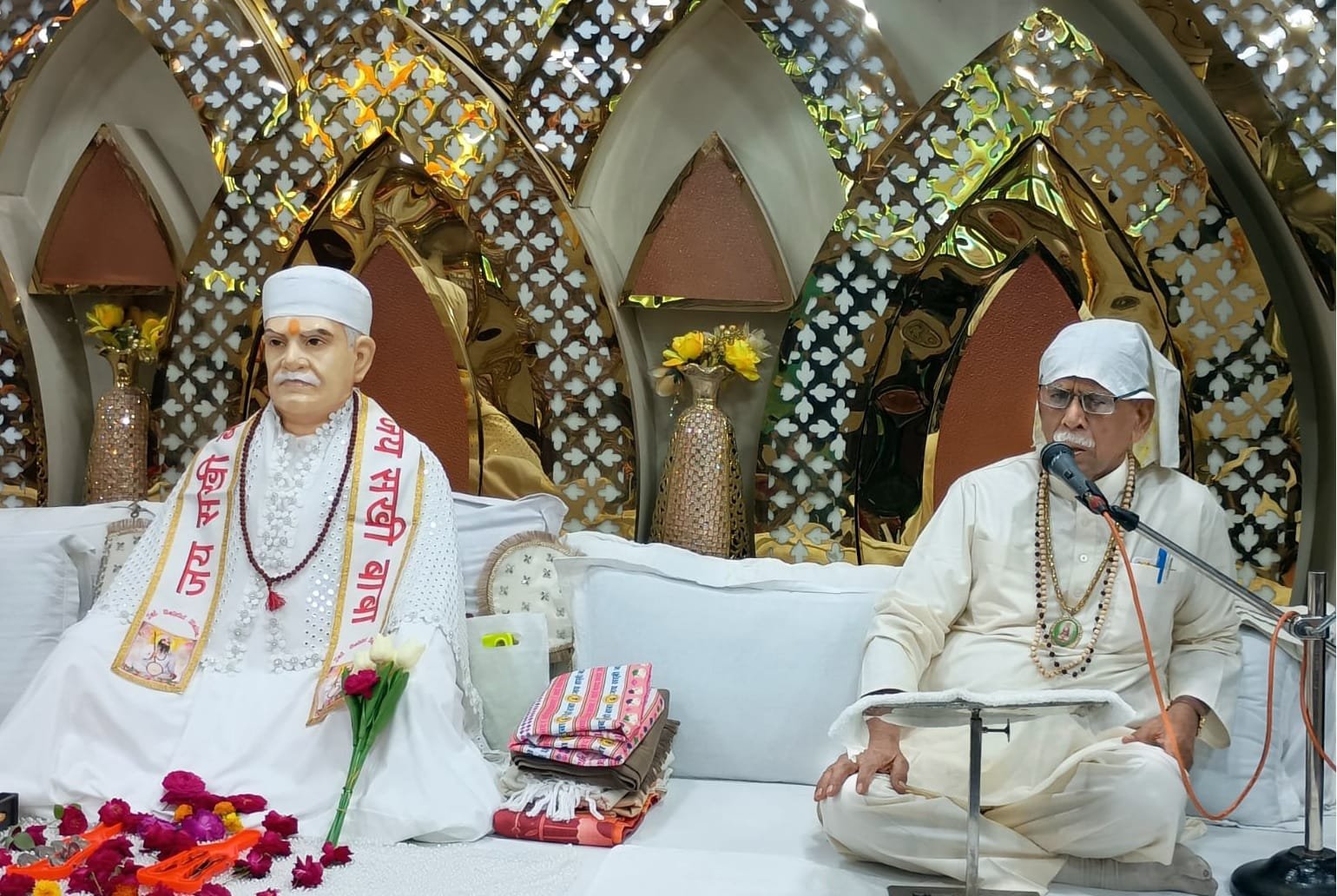
This call was made by Sai Jalkumar Masand Sahib, the
head of the Masand Sevashram Raipur, while addressing a
satsang held recently at the renowned Shiv Shanti Sant
Asudaram Ashram in Lucknow and a joint meeting of the key
officials of various Sindhi community organizations formed in
India and other countries. Sai Masand Sahib is also the
organizing secretary of Param Dharma Sansad 1008, an
international Hindu organization of 108 countries formed under
the chairmanship of all four Shankaracharyas to achieve this
goal. It is noteworthy that this campaign has been underway in
the country at the initiative of Sai Masand since September 2012.
Sai Masand Sahib explained that the Sindhi community
has played a significant role in the fields of Sanatan vedic
religion, nationalism and public welfare for thousands of years.
Current paleography scientists have recently confirmed that the
stone inscriptions of the Indus Valley Civilization, which have
now been deciphered thousands of years ago, contain verses
from the Vedic scriptures. Sindhi traders of the time, living a life
of eternal Vedic culture, traveled to many countries by sea for
long periods of time to conduct trade. Their lifestyle, steeped in
eternal Vedic culture, influenced the citizens there. Thus, they
have played a significant role in India’s rise to becoming the
Vishvaguru.