
















- A New Framework for Trade, Law, and Global Cooperation
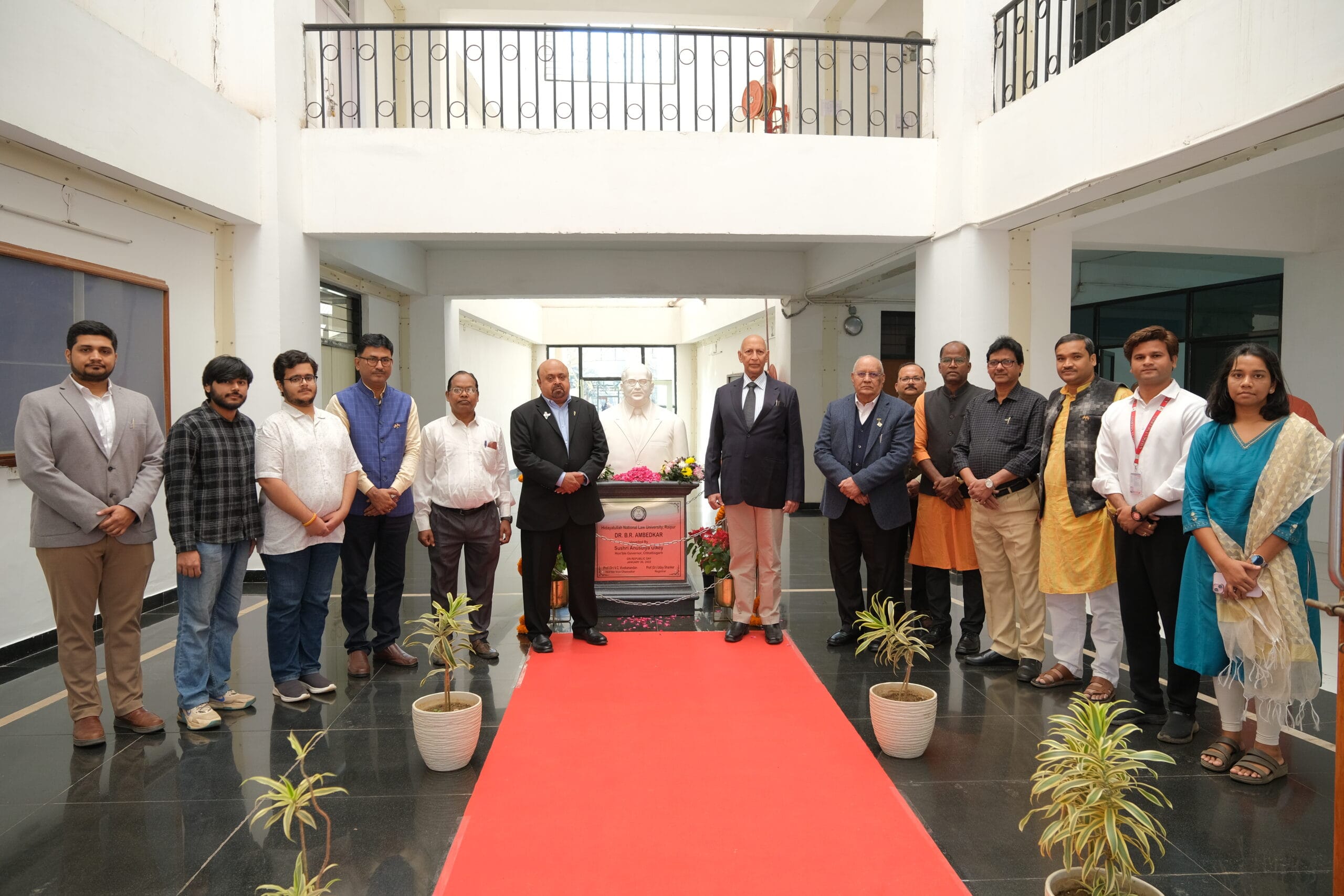
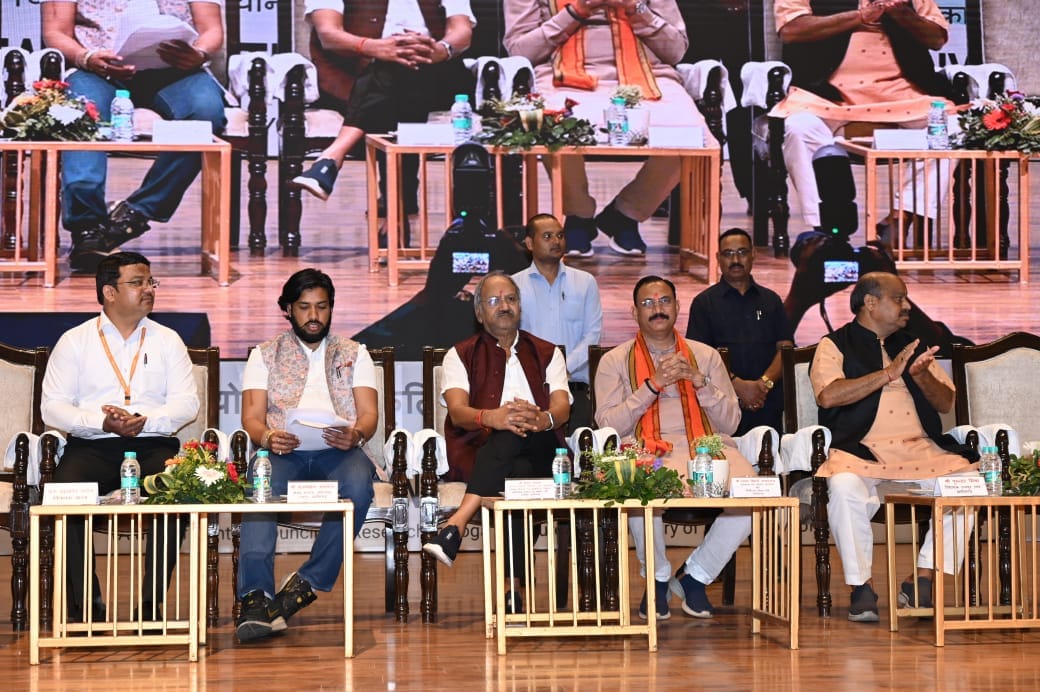
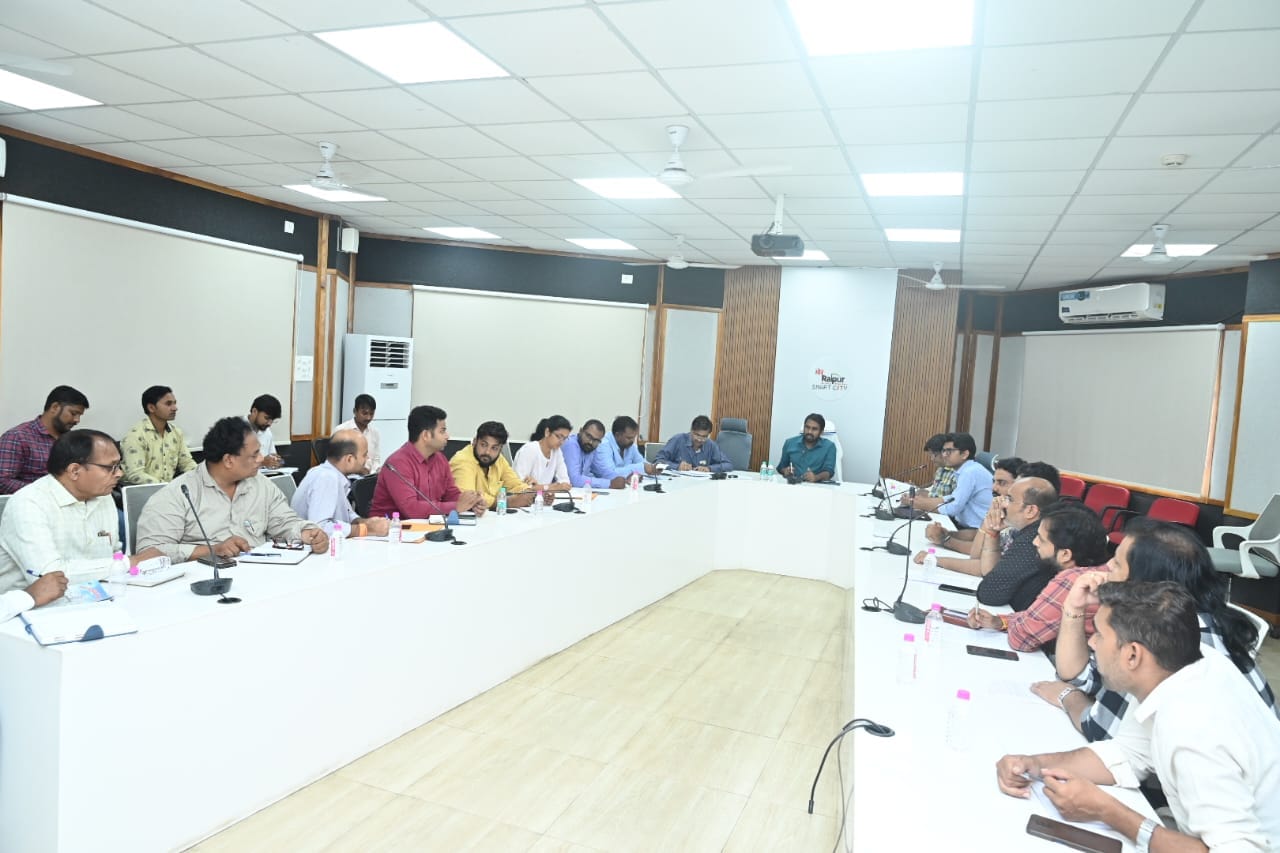
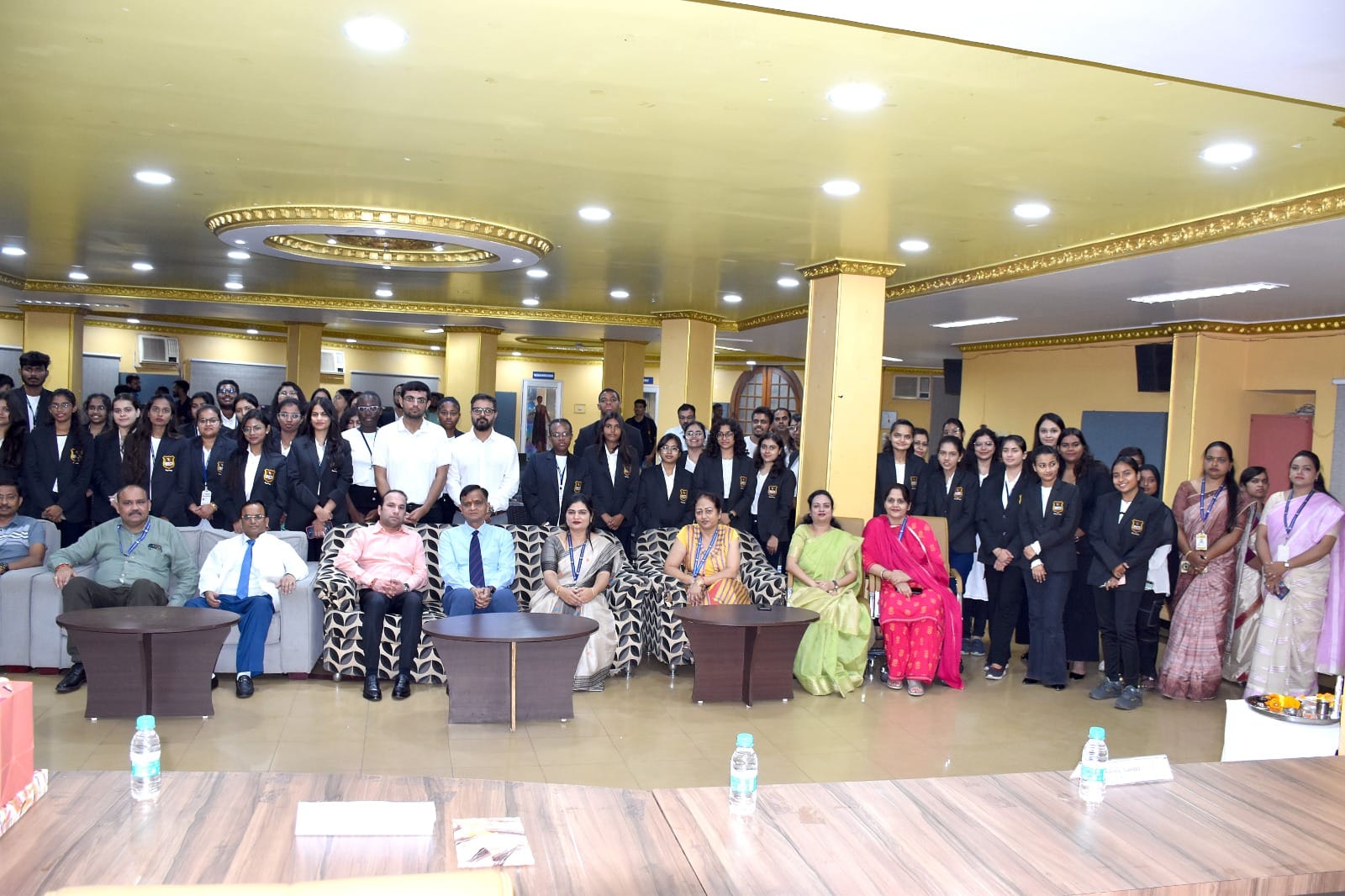
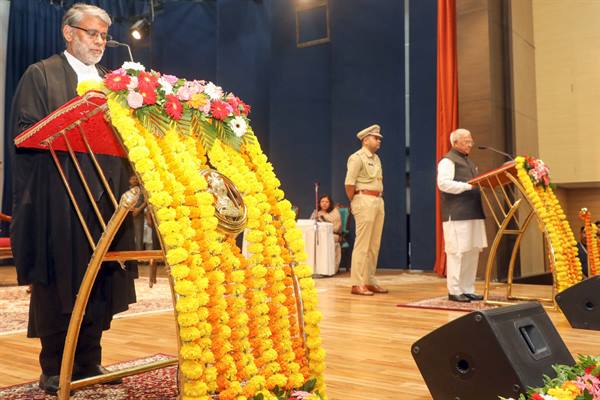
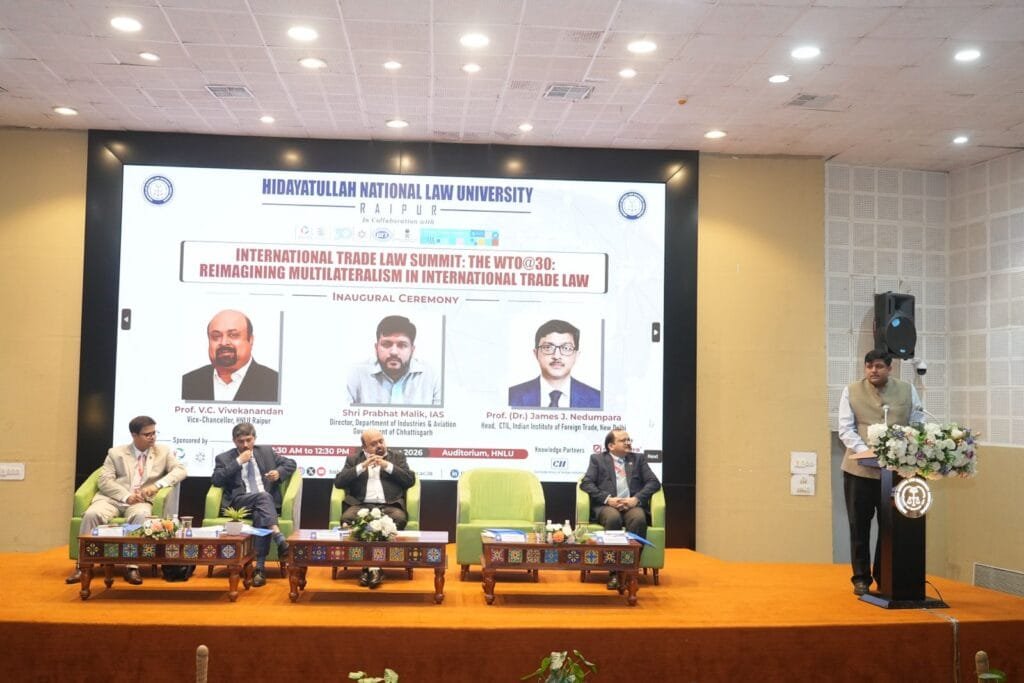
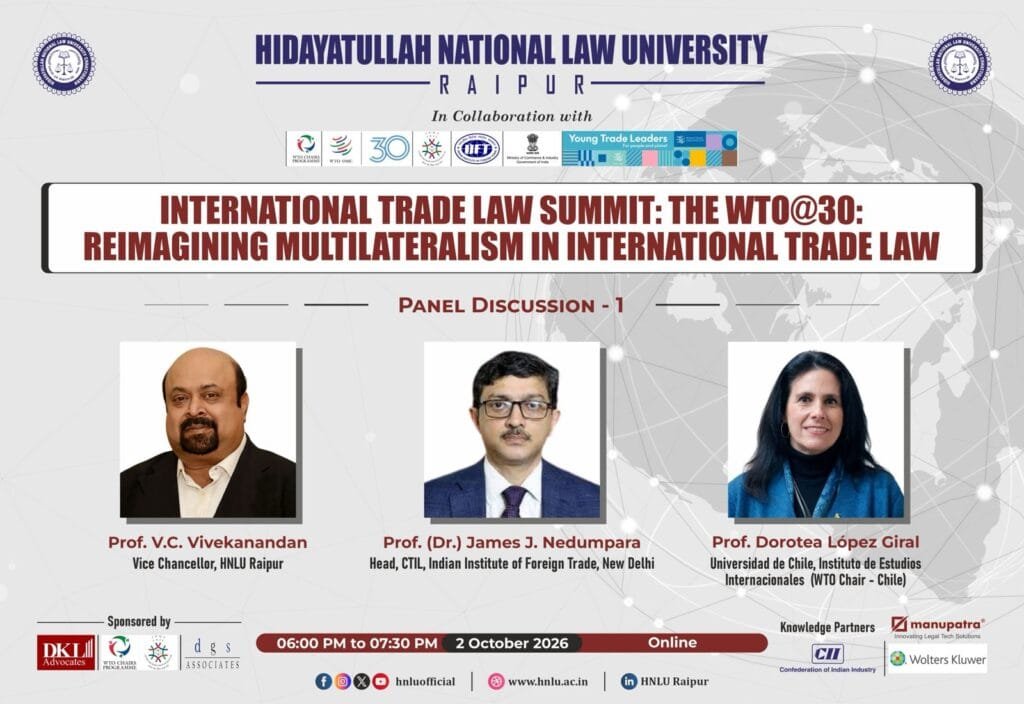
The International Trade Law Summit (ITLS) 2026 was inaugurated at Hidayatullah National Law University (HNLU), Raipur on October 2, 2026. The three-day summit brought together academics, policymakers, legal practitioners, researchers, and students to discuss the theme “The WTO@30: Reimagining Multilateralism in International Trade Law.” The summit is being organized by HNLU’s School of Law and Technology and the Centre for WTO & WIPO Studies, in collaboration with their academic and institutional partners.
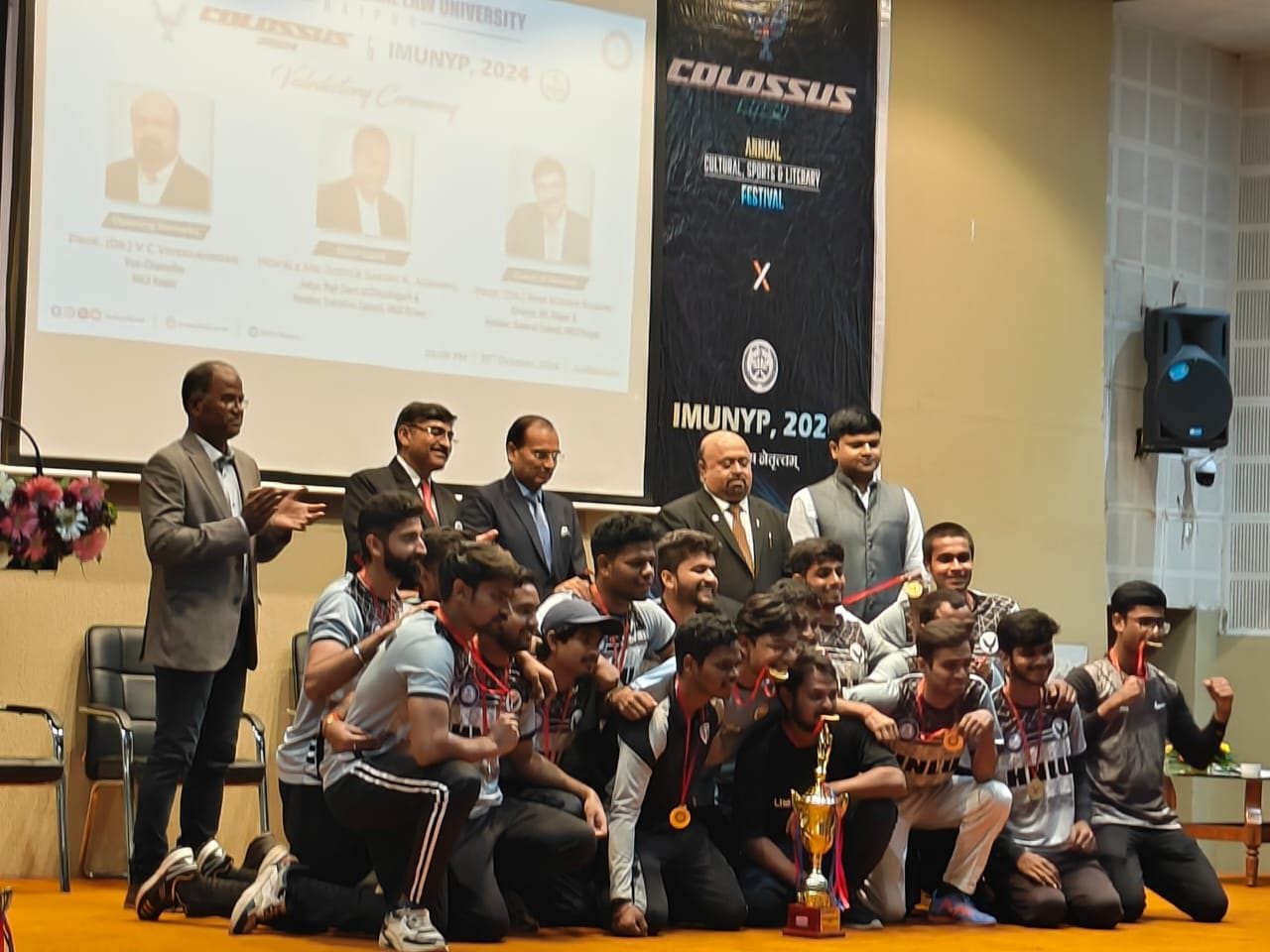
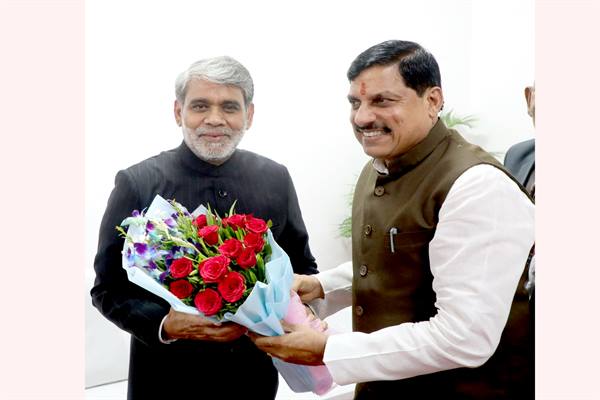
Prof. (Dr.) V. C. Vivekanandan, Vice Chancellor, HNLU, delivered the inaugural address. Mr. Prabhat Malik, IAS, Director of Industries and Aviation, Government of Chhattisgarh, was the Chief Guest, and Prof. (Dr.) James J. Nedumpara, Indian Institute of Foreign Trade, New Delhi, was the Guest of Honor.
Vice Chancellor: Trade is also a means of developing a habit of cooperation
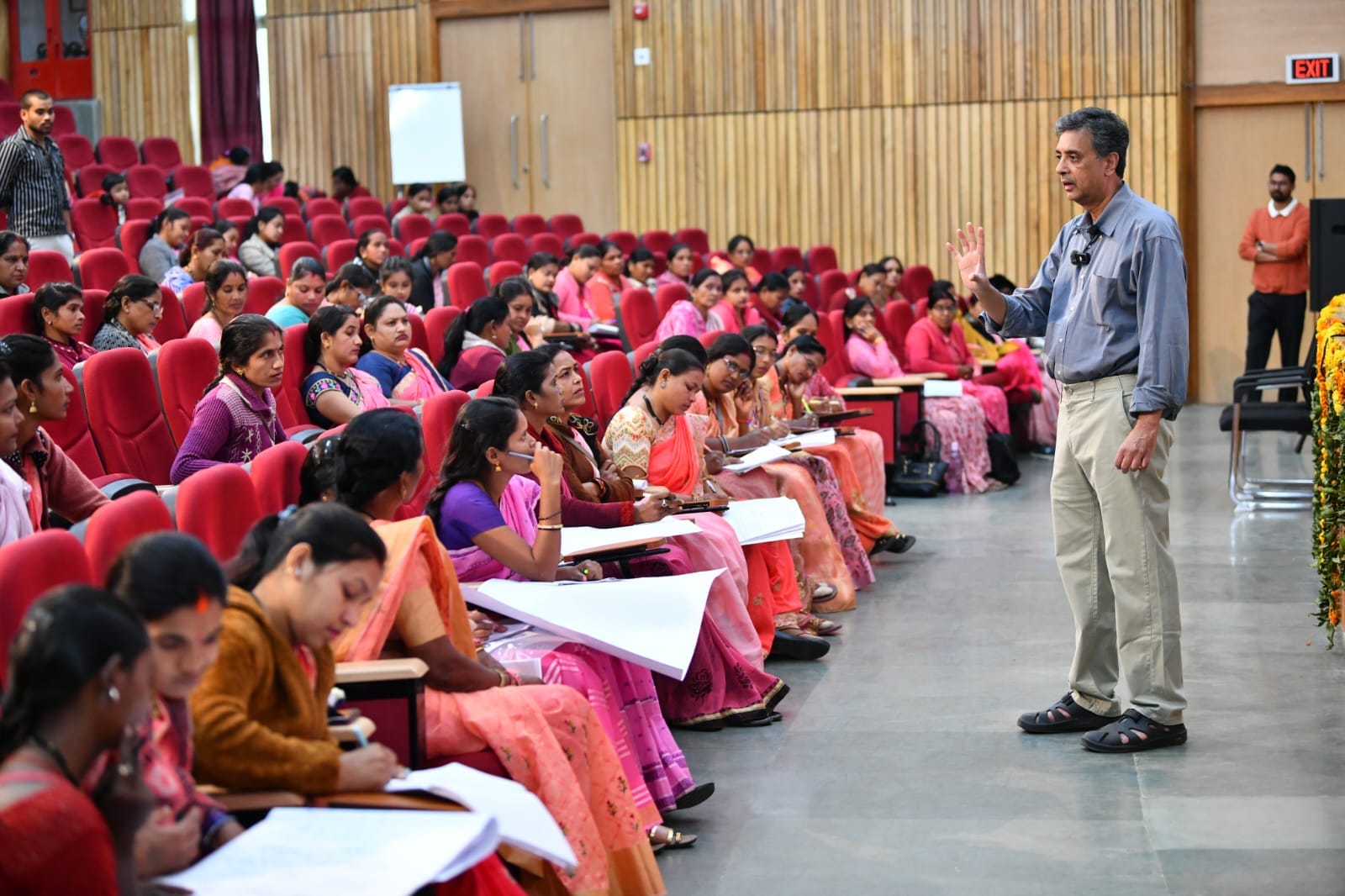
In his opening address, Prof. (Dr.) V.C. Vivekanandan placed the summit in the context of a changing international environment characterized by geopolitical competition, technological competition, supply-chain concerns, and a decline in institutional trust. He emphasized that trade is not limited to the exchange of goods and services; it can also play a role in managing conflicts and fostering a habit of cooperation in international relations.

Referring to the WTO’s 30th anniversary, he said the international economic landscape has undergone significant changes. The influence of emerging economies has grown, and new questions have emerged related to digital trade, artificial intelligence, environmental measures, and global value chains.
He posed four key questions to the summit— how multilateralism can be redefined without abandoning fundamental legal principles; how development concerns can be accommodated; how a balance can be struck between national policy space and global economic interdependence; and how established and emerging powers can work towards a new balance.
He said:
“I hope this summit will not be limited to simply identifying the cracks in the trading system. I hope it will envision a new ‘architecture of repair.'”
Prof. Nedumpara: “Trade cannot be viewed in silos”
Guest of Honor, Prof. (Dr.) James J. Nedumpara, Head, Center for Trade and Investment Law, IIFT , stated that international trade cannot be viewed in isolation from broader social and economic concerns. Drawing attention to issues such as human rights, environmental protection, sustainability, and labor conditions, he said:
“Tread can’t really operate in different slots.”
He also stressed that WTO agreements are not limited to trade liberalization alone.
Prof. Nedumpara stressed the need to reform WTO rules to address emerging challenges, while maintaining the central role of the multilateral system and its judicial function. He said:
“Every person and every institution has to behave as a responsible party.”
He further said that:
“The judicial function of the WTO must also be maintained.”
Mr. Prabhat Malik: Local Impact of Global Trade Rules
Chief Guest Mr. Prabhat Malik, IAS , presented the state’s perspective at the summit, explaining that international trade rules directly impact states, industries, businesses, and citizens. Regarding governance and administrative reform, he said:
“Either you improve the rules, or ensure compliance, or simplify the process.”
He urged students and researchers to look at international trade from the perspective of Chhattisgarh and consider how the state’s industries and local communities can connect with and benefit from the multilateral economic system.
Concluding his address, Mr. Malik said:
“We may not be able to change the world, but we can work towards becoming net gainers in the economy by improving our internal processes.”
The inaugural program included a welcome address by Dr. Deepak Srivastava, Registrar (In-Charge) , an introduction to the Summit by Dr. Ankit Awasthi , the release of the abstract book , and a vote of thanks by Dr. Mayank Srivastava . The program was moderated by Ms. Satvika and Ms. Pragya . The academic program then began with a training session on “Mastering WTO Trade Negotiations.”
WTO Chairs from various countries discussed the future of multilateralism
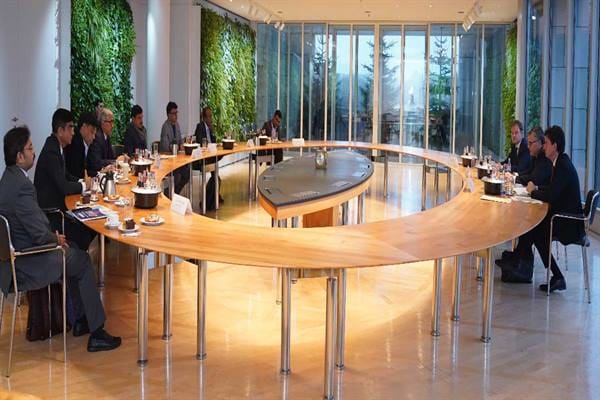
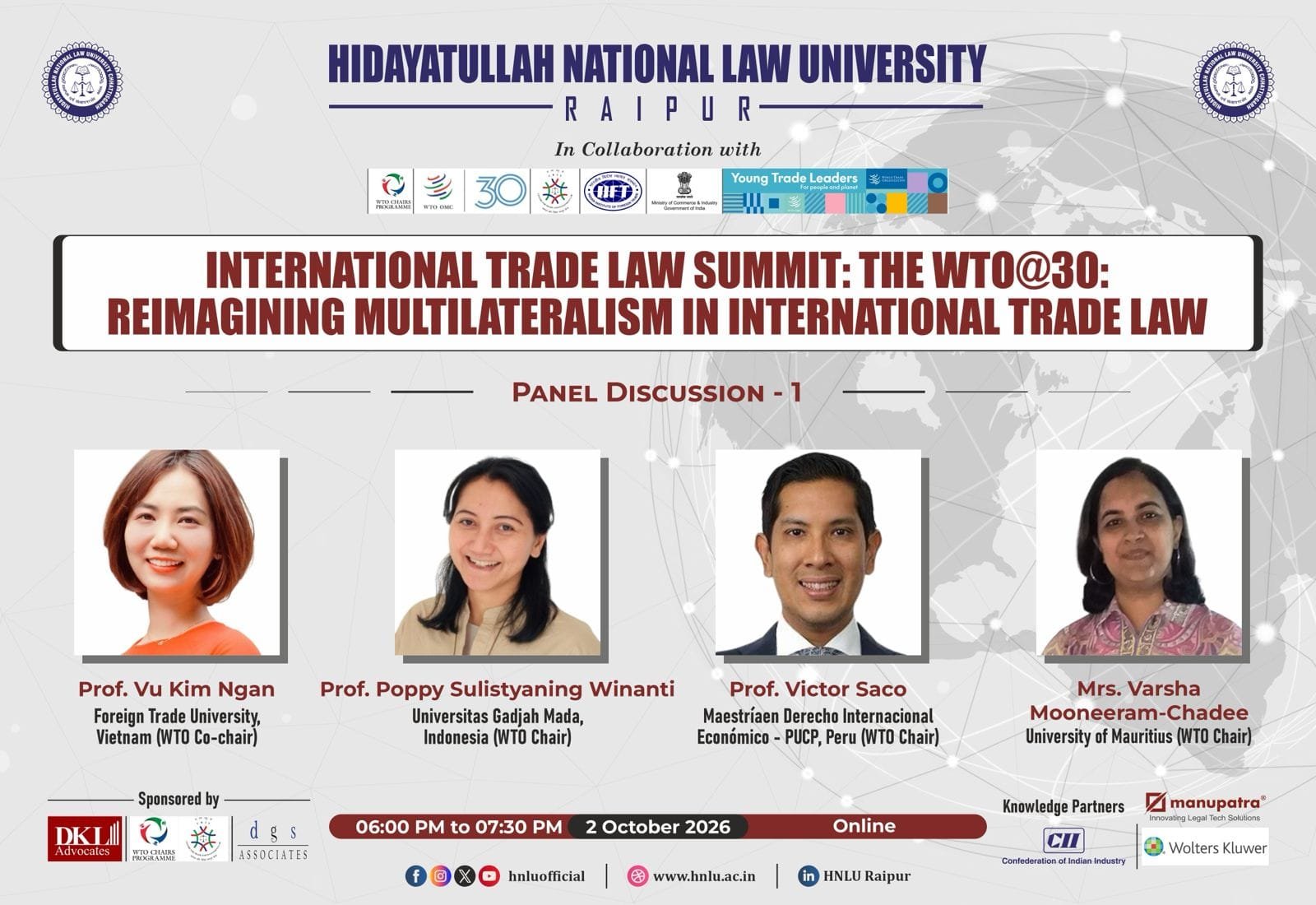
A key highlight of the opening day was a panel discussion bringing together trade law professors from various countries. Titled “The Future of Multilateralism: How Academia Can Shape the Next Era of International Trade Law,” the discussion explored the relationship between academia and the WTO in the context of public policy.
The panel included Prof. Dorotea López Giral , Director, Institute of International Studies, Universidad de Chile (Chile, WTO Chair); Prof. Poppy Sulistyaning Winanti , Professor of International Relations, Center for World Trade Studies, Universitas Gadjah Mada (Indonesia, WTO Chair); Prof. Vu Kim Ngan , Deputy Head, Department of Planning and Finance, Foreign Trade University (Vietnam, WTO Co-Chair); Mrs. Varsha Mooneeram-Chadee , Senior Lecturer and Member, WTO Chair, University of Mauritius and Centre of Excellence for International Trade and Investment, University of Mauritius (Mauritius, WTO Chair); Prof. Victor Saco , Associate Professor of International Economic Law, PUCP (Peru, WTO Chair); and Prof. (Dr.) James J. Nedumpara , Head, Center for Trade and Investment Law, IIFT, New Delhi (India, WTO Chair).
The session began with an address by Vice Chancellor Prof. Vivekanandan . Dr. Navneet Roy, Ms. Aditi Singh, and Dr. Priyanka Dhar also participated in the discussion , while Ms. Yashita Gupta, a student volunteer , moderated the discussion.
The panel discussion addressed the WTO’s achievements, the geopolitical challenges facing the multilateral trading system, and the growing role of the Global South in strengthening and shaping the WTO’s direction. The importance of international negotiations in the development and operation of an effective multilateral trading system was also highlighted.
The discussion focused on the role of academia in improving public policy . The need to produce better evidence-based research, deepen academic discussions on trade policies, familiarize practitioners with current and digital trade law, and create opportunities for experimentation and dialogue were highlighted.
Speakers also underscored the need for good empirical research , increased participation of students and young researchers, and better communication between researchers and policymakers. This can help bridge the gap between research, international negotiations, and actual policy implementation.
The discussions on the opening day laid the foundation for the Summit’s broader discourse, which considered the future of multilateral trade in the context of development, sustainability, technology, digital trade, governance, and dispute settlement . Rather than viewing the occasion of WTO@30 solely as a celebration of institutional continuity, discussions focused on how the multilateral trading system can effectively respond to a changing and more complex international environment, while maintaining the fundamental legal predictability and cooperative framework of international trade.
The three-day International Trade Law Summit 2026 will continue.
The International Trade Law Summit 2026 will continue at HNLU on October 3 and 4, with a focus on the best in International Trade Law.