













































































































- The discovery of the world’s highest flying bird at the Kunwarpur Wetland Complex reaffirms the state’s renewed interest in ecology and establishes a firm foundation for ensuring habitat protection.
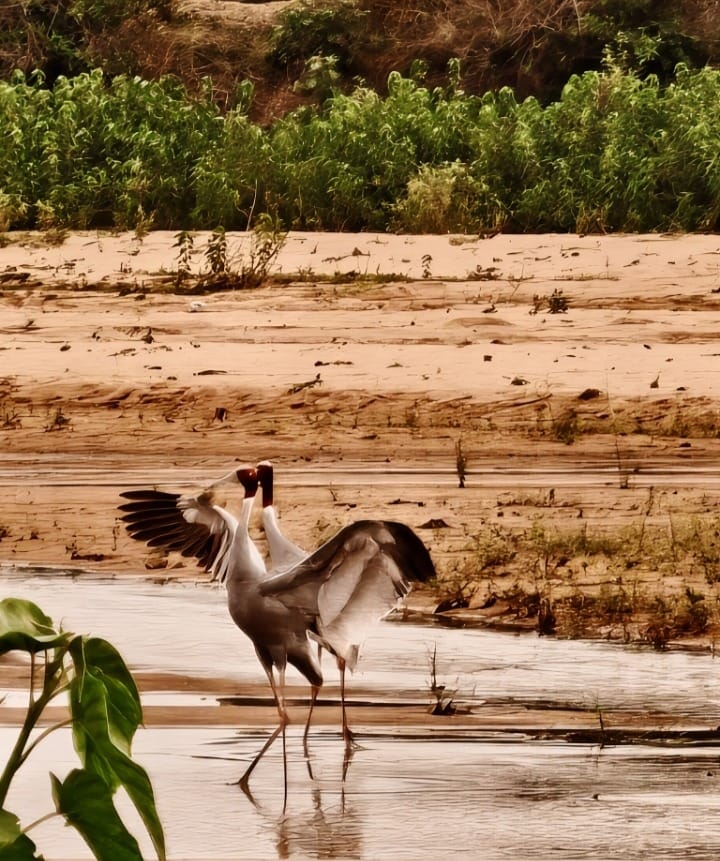
A pair of Sarus Cranes (Antigone antigone) has made history in India’s biodiversity by being successfully documented in the Kunwarpur Wetland Complex part of the Surguja Forest Division of the Chhattisgarh range.
The “hallmark” of the sighting of the world’s tallest flying bird is being seen not only as a rare event in the bird world, but as a direct consequence of the state government’s aggressive efforts to protect the environment, led by forest minister Shri Kedar Kashyap. During his time in office, a dedicated strategy for the restoration and maintenance of the state’s fragile wetland ecosystems has started to show on-the-ground results that are undeniable.
For people who like animals, and for state authorities, this means that the Sarus Crane, a species considered to be one of the most important indicators of a pristine and healthy ecological habitat, is doing well, thanks to recent conservation interventions. Interestingly, Surguja is the only area in Chhattisgarh to have reported regular sightings of these majestic birds. This is a very special designation that clearly situates the conservation value of wetlands in Surguja in the national context.

Stronger Administrative Oversight
The Principal Chief Conservator of Forests and Head of Forest Force, Shri Arun Kumar Pandey had laid out a framework of the strategic administration for this ecological breakthrough. The changes he has made to the department’s monitoring processes has dramatically reinforced frontline forest staff and increased ground level monitoring.
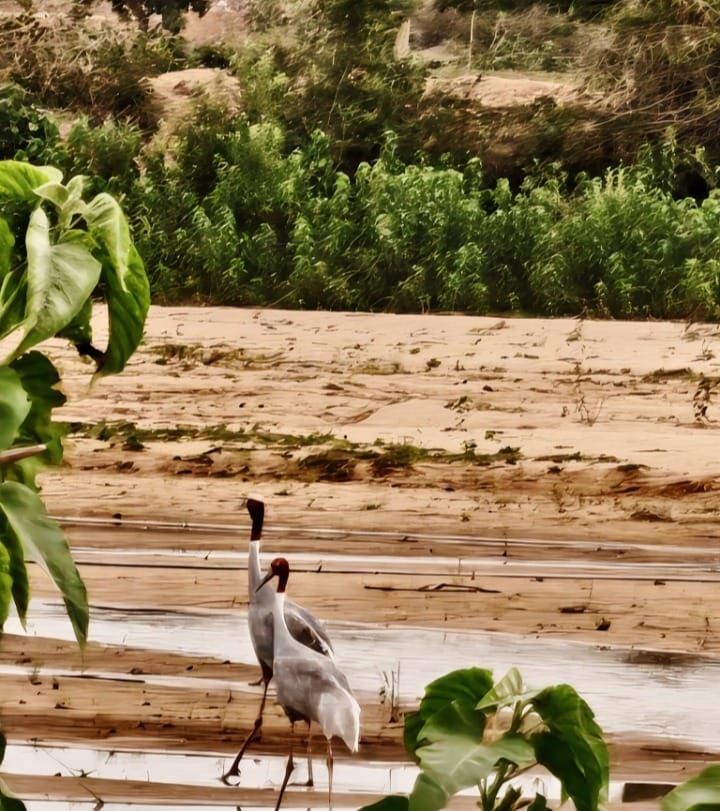
The documentation was the culmination of diligent field research in the course of regular ecological monitoring. It was the unflagging efforts of the DFO, Abhishek Jogawat, Technical Assistant, Dhaniram and Beat Guard, Rajendra Kujur in the Lakhanpur range that enabled this important photographic documentation.
A Baseline for Future Conservation
State forest officials say the sighting of the pair of birds is a clear sign of how well the ecology of the Kunwarpur area is doing and how favourably the recent efforts in the management of the wetlands have been working. In the future this historical record will provide a baseline for future scientific research, wetland avian diversity mapping and long-term plans on the management of habitat throughout central India.
The Forest Department has invited all nature lovers, birders and local residents to avail themselves of this opportunity by issuing an open invitation. Authorities are asking for citizens to play a more active role in protecting these important wetland habitats and to immediately report to the department any other wildlife sightings similar to this one. The state is looking to create a linkage between local communities and the forest administration to ensure the conservation is done at the local level and that there is strong scientific documentation.