








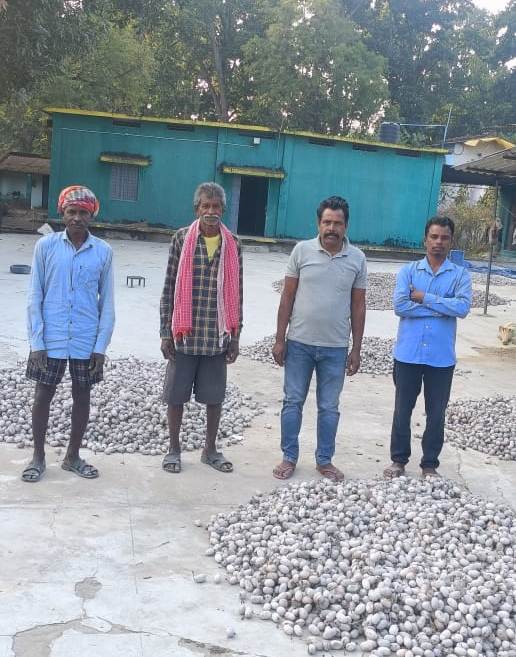




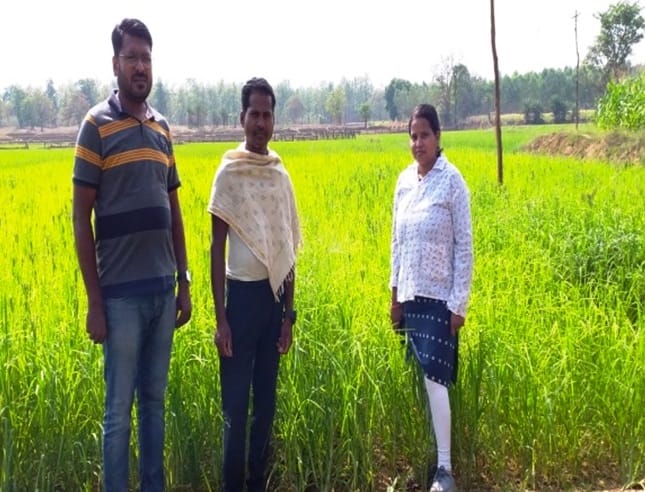




















































- Parshuram Sahu, a progressive farmer from Kanker district, is setting an example for natural farming.
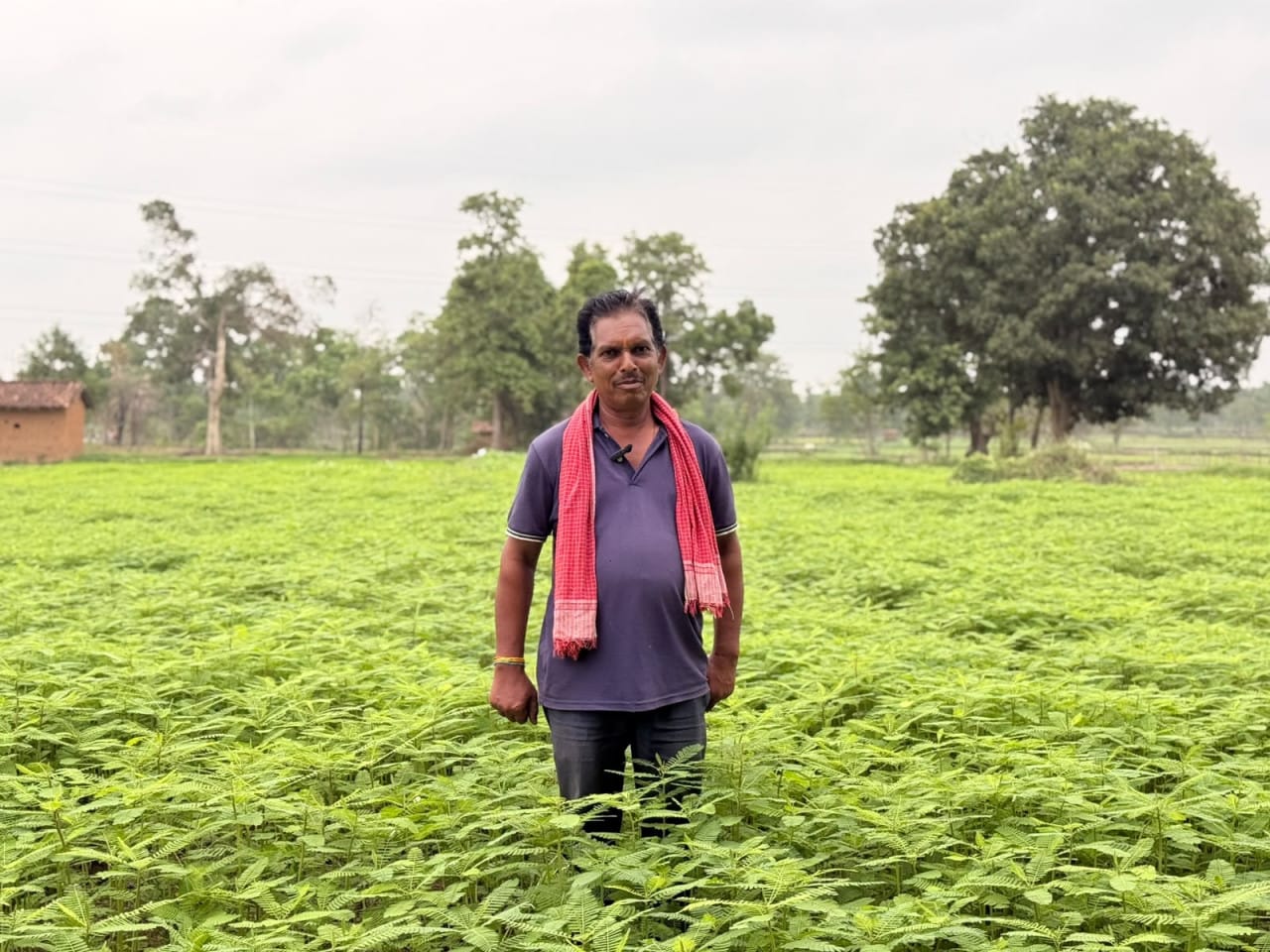
Rising farming costs and declining soil fertility are major challenges facing farmers today. Under the guidance of the Agriculture Department, progressive farmer Mr. Parshuram Sahu of Golkumra village in the Charama development block has proven that better farming can be achieved at lower costs through green manure (Dhaincha) by adopting natural methods. His experience is becoming an inspiration for other farmers in the area. Mr. Sahu began using Dhaincha in his paddy cultivation about three years ago, following the advice of Agriculture Department officials. Initially, he adopted it as an experiment, but after seeing positive results, he now regularly sows Dhaincha on his approximately 3 acres of agricultural land, 40 to 45 days before transplanting the paddy.
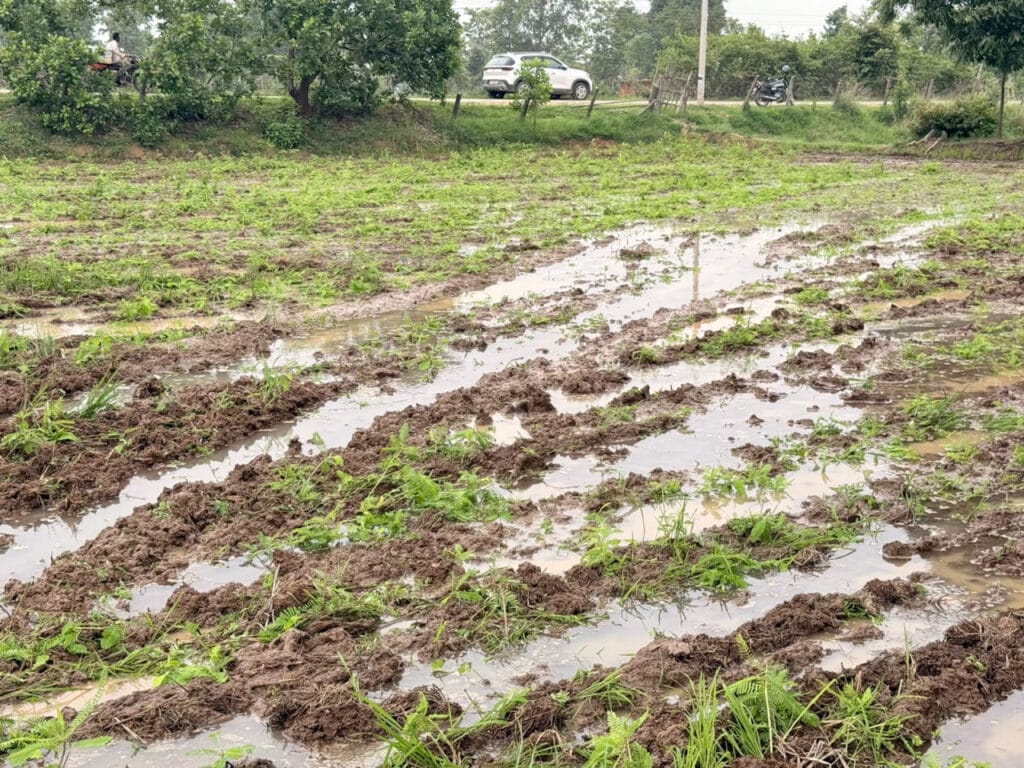
Mr. Sahu explains that the Dhaincha crop is ready in approximately 35 to 40 days. After this, the Dhaincha crop is turned over in the field using a tractor or plow and mixed with the soil. Within a few days, it completely decomposes and becomes an excellent green manure, naturally providing the soil with essential nutrients. He explains that after adopting Dhaincha, the need for chemical fertilizers on his farm has reduced by approximately 50 percent. Previously, he had to use large quantities of urea and other fertilizers, but now he is able to yield a good harvest with less fertilizer. Furthermore, his land has become more loose, fertile, and moisture-retentive than before.
Mr. Mahesh Kumar Sonkar, Rural Agricultural Extension Officer of Charama Block, explained that Dhaincha is an important green manure crop among the legumes. The Rhizobium bacterial nodules that develop in its roots fix nitrogen from the atmosphere and make it available to the soil. One hectare of Dhaincha green manure can provide approximately 40 to 60 kilograms of nitrogen to the soil naturally. Additionally, it increases the amount of organic carbon in the soil, encourages microbial activity, improves water-holding capacity, and improves soil structure. With continued use, soil fertility is maintained for a long time and dependence on chemical fertilizers is reduced.
He explained that the Agriculture Department is providing Dhaincha seeds to farmers at a 50 percent subsidy, so that more farmers can benefit from adopting this scientific technique of natural and sustainable farming. Sowing Dhaincha before transplanting paddy in the Kharif season and turning it into the field provides adequate organic matter and nutrients to the soil, which improves the initial growth of paddy and positively increases production capacity. Mr. Parshuram Sahu says that if farmers gradually reduce their dependence on chemical fertilizers and adopt green manure, organic fertilizers, and balanced nutrient management, farming can become more profitable and soil health can be protected. He believes that natural farming is not only a means of reducing costs, but is also an effective way to preserve fertile land for future generations.