



































- Ms. Yamini Tiwari
- State Nutrition Advisor
Service is not just about helping those in need, but also about understanding our responsibility for the health and well-being of society. The “Seva Sankalp Abhiyan” is an opportunity to spread this sentiment to everyone. We can also connect this resolution to children’s nutrition. We need to reduce unnecessary spending on junk food and use that money for nutritious food.
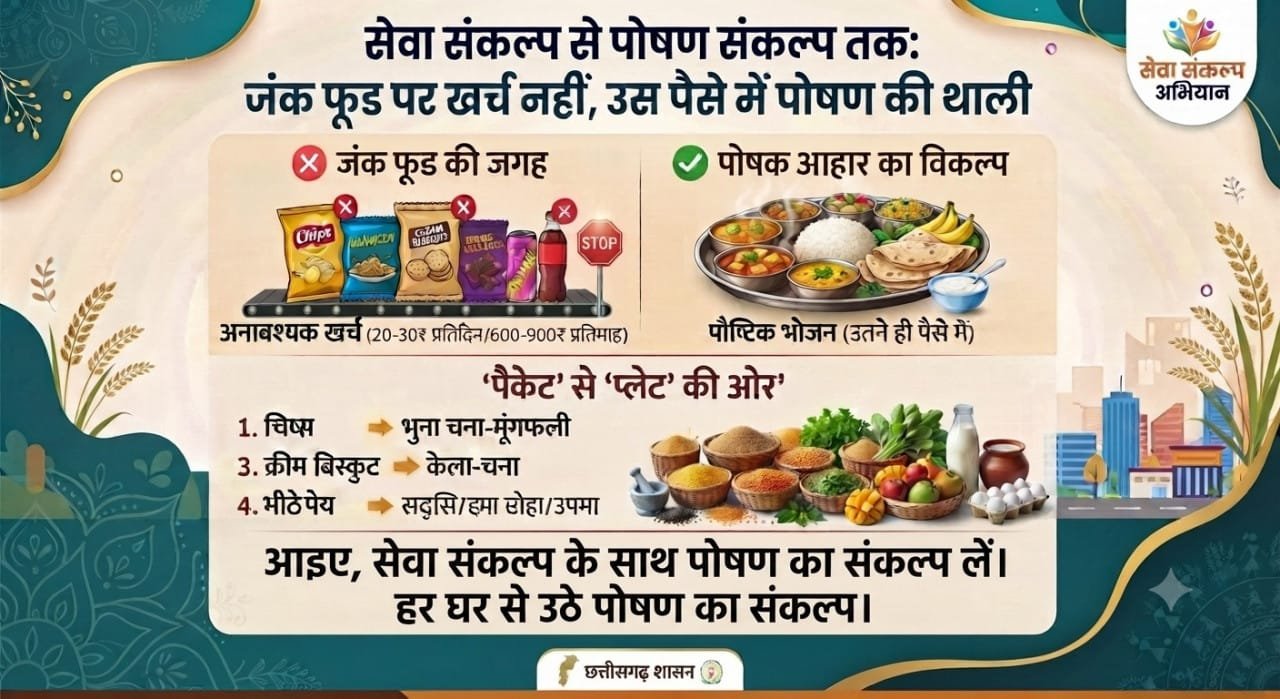
Today, chips, namkeen, cream biscuits, chocolate, and sweet drinks are becoming children’s favorites. A daily expenditure of 20-30 rupees may seem small, but it can add up to 600-900 rupees a month. If this money is spent wisely, options like roasted chickpeas, peanuts, bananas, seasonal fruits, flattened rice, upma, milk, or homemade snacks can be included in children’s meals, depending on availability.
The question isn’t just how much we’re spending, but also how much nutrition the child is receiving from that expenditure. Children’s preferences don’t shift
- from “packets” to “plates”
overnight. Therefore, it’s better to change choices gradually. Roasted chickpeas and peanuts can be offered instead of chips, homemade poha or chivda instead of packaged snacks, bananas and chickpeas instead of cream biscuits, milk or buttermilk instead of sweet drinks, and vegetable poha or upma instead of instant noodles.
This isn’t about branding any food as completely ‘bad’, but rather an effort to increase the share of local, diverse, and nutritious options in children’s diets.
- Nutrition starts at home
Nutrition doesn’t always require expensive foods. Foods like chickpeas, peanuts, pulses, soybeans, ragi and other coarse grains, green vegetables, seasonal fruits, milk, yogurt, and eggs can help make meals more varied and nutritious at a low cost.
Adding vegetables and peanuts to poha, including sprouted chickpeas or moong beans for breakfast, and offering seasonal fruits can all bring positive changes to children’s eating habits.
Instead of simply telling a child “Don’t eat chips,” it can be more effective to say, “Let’s buy something for the same amount of money that’s both tasty and energizing.” This dialogue can become the beginning of an understanding of nutrition.

- Every household takes a pledge for nutrition.
The role of the family is crucial in transforming the Seva Sankalp Abhiyan into a public participation campaign. Adding a fruit to a child’s plate, providing a nutritious breakfast, prioritizing home-cooked meals, or reducing unnecessary spending on junk food are small but meaningful acts of service.
Let’s also take a pledge for nutrition alongside our service pledge: we will reduce unnecessary spending on junk food, prioritize local and nutritious foods, and start healthy eating habits in children at home. Because one less packet and one more nutritious option is a small but meaningful step towards a child’s healthy future.