




































Summer urad and mung bean cultivation is opening new doors of opportunity for farmers. Thanks to the guidance of the Agriculture Department, the availability of improved seeds, and scientific farming techniques, the area under summer pulse cultivation has increased significantly this year in Bemetara district. Last year, only 285 hectares were cultivated for urad and mung bean cultivation, which has increased to 1,191 hectares this year. Summer urad was demonstrated by 1,280 farmers on approximately 1,000 hectares, providing them with an opportunity to learn and adopt new techniques.
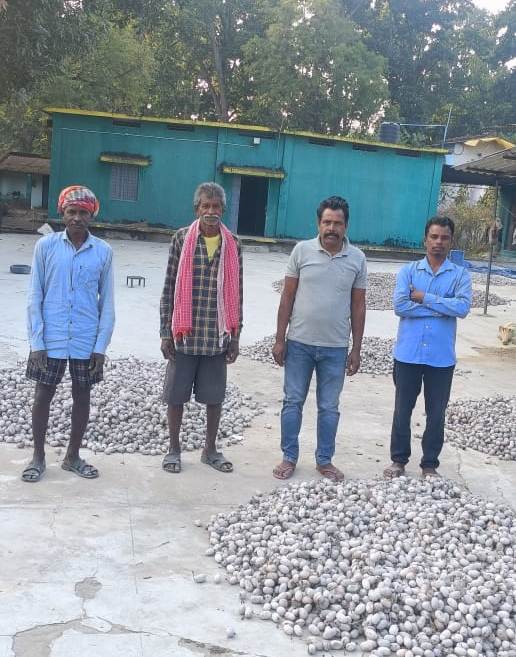
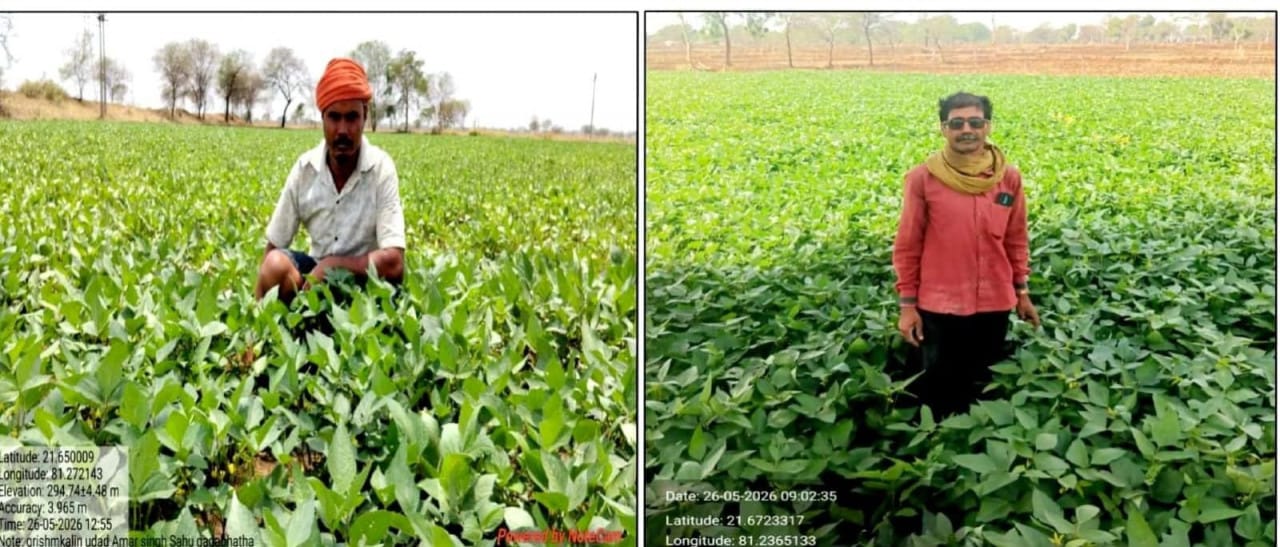
The story of this positive change is linked to progressive farmers like Mr. Amar Singh Sahu of village Garabhatha and Mr. Chandrakumar Kumbhar of village Bijagond, who have achieved remarkable results by cultivating summer urad for the first time.
- Advanced technology boosts farmers’ confidence
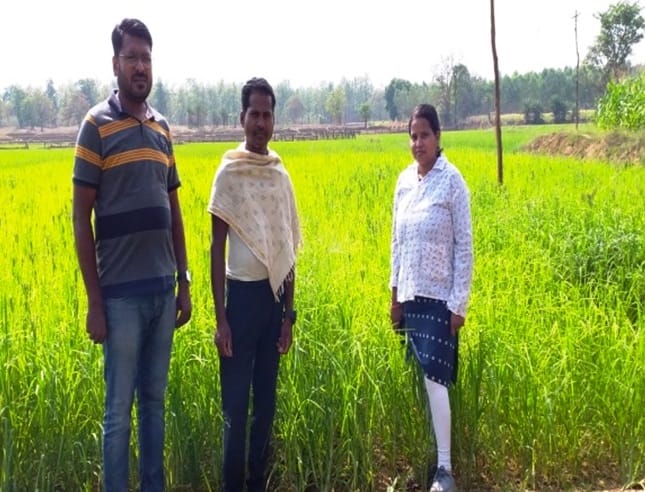
Mr. Amar Singh Sahu, a farmer from the village of Garabhatha in the Saja development block of Bemetara, cultivated summer black gram on approximately 1.5 acres of land under the guidance of the Agriculture Department. The department provided him with improved seed varieties and provided him with information on row sowing, timely irrigation, and proper nutrient management. After sowing on April 21, 2026, the crop grew very satisfactorily. Currently, his crop is in good condition, and he expects to yield approximately 7 to 8 quintals per acre.
Mr. Amar Singh Sahu explains that he previously relied solely on traditional crops, but after consulting the Agriculture Department and following demonstration programs, he switched to summer black gram cultivation. Based on the current crop yield, he expects improved income and plans to expand his pulse production to a larger area in the future.

- Performance plot gives new direction
Similarly, Mr. Chandrakumar Kumbhakar, a farmer from Bijagond village, also organized a demonstration of black gram. He sowed it using the row method on April 12, 2026. He benefited from scientific farming methods and regular technical guidance from the Agriculture Department. His crop is currently healthy and dense, and he anticipates a yield of 8 to 9 quintals per acre. Mr. Chandrakumar says that he initially had some doubts about cultivating black gram in the summer season, but the support of department officials and the successful demonstration boosted his confidence. Now, he is encouraging other farmers in his village to adopt pulse cultivation.
- Improvement in soil health with increase in income
Summer black gram cultivation is proving beneficial not only economically but also for the environment and soil health. Legume crops increase soil fertility by fixing atmospheric nitrogen. This makes the land more fertile for future crops and reduces dependence on chemical fertilizers. If timely rainfall occurs, these crops can also be used as green manure, further improving soil quality.
- An inspiring example for farmers
The success of Mr. Amar Singh Sahu and Mr. Chandrakumar Kumbhar proves that if farmers are provided with timely quality seeds, scientific technology, and proper guidance, they can achieve improved production and income by adopting new crops. These two farmers have demonstrated that successful cultivation of pulses is possible even in the summer season and can play a vital role in strengthening farmers’ economic status.
Increasing summer black gram cultivation in Bemetara district is a strong step towards self-reliant agriculture. This initiative is significantly contributing to increasing farmers’ income, improving soil health, and promoting sustainable agricultural systems. The success of farmers like Mr. Amar Singh Sahu and Mr. Chandrakumar Kumbhar is inspiring other farmers and setting new standards for pulse production in the district.